

Once a familiar sight on Dorset’s verges and fields, rabbits have become noticeably scarce. Jane Adams looks at what’s behind their dramatic decline
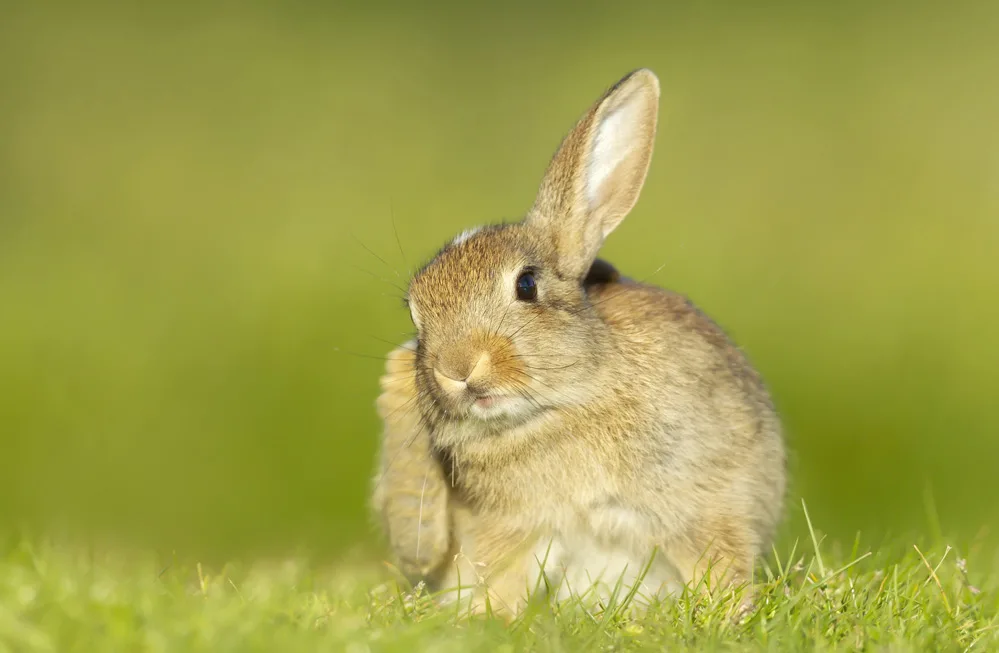
“Has anyone else noticed how few wild rabbits there seem to be these days?” A Letter to the Editor from Pauline Wilson of Wimborne in last month’s Dorset Life caught my eye – because I had been wondering the same thing.
Pauline Wilson of Wimborne in last month’s Dorset Life caught my eye – because I had been wondering the same thing.
In the past, driving out of my village, I would always see rabbits happily munching on the verge, sometimes as many as ten at one time. For the last couple of years, however, the verge has been empty. But curiously, like Pauline, I have noticed more brown hares out in the fields. Are our eyes playing tricks on us? Or are we simply noticing the hares because the rabbits have disappeared?
It turns out Pauline and I aren’t imagining things. The British Trust for Ornithology has been recording mammals alongside birds in its Breeding Bird Survey since 1995, giving us a surprisingly good picture of what has happened to our rabbits. The latest figures, published in 2026, show a 68 per cent decline in England. Sadly, there isn’t one simple explanation, but disease has clearly played a part.. Myxomatosis devastated Britain’s rabbit populations in the 1950s and, after they gradually recovered, rabbit haemorrhagic disease (RHD) – particularly the newer RHDV2 strain – began taking its toll. Changes in habitat and land management, predation, human controls and road deaths will all have affected local populations too.
The story becomes even more intriguing when you look at hares. Over the same period, the BTO recorded a 49 per cent increase in brown hares across England. That doesn’t mean there are suddenly loads more hares in Dorset. Other evidence suggests our hare numbers may be stable, rather than increasing, but at least the impression of seeing more of them is slightly less fanciful.
Hares aren’t immune to RHDV2 either. In 2018, two brown hares were found dead only 20 metres apart on a Dorset farm and both tested positive for the virus, with RHDV2 confirmed in another dead hare in Dorset four years later. Hares also have their own haemorrhagic disease to contend with – European brown hare syndrome (EBHS) – which can cause sudden deaths. Yet their numbers have fared much better than rabbits. Maybe this is something to do with the fact that rabbits live communally in warrens, while hares live above ground, and only tend to mix during the mating season.
Under the brambles
Rabbits may not be native, having been introduced to Britain centuries ago. Native to the Iberian Peninsula in Spain, some say they were first brought here by the Romans, while others credit the Normans, who kept them for food and fur from the 12th century onwards. Regardless, I like seeing them. They’ve shaped vegetation through their grazing and helped provide food for hungry predators.
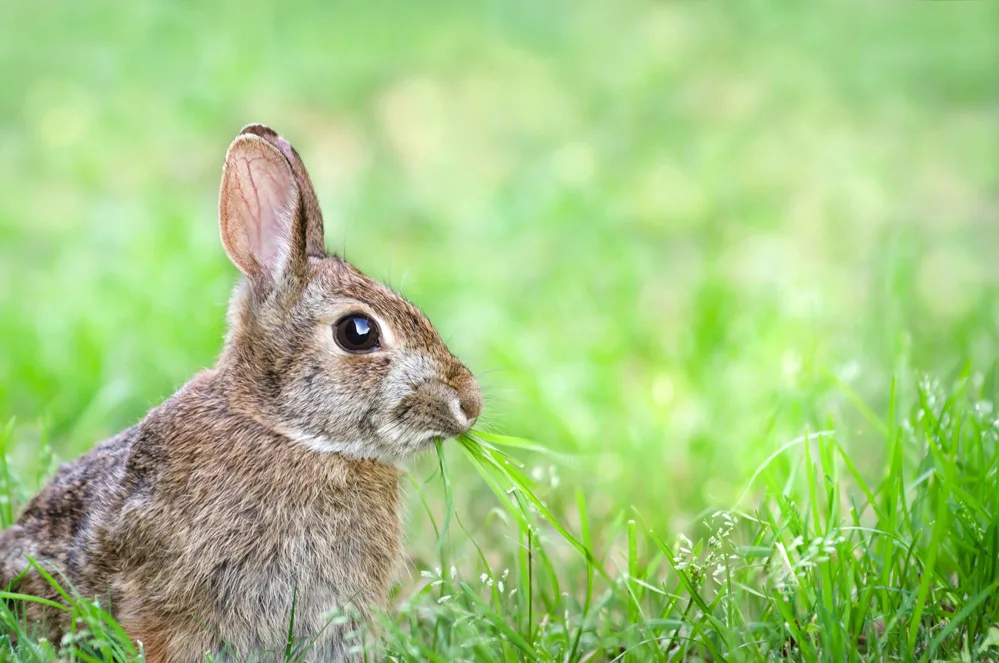
But perhaps our assumption that they have gone is premature. Perhaps beneath the summer’s dried grass and thick brambles, they are ‘breeding like rabbits,’ as the saying goes, and a few of those offspring are hanging on. Maybe it won’t be what you’d call a dramatic comeback, but seeing those young ones quietly feeding made me hope that one day there might be a resurgence.
by Jane Adams