

This month Jenny meets a Dorset family whose Christmas present of piglets rather got out of hand, steps inside Stonehenge after the crowds have gone, and catches up with farmer George Hosford after one of the most difficult growing seasons in recent years.
First, George reflects on a summer of prolonged heat and drought. For livestock farmers in particular, the problem goes far beyond fields simply turning brown – winter feed has already been eaten, silage stocks are down and the welcome return of green grass may have come too late to replace what was lost.
He explains why his own deeper-rooted herbal leys coped better than conventional grass, and considers how farmers might adapt if extreme summers become more frequent. But the conversation also turns to the economics of producing food – and the uncomfortable prospect that some farmers are now questioning whether it makes financial sense to put the machinery back into the fields at all.
‘To be a farmer, you’ve got to be an optimist – because who else in their right mind would invest thousands and thousands of pounds, anything up to nearly 12 months in advance, in the hope that the weather will come right?’
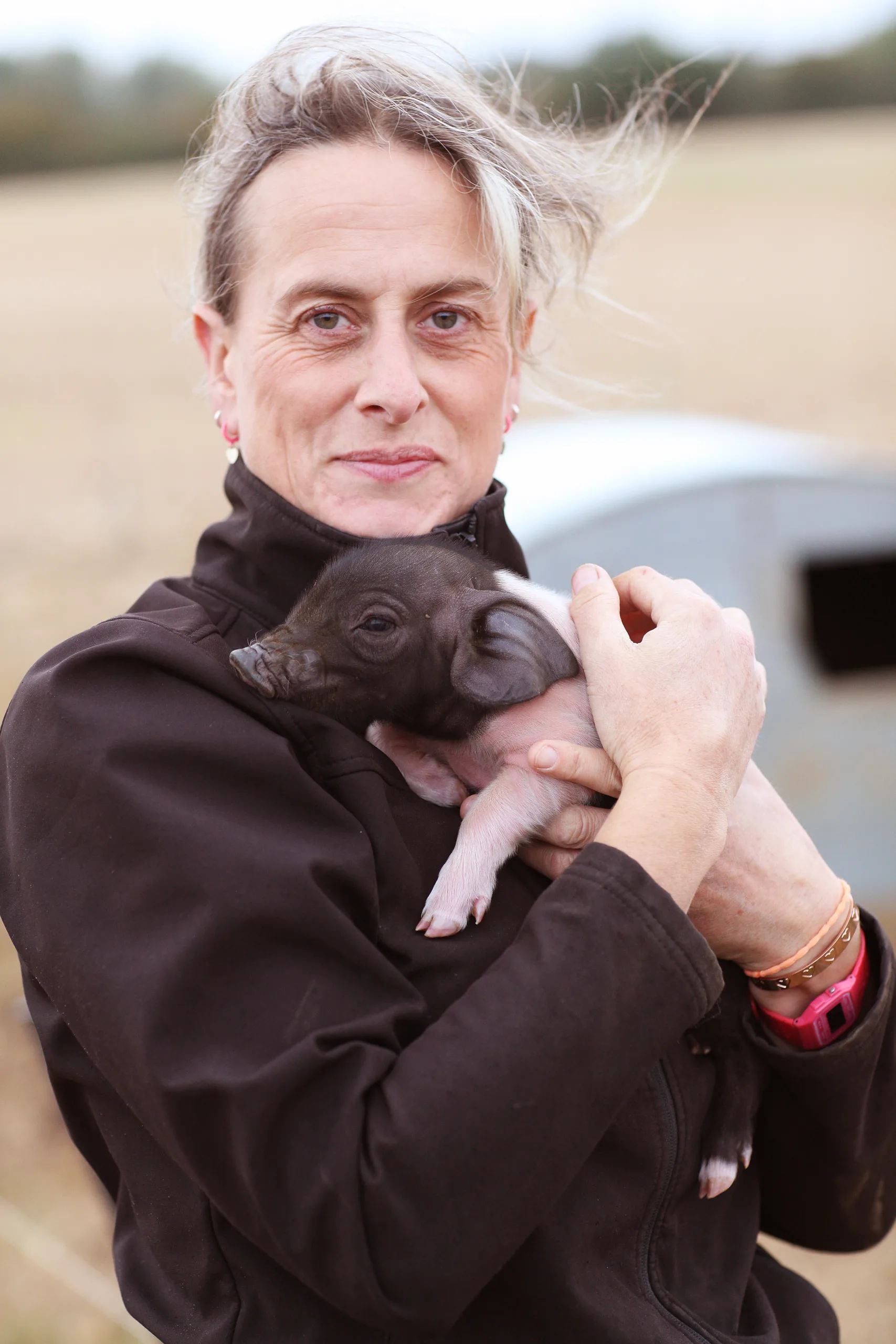
Then there are the pigs.
Eight years ago, Lissy Carr’s eight-year-old son Seb asked for piglets for Christmas. Four pedigree British Saddlebacks duly appeared in the paddock at the bottom of the garden. Today Lissy feeds 72 pigs each morning, and the family travels the country showing some of the best British Saddlebacks in the country.
She talks to Jenny about breeding for the elusive perfect markings, training pigs for the show ring, the surprisingly close-knit showing community and the personalities of Plum, Winnie, Tank and Chomper.
There’s a serious purpose behind it too. British Saddlebacks are a vulnerable native breed, and Lissy is passionate about maintaining pedigree bloodlines while using agricultural shows to help reconnect people with farming and where their food comes from.
‘‘There are less registered British Saddlebacks than there are giant pandas in the world.’
Finally, Jenny heads – figuratively at least – beyond the ropes at Stonehenge.
English Heritage guides Julia Kirkland and James McGalliher take her behind the scenes of the intimate five-person after-hours tours which explore not just the stones but the wider prehistoric landscape before ending inside the stone circle itself.
The conversation ranges from the enduring mystery of how enormous stones were transported – without metal tools – to Neolithic medicine, aliens, acoustics, astronomy and the slightly unfortunate fate of the Stonehenge sheep.
Even after hundreds of visits, Julia and James say the monument can still stop them in their tracks.
‘It never fails to take my breath away as I step inside the circle.’
And there’s Laura’s editor’s letter, in which the imminent death of the dishwasher prompts a disturbing realisation: she has become the person standing in the kitchen muttering ‘Well, the old one was much better.’ Apparently complaining about the price of biscuits is next.
This episode is based on stories from the September 2026 issue of Dorset Life, available to read freely online. Farming, prize pigs, ancient mysteries and unreliable white goods – all seen through a distinctly Dorset lens.