From post-war food security to uncertain support schemes, Dorset NFU chairman Tim Gelfs looks back at agricultural policy – and thinks we’ve reached another turning point
Well, the government has excelled again with its ambition for landscape and nature recovery … or lack of it! What a completely underfunded and totally mismanaged state of affairs by this and the previous government. You really couldn’t make it up – the incompetence of Defra!
But were the seeds of failure sown many years ago? More than 70 years ago?
I am talking about the conception of the Common Agricultural Policy, or CAP as we know it, which was designed to encourage food security and stability throughout Europe.
Europe had been devastated by the Second World War. Food was scarce, infrastructure shattered and, importantly (something our government should take heed of today) there was no money.
So it was right for governments to intervene with support. Britain was not part of the Common Market, but we already had our own system of agricultural support and guaranteed prices. When we joined in 1973, we adopted the CAP.
But should we have taken a different route?
I believe the seeds of the CAP’s later problems were there from the outset. It succeeded at what Europe desperately needed it to do – increase food production – but the support system proved far harder to unwind once that problem had been solved. It had an utter lack of flexibility. In the end, producers and farmers came to rely on the system rather than using it as support.
The brakes should have been applied years before they were. Under the CAP, there were no real competitive markets and little or no scope for entrepreneurship. There didn’t need to be – you couldn’t really fail! Look at our cheesemakers of the time: you got paid to produce it, paid to store it and paid a guaranteed supported price on its sale! How could successful product markets develop with that as their base?
Cheap food for all …
Farmers across Europe excelled in food production. We had grain mountains, butter mountains, even wine mountains.
By the late 70s, it was costing a fortune to support. Quotas would eventually take hold, along with limits on intervention, but we were in a market oversupply. Supported food production had led to cheap prices on the shelf, consumers were starting to enjoy having more disposable income and it would have been political suicide to suggest anything else!
And this is when we were well and truly thrown under the proverbial bus: an oversupplied market and now the emergence of the large retailer and the so-called free market.
They really couldn’t believe their luck!
With the promise of cheap, affordable food for all and a dominance in the marketplace, we stood no chance. Produce was purchased at below the cost of production. Of course, we then had to rely on government support to make up the shortfall, and there was no plan to steer the ship away from that course.
The larger retailers got ever bigger, their shareholders got richer … and our balance sheets got smaller. Farmers had two choices: get bigger or get out. Unfortunately – but understandably – many chose the latter.
Throughout my farming career I have watched the heart being ripped out of the family farm and the fabric of the countryside is changed forever.
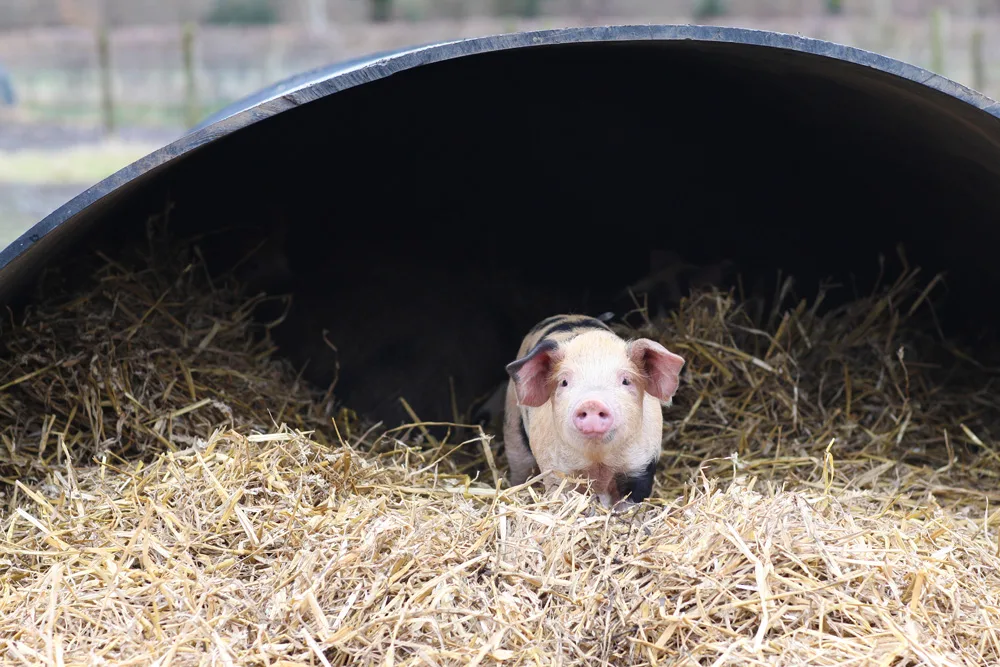
Image: Courtenay Hitchcock
Remove the barriers
But could it have been different all those years ago? Unlike Europe, our countryside was not a battlefield. We were an island – food production was paramount throughout the war, and we turned out to be rather good at it! We were turning the corner and going in the right direction. Food production had risen more than ten per cent in the war years with the plough policy. We didn’t need financial support to encourage us – we were already doing it.
We just needed leadership.
The blueprint was there for us to copy. We should have been paying close attention to what the Danes had been doing with their pig industry since the 19th century, and copied them. They didn’t support the end price of the product: instead they facilitated it. They actively encouraged production, got barriers out of the way and promoted the industry far and wide. They had a clear vision, and they grew into the powerhouse of the European pork industry. They are still outcompeting most markets today.
Obviously, all of this is theoretical. What is done is done, and we are where we are. For that to have happened, it would have required a government with a clear vision, the ability to move quickly and the foresight to support and react … A government that, unfortunately, none of us can recognise – and one that none of us has probably ever seen?
The new Danish pigs?
But are we at another junction in our agricultural path? Production is not supported so eventually it will cease – unfortunately at the expense of some businesses. We have already witnessed that over the last year or so, but the map is changing. Our reliance on imports may come home to roost sooner than we think. There is more local talk of food resilience, we are getting better at marketing not only our food but also our industry, and we are getting more efficient.
No, we can’t control the price of energy or fertiliser, but we are getting better at using it. We understand our costs so much more today.
The next generation of farmers are talking to each other and sharing knowledge and there are co-ops starting to lead the way in some areas.
Maybe, just maybe, could we become the new Danish pig industry?