

James Brinsford tells the extraordinary story of Mabel St Clair Stobart, who trained women on the shores of Studland before leading a medical column through war-torn Serbia
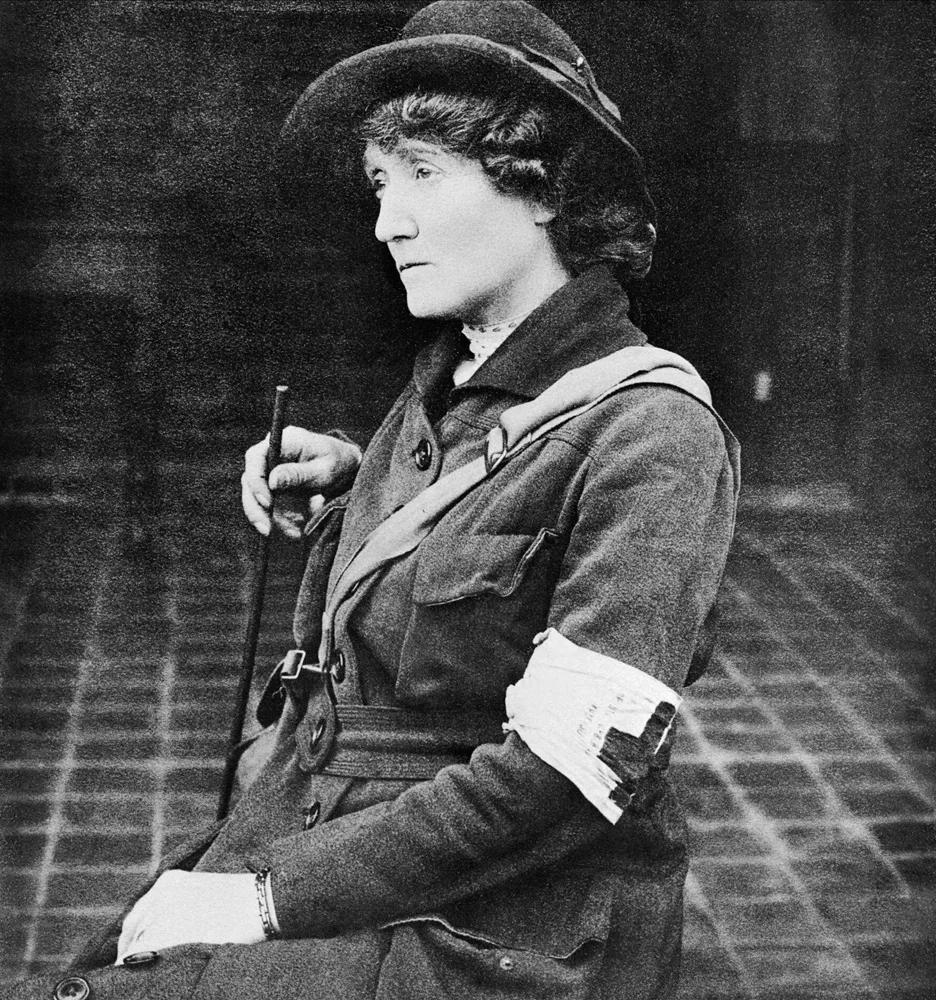
© Crown copyright. IWM
At this time of remembrance, those who were lost in wars are rightly honoured for their sacrifice. But there are other stories worth remembering too – including one of a remarkable Dorset woman who challenged expectations of what women could do in wartime, and who became a national heroine hundreds of miles from home.
Mabel St Clair Stobart was already in her fifties when she led an all-female medical team into war-torn Serbia in 1915. Before the year was out she would be given the rank of Major and find herself on horseback, leading a medical column through the mountains during one of the most desperate retreats of the First World War.
Her journey there had begun, rather improbably, in Studland. Born Mabel Annie Boulton into a wealthy family in February 1862, she married St Clair Kelburn Mulholland Stobart in 1884 and had two sons. The family moved to South Africa, but their remote Transvaal farming venture failed. Mabel returned to Britain in 1907 and settled in Studland; her husband died during his own journey home the following year.
A vigorous feminist, Mabel believed that war offered women an opportunity to prove they were every bit as capable as men – and, in doing so, strengthen the argument for women’s suffrage.
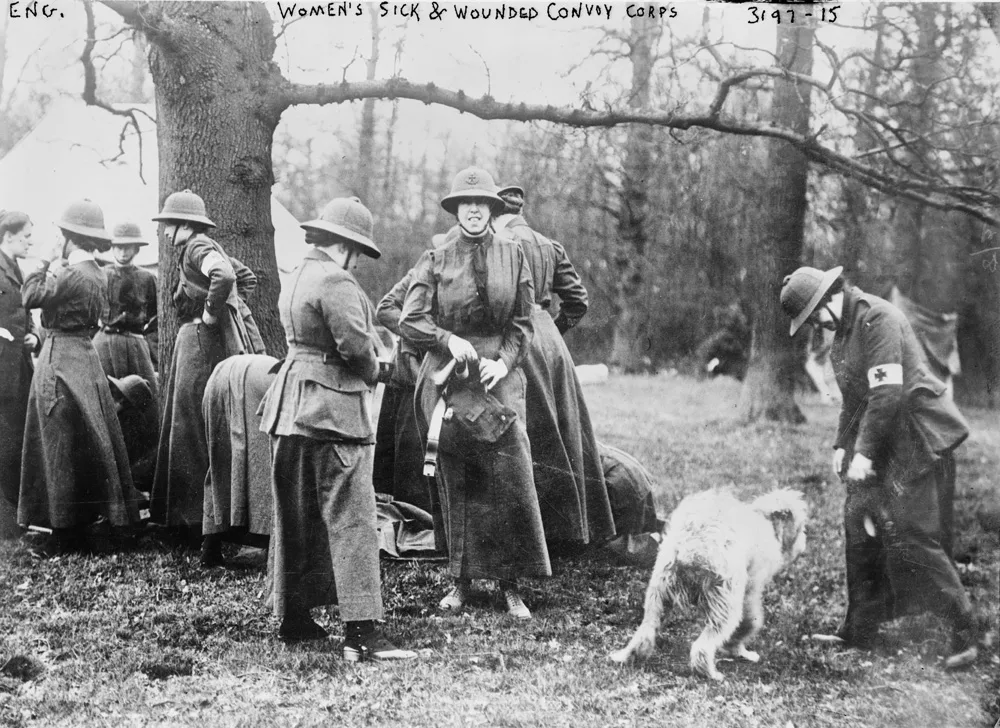
She joined the recently-formed First Aid Nursing Yeomanry, but became dissatisfied with its organisation, and broke away to help form the Women’s Sick and Wounded Convoy Corps (WSWCC).
Training on Studland Bay
By September 1910, 50 women had gathered at Studland for an extraordinary training camp.
Living under canvas in bell tents and marquees, they were preparing for war work few people of the period imagined women doing. Their groundbreaking training was based on Royal Army Medical Corps methods, and included first aid, anatomy and physiology, hygiene and sanitation, signalling, stretcher-bearing and ambulance work.
They learned to ride and care for horses, marched and drilled together, and wore a practical uniform of Norfolk jacket, divided skirt, helmet and haversack.
The intention was serious: if war came, the women would be able to provide first aid close to the fighting and help evacuate wounded soldiers from the front line to hospital.
The sight of dozens of uniformed women drilling on the Dorset coast inevitably attracted attention.
The press descended on Studland, sometimes with a distinctly patronising tone. The Daily Mail marvelled at women living under canvas ‘military fashion’, while reports of their demanding routine travelled much further afield.
But this was no ladies holiday camp. Days began early and were filled with bandaging, stretcher drill, lectures and practical exercises – although there was apparently still time for the entire corps to troop down for a swim in Studland Bay.
Mabel had set out to prove that women could do serious work in wartime. It would not be long before she had the chance.
‘Man’s work’
In March 1911 Mabel married retired barrister John Greenhalgh, and the following year events in Europe changed everything.
In October 1912, Bulgaria, Greece, Montenegro and Serbia went to war against the Ottoman Empire. Mabel saw an opportunity for the WSWCC to put its training into practice and approached Sir Frederick Treves, chairman of the British Red Cross, offering the services of her team to treat wounded soldiers.
Treves, the eminent Dorset-born surgeon, was not receptive. Work near a battlefield, he believed, was no place for women.
Mabel’s response was characteristic: she went anyway.
© Crown copyright. IWM
Her team travelled independently to the Balkans, eventually establishing a hospital close to the front at Adrianople. Supported financially by Mabel’s affluent friends at home, the women worked amid disease, poor sanitation, language difficulties and a constant stream of casualties. The war ended in 1913, but peace was brief.
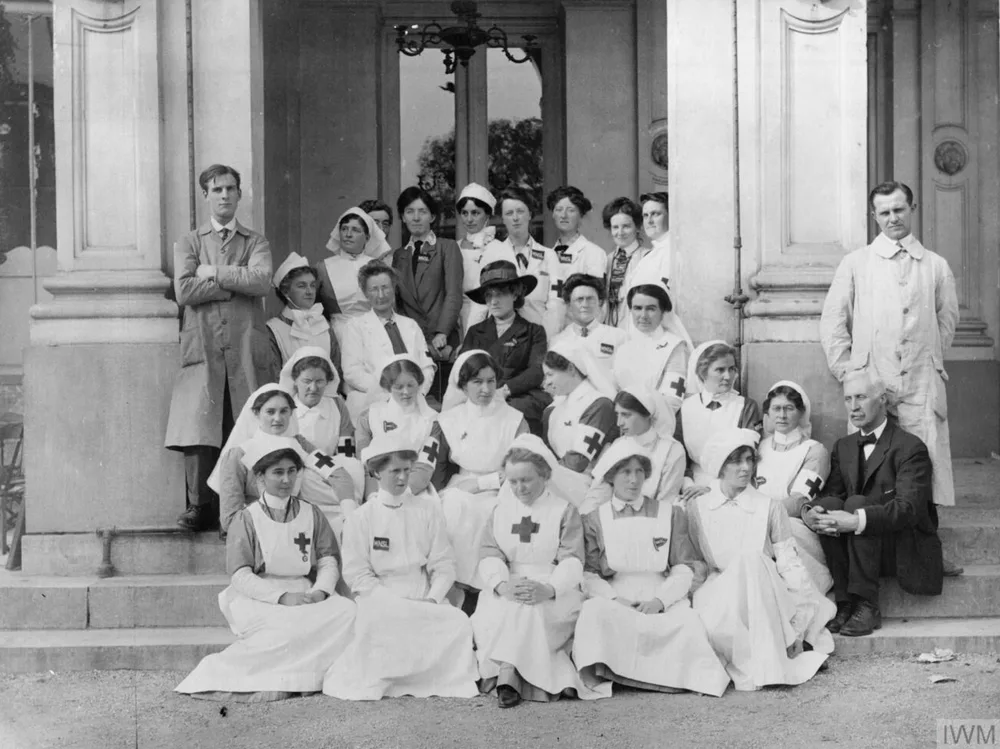
When the First World War began in August 1914, Mabel formed another organisation, the Women’s National Service League (WNSL), and once again offered women’s medical services for frontline work. Once again, she encountered resistance.
And once again, she bypassed it.
Her organisation established field hospitals in Belgium and France, but it was the worsening situation in Serbia that would define Mabel’s wartime service.
Into Serbia
By the spring of 1915, Serbia was not only fighting a war but struggling with a devastating typhus epidemic.
In April, Mabel travelled to the Balkans with a team of female doctors and nurses. Her husband John, by then in his sixties, joined them as treasurer.
They established a tented military hospital at Kragujevatz, south of Belgrade, as well as civilian dispensaries to help tackle the epidemic. Later that year Mabel’s group was appointed to run the First Serbian-English Field Hospital close to the front.
Their equipment included motor ambulances, horses and carts, ox wagons and even a captured Austrian field kitchen.
But by autumn the military situation had become desperate. Serbia, attacked by Austria-Hungary and Germany and then Bulgaria, was being overwhelmed.
Kragujevatz fell in November.
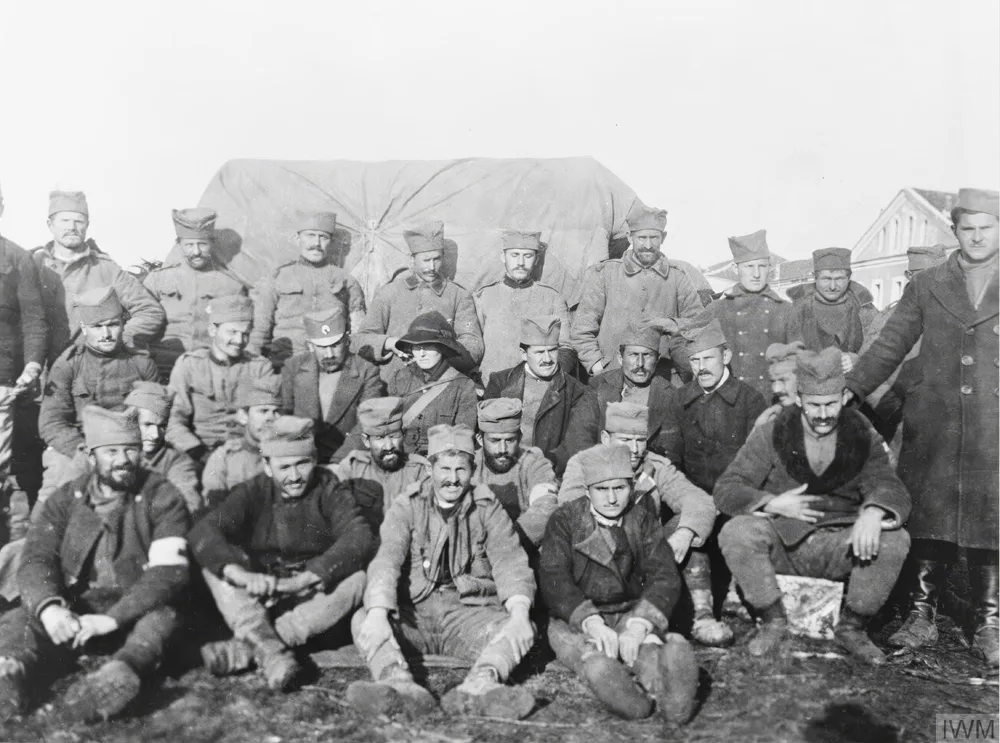
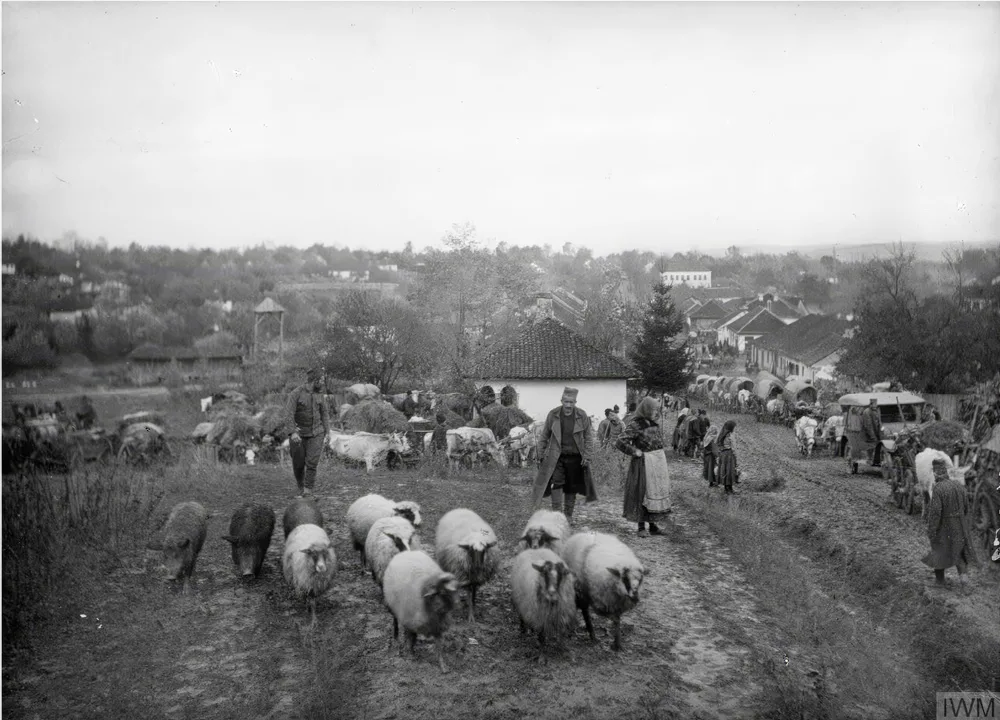
What followed was not simply a military retreat, but a mass exodus. Soldiers, medical units and thousands of civilians began the long journey towards Albania and the Adriatic coast – hundreds of miles on foot and horseback, over rough mountain tracks, as winter closed in. Mabel and her medical team went with them.
© Crown copyright. IWM
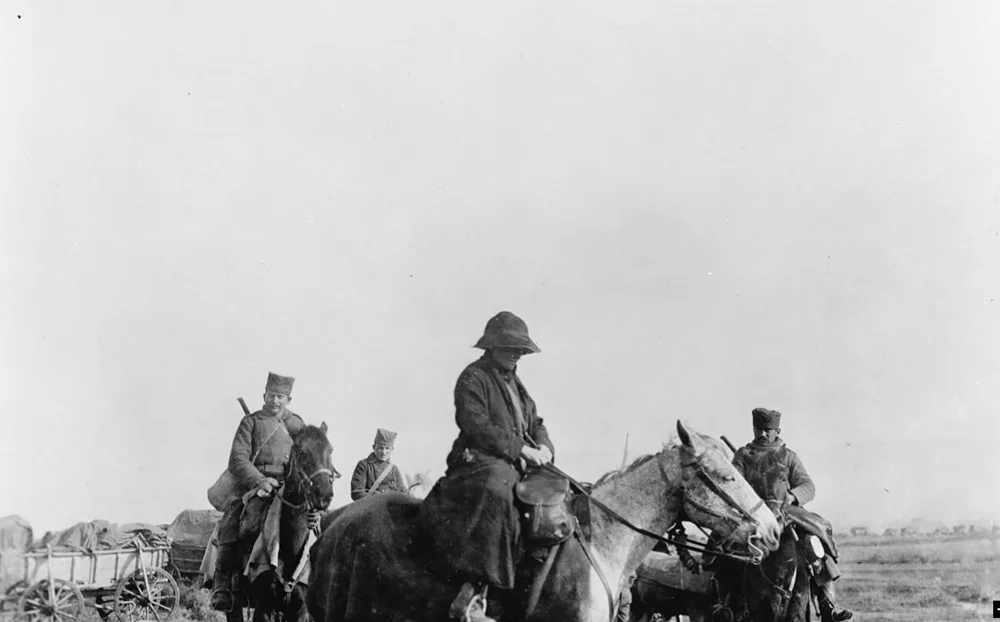
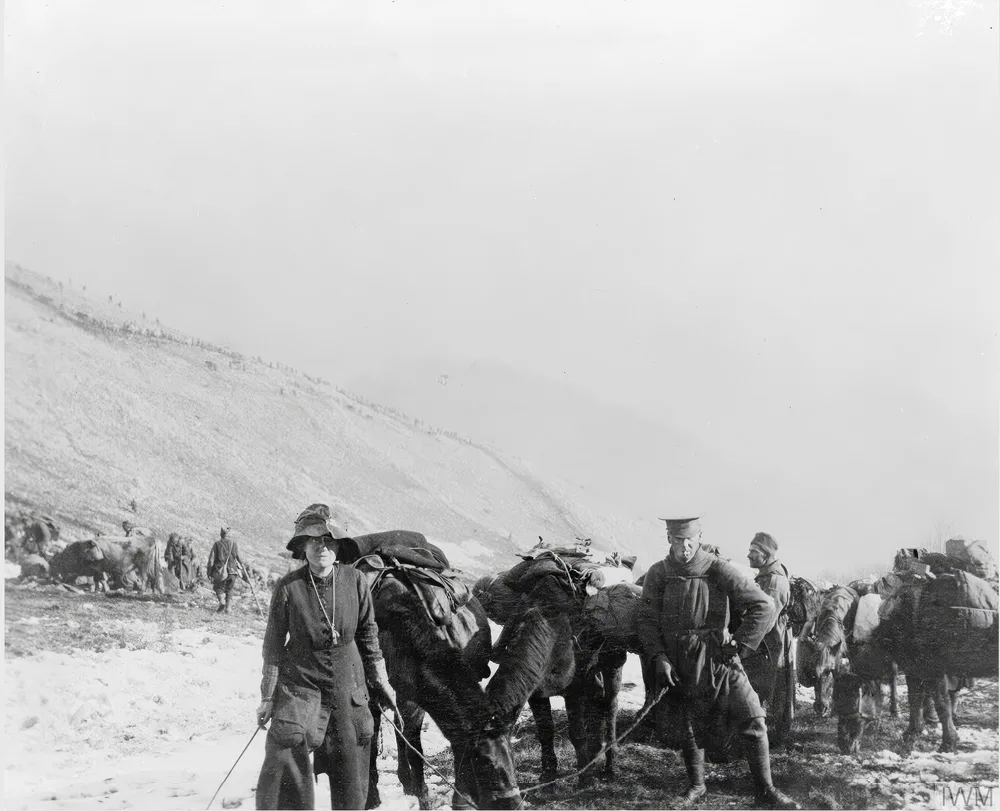
Now given the rank of Major and placed in command of a column, the 53-year-old who had once drilled women beside Studland Bay found herself treating patients with few medical facilities while travelling through mud, freezing rain and snow. Photographs from the retreat show her on horseback among Serbian soldiers and orderlies, an unmistakable figure at the head of her column.
The journey took weeks. Hunger, disease, exhaustion and bitter weather took a terrible toll on those making the retreat, which became one of the great tragedies of Serbia’s wartime experience.
Mabel’s column eventually reached Scutari, now Shkodër in northern Albania, shortly before Christmas.
The Dorset woman who had been told that battlefield medicine was ‘man’s work’ had led her people to safety through one of the most punishing episodes of the war.
© Crown copyright. IWM
A Serbian heroine
Mabel’s work did not go unrecognised. For her determination and bravery she received the Serbian Order of the White Eagle and Order of St Sava, as well as recognition from the Bulgarian Red Cross.
In June 1916 she became a Dame of Grace of the Order of the Hospital of St John of Jerusalem in England. She wrote and lectured about her experiences, with fees from her talks donated to the Serbian Red Cross, and continued campaigning for effective frontline hospitals and nursing provision.
And between her travels, there was still Studland. Mabel and John had their home at Knapwynd, where periods of extraordinary activity were punctuated by quieter spells of reading, walking and swimming in the bay before she left once more.
After the war her interests moved in a rather different direction. Mabel became deeply involved in spiritualism and eventually chaired the Spiritualist Community. Among the friends who attended séances at Knapwynd was Sir Arthur Conan Doyle, himself a prominent believer in spiritualism.
John died in 1928 and was buried at St Nicholas Church in Studland. Mabel continued to divide her time between Dorset and London, travelled abroad and worked on her autobiography, Miracles and Adventures, published in 1936.
Remarkably, she was still swimming in Studland Bay into her eighties. Eventually, growing frail, she moved to a nursing home in Bournemouth. Mabel St Clair Stobart died on 7th December 1954, aged 92.
She was brought back to Studland and buried at St Nicholas alongside John; her two sons also rest there.
Today her name is little known in the country whose expectations she spent so much of her life challenging. In Serbia, however, the British woman who travelled to help during the country’s darkest days is still remembered.
And here in Dorset, the story comes back to where so much of it began: to Studland, where a group of women once camped beneath canvas and trained for a war in which they were repeatedly told they had no place.