

Three Dorset dairy farms supplying one of Europe’s largest dairy companies are at the centre of serious animal welfare allegations following an undercover investigation.
Footage obtained by animal rights organisation Animal Justice Project appears to show cows being struck, sick or lame animals in apparent distress and newborn calves being handled roughly.
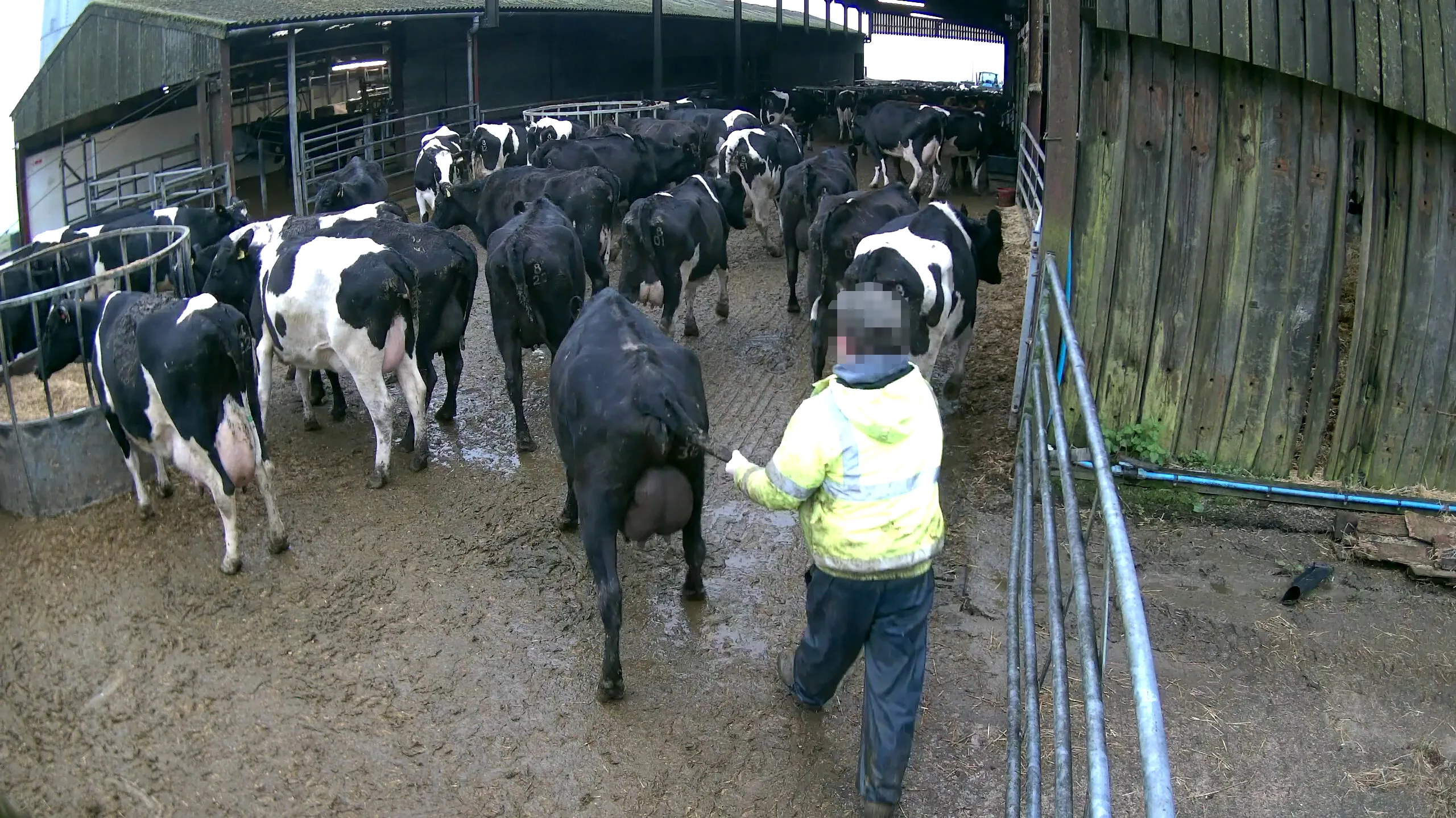
The findings, revealed in a national investigation by The Mail on Sunday, raise an uncomfortable question: when dairy farms are subject to welfare standards, regular inspections and independent assurance schemes, how can such incidents occur – and what can those systems realistically be expected to detect?
Over 11 months, Animal Justice Project (AJP) investigated 16 Arla-supplying dairy farms across England, using undercover cameras at ten sites. Its findings form part of a national investigation called The Big Milk Con. The cameras were installed without the farms’ permission.
Across the farms filmed, animal welfare expert Jenny Mace, commissioned by AJP, identified 360 incidents she assessed as potential breaches of welfare legislation or farm assurance standards. Of these, 129 were recorded at three Dorset farms – more than a third of the total.
Claire Palmer, AJP’s founder and executive director, argues that neither existing audits nor assurance schemes do enough to identify or penalise poor animal welfare. She was also adamant that everything the Project did was carried out legally – saying one of the reasons that this is vital is that when a cruelty case goes before a court (with the support of Trading Standards) all film footage has to be time-coded and accurately recorded.
Asked whether her concern was animal cruelty or the sale of milk itself, she replied: ‘Honestly both. We just don’t believe there’s a humane way of farming dairy cows. We can’t see a place for them in today’s society.’
She accepts that within any industry there will always be good and bad examples. But she’s concerned about what she describes as the ‘widespread’ abuse recorded on the dairy farms within this report.
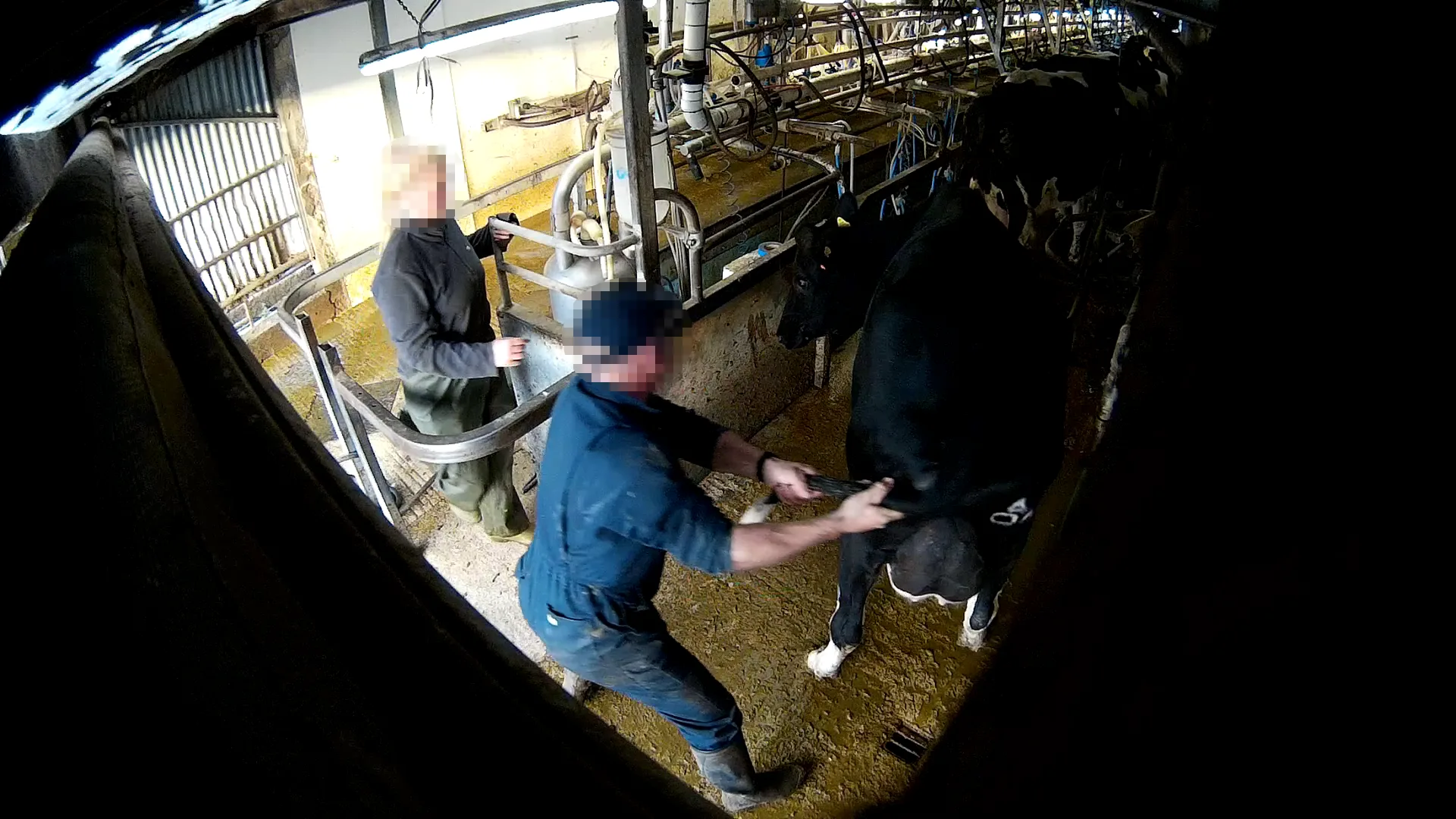
Some of the handling techniques shown in the footage will be familiar to dairy farmers, including physical encouragement to move reluctant cattle: smacking a cow on her hindquarters to move her forward, or lifting her tail to get the same result, for example. But there is a clear distinction between necessary livestock handling and the use of excessive force. Footage appearing to show cows being kicked, struck with metal milking-parlour equipment or subjected to rough handling raises serious welfare concerns. So too do images of visibly sick or lame animals, although the footage alone cannot establish what veterinary treatment they may already have received. Similarly, while assisted feeding of newborn calves is an accepted husbandry practice, it must be carried out safely.
The three Dorset farms that form part of this investigation are:
- Longlands Farm, Frampton
- Littlewood Farm, Frampton and
- Marsh Farm near Bridport.
The two Frampton farms, Longlands and Littlewood, are operated by a farming business associated with George Holmes, who has served on Arla Foods’ Board of Directors since 2024. Previously a member of its Board of Representatives, he is also listed as a director of Beaminster Farmers Ltd.
‘You would surely expect one of the directors of Europe’s largest dairy co-operatives to be running a welfare-friendly unit,’ says Claire. ‘The video footage shows anything but this.’
Footage from Longlands appears to show a worker repeatedly bringing a metal milking-parlour lever down on to a cow’s back while she is unable to move forwards or backwards as she’s surrounded by other animals. There’s also a lot of verbal abuse heard, and AJP claims one calf was ear-tagged just five minutes after birth and removed from its mother 25 minutes after birth. Other footage shows a cow back in the herd with her placenta clearly visible and a sick and under-nourished cow shown struggling to eat.
On the edited footage seen by Dorset Life there are no time codes, so it’s impossible to verify the timings described. AJP told Dorset Life that the cameras were on site for three days only, and that all this footage was captured within that time.
Animal welfare expert Jenny Mace, commissioned by AJP to review the footage, identified 54 cases she assessed as potential breaches of welfare legislation or farm assurance standards across 16 categories at Longlands, and a further 50 across eight categories at Littlewood.
Dorset Life contacted George Holmes for comment and was referred to Arla, which confirmed it had launched an investigation: ‘Animal welfare is of the utmost importance to us, and we take all reports and concerns seriously. We have therefore launched an urgent investigation,’ an Arla spokesperson said. Dairy giant Arla supplies milk and dairy products to Morrisons and Starbucks, as well as to other consumer outlets.
Longlands Farm is reported to be part of Arla’s enhanced UK 360 programme, while Littlewood operates under its standard Arlagården scheme. Arla describes Arlagården as a programme covering milk quality, food safety and animal welfare, with independent third-party farm audits alongside farmer self-assessments.
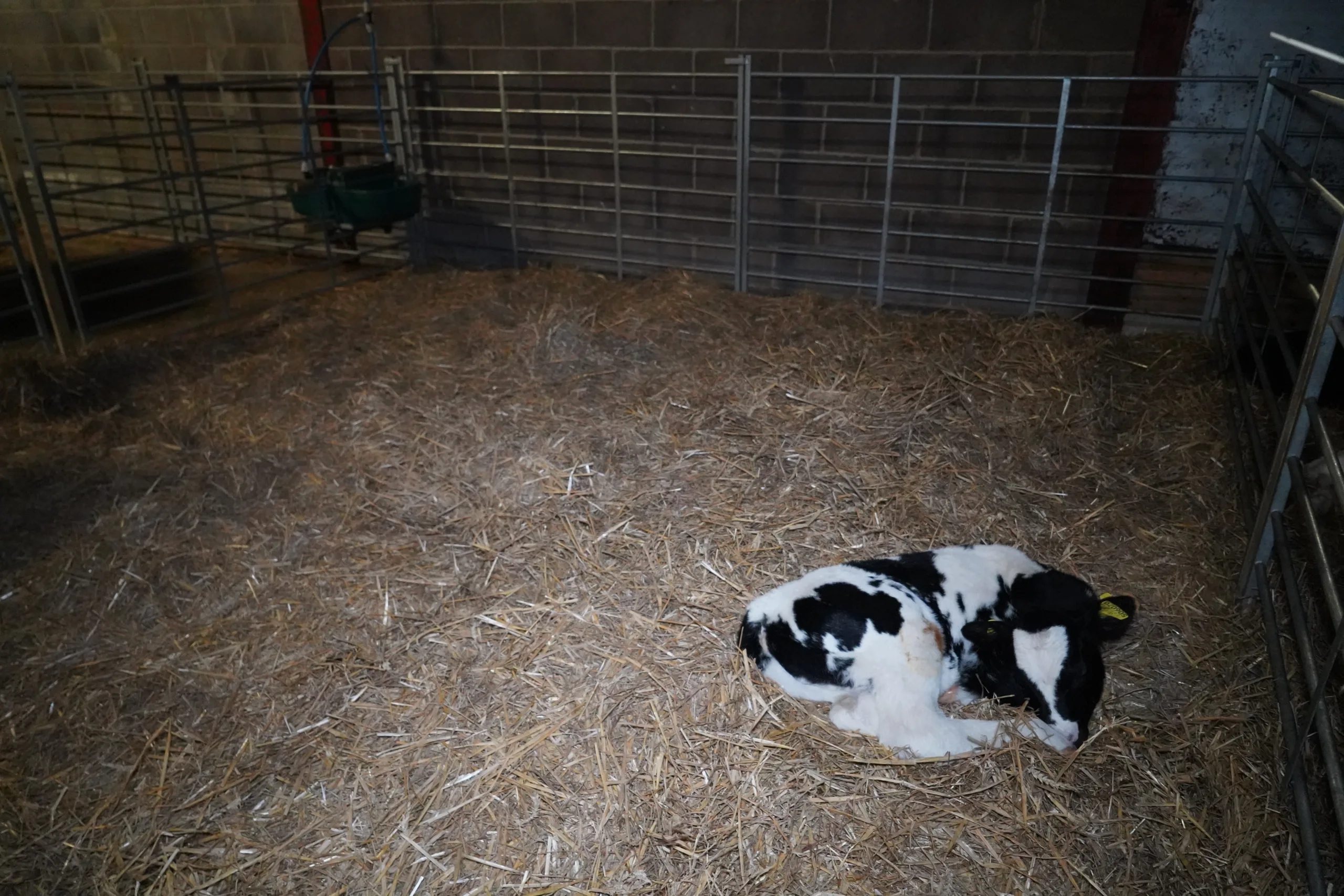
At Marsh Farm, near Bridport, footage appears to show workers dragging and pushing newborn calves. AJP also alleges that a dead calf remained in a wheelbarrow for at least three nights. The farm is operated by Crutchley Farms Partnership, which has previously won awards for its farming practices.
Red Tractor’s dairy standards prohibit handling livestock with excessive force or in ways that cause pain or suffering, and require sick or injured animals to receive prompt attention.
‘The footage we received from the AJP is heavily edited,’ said a Red Tractor spokesperson. ‘We have requested further information, including details of when and where this footage was filmed, but have received no response. Without this we are unable to conduct a meaningful investigation.
‘We’re concerned that Animal Justice Project is using highly edited footage, collected over many months, to construct an anti-farming message. Any welfare concerns should be reported to us immediately.’
Dorset NFU chair Tim Gelfs told Dorset Life: ‘While I haven’t been shown the footage in question, animal welfare is a huge and important issue on farms across the country, and something that should always be of the highest standard.
‘One thing this report does show is the need for us to have better engagement with animal welfare groups. It is vital that we do our best to educate and answer honestly some of the issues they raise in their reports. In many cases there may well be valid, veterinary, reasons why some activities take place, but unless we’re prepared to openly talk about them, the consumer will not understand their importance.’
Farm assurance schemes operate alongside statutory welfare requirements, each examining different aspects of how livestock are managed. Red Tractor says it has around 10,000 dairy members and works with some 350 assessors across multiple farming sectors. Dairy farms normally receive an announced assessment once every 12 months.
Even thorough annual inspections can only provide a snapshot of conditions on a working farm. They can examine facilities, veterinary records, herd health and management practices, but cannot observe how every animal is treated throughout the year. That raises the question at the heart of this investigation. Are existing assurance schemes sufficiently robust to identify poor welfare and address it when it occurs, or are there gaps between the standards farmers must meet and what inspectors can realistically see?
By Sarah Peacocke