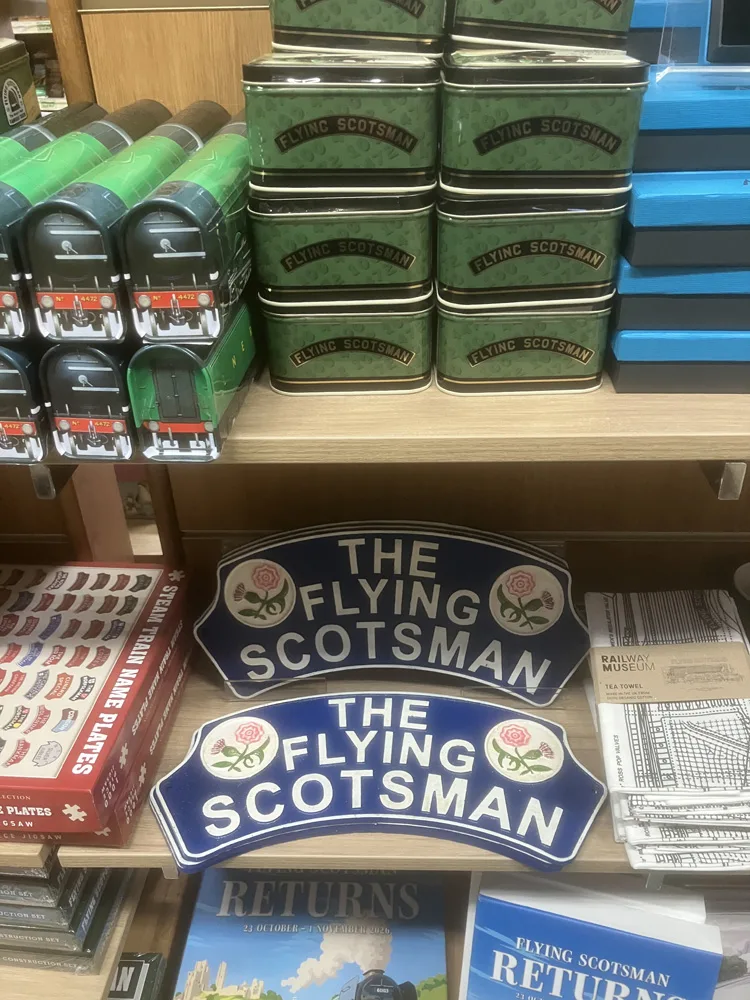
It is packed in the Swanage Railway shop on Saturday, the crowd giddy with anticipation. Forget the storm outside. Cast-iron nameplates at £27 each, boxes of ginger biscuits (£10.90) and fruit jellies (£7.95), all branded with a legendary name, are being snapped up. Because the most famous train ever built in Britain is in town: The Flying Scotsman.
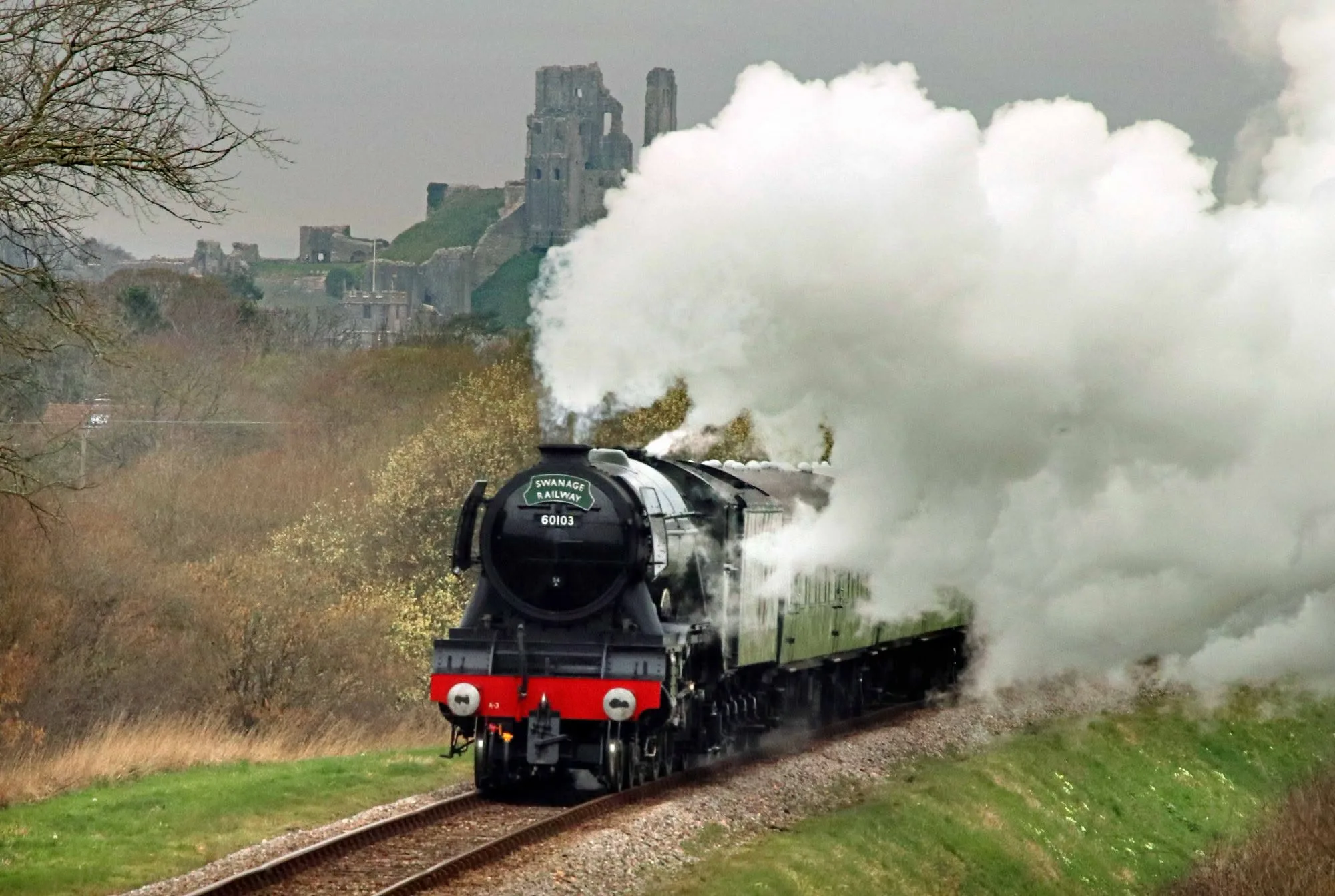
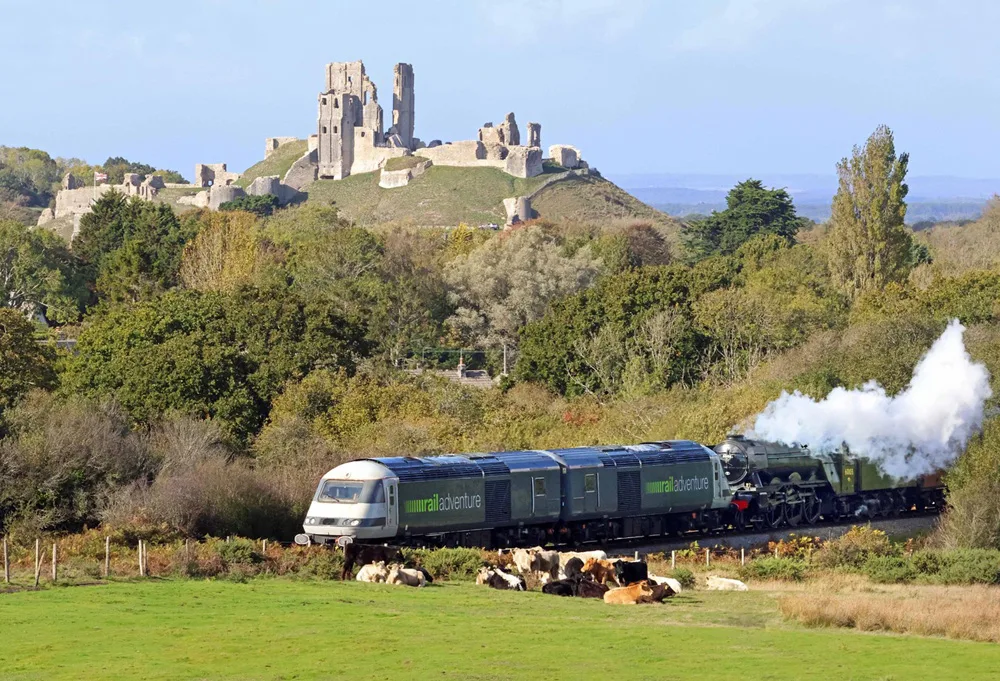
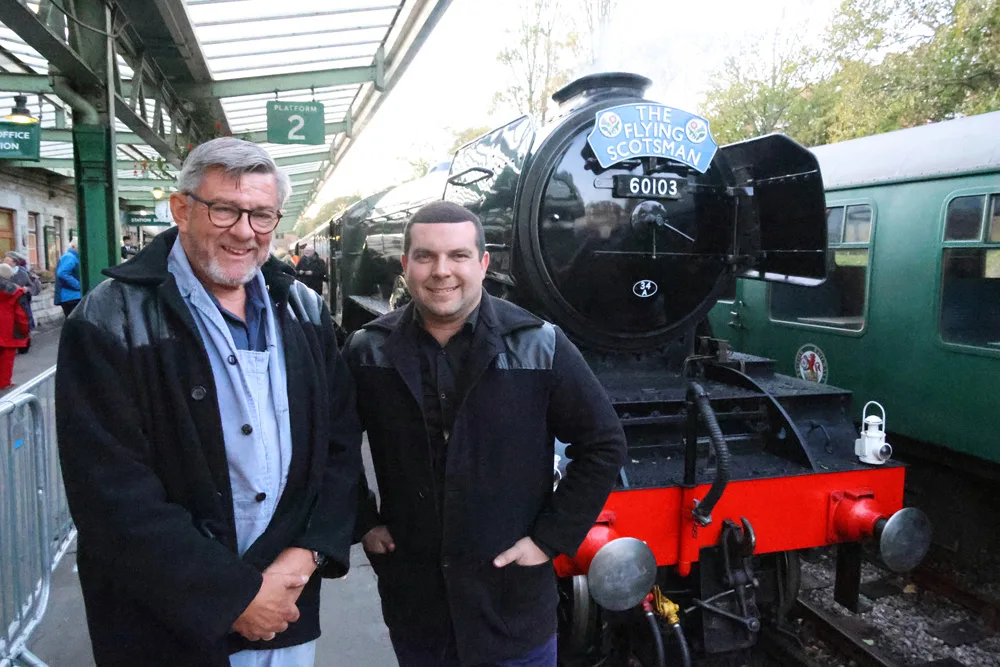
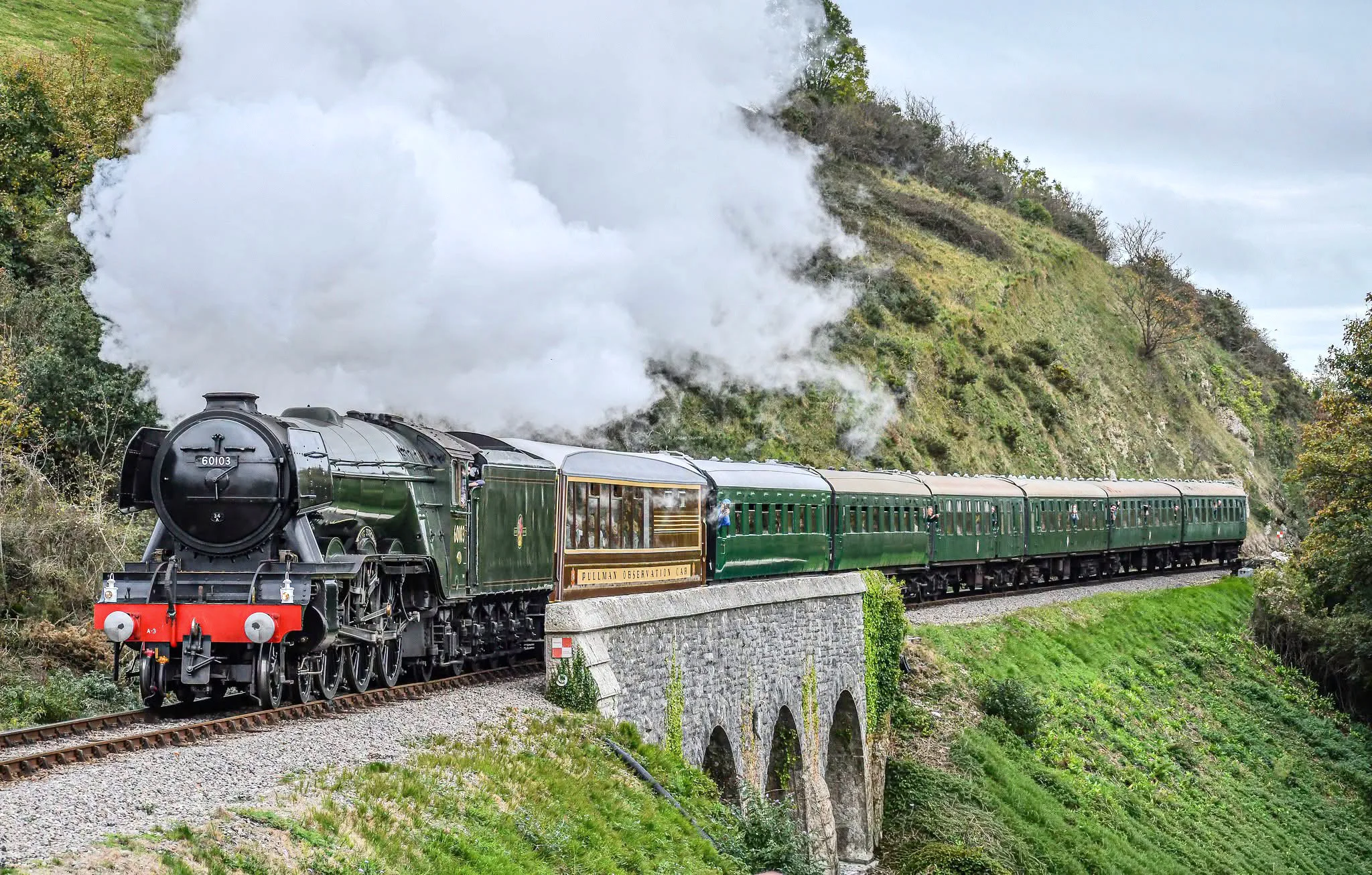
Nothing else on rails pulls a crowd like this. The Scotsman had a rather ignominious arrival in Dorset, towed by a pair of diesel engines from Oxford. But now, shimmering in the shadow of Platform One, the imposing apple green leviathan is ready to roll, pulling seven carriages on a one-hour round trip via Corfe Castle to Norden.
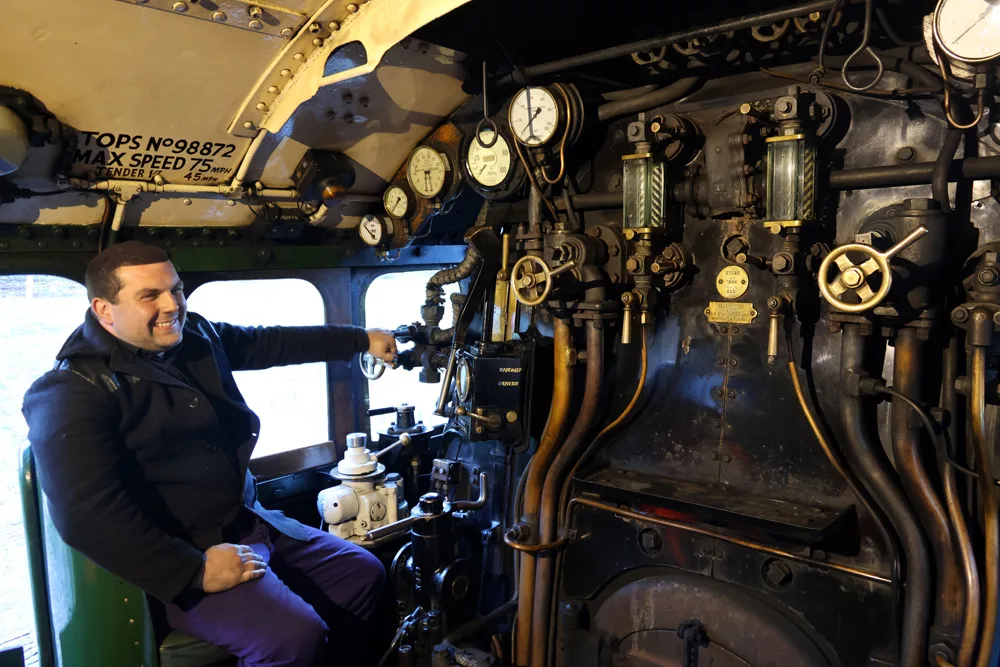
The luck of the rota sees Josh Voce, aged 34 and from Salisbury, step up to the plate for the first run. It’s his 10th year as a volunteer at Swanage, four years driving. How big a deal is the Flying Scotsman’s visit? ‘It’s HUGE. The money it brings in will help with projects next year and it promotes and enhances the reputation of Swanage.’
Today he’s joined by veteran Kevin Potts, from Poole, who will be shovelling in the coal. And there’s a third crew member, from The National Railway Museum in York, home to the Scotsman. ‘We know our line, all the twists and turns – but he knows the engine.’ says Josh. The locals also know the speed limit: the Scotsman can do 75mph, but the Swanage Railway limit is 25mph.
It’s going to be a gentle potter, perhaps with a breakfast of a croissant and fizz or, later, afternoon tea. Perhaps a gin or rum experience, even a private compartment for six – or simply a seat and a gaze out of the window. It all depends on your budget. The Scotsman is in town for 10 days, until November 1 – five steaming up, and five static days on the platform but open to explore.
The last carriage is Devon Belle Car 14, built in 1917 to carry wounded soldiers in World War I. It later served on the London-Devon route and ended up as a café on a San Francisco quayside before being repatriated by Swanage Railway in 2007. Today it’s a beautifully restored observation car with bar – last month it hosted a wedding. It won’t be the last.
Britain does castles, cathedrals and canals well … but alongside The Flying Scotsman, perhaps only SS Great Britain in Bristol Docks resonates as much in celebrating our industrial steam heritage. And the engine, now 103 years old, is still on the move.
Not many heritage steam lines get to welcome the icon, and this is the fourth time Swanage has played host, following visits in 1994, 2019 and 2022. There is a range of clothing in the shop – hoodies, T-shirts and baseball caps welcoming her back. She’s here in 2026 because it is the line’s 50th anniversary … and things are on the up after some rocky years.
In 2023, the financial forecast post-Covid for the Swanage Railway was so poor that insolvency was considered likely. The coal price had doubled, energy costs soared and there were fewer visitors. Redundancies followed, and operations reduced to running just one steam train a day. A plan to run scheduled commercial services, connecting to mainline railways at Wareham, was also paused.
A three-year plan for change has replaced the former structure, with The Swanage Railway Company emerging as a single charitable organisation. Registered by the Charities Commission in August, the paperwork will be complete by January – the company can now claim Gift Aid, apply for Lottery funding and other grants and reduce business rates by 80%.
There are currently nine trustees, each with their own skill sets (law, accountancy etc,) and role in the company. Sean Butler handles sales management and is very positive about the future. ‘We have returned to the passenger numbers last seen before Covid, about 210,00 passengers a year. We’re happy to see it come back – and next year will go beyond that.’
Kevin Potts, the fireman who is also the line’s Operations Director, says it’s the biggest change in the railway’s history. ‘It’s like letting an F1 car out the box and letting it go. With charity status, we can go and do an awful lot more. Not just the money, it’s about inspiring people.’
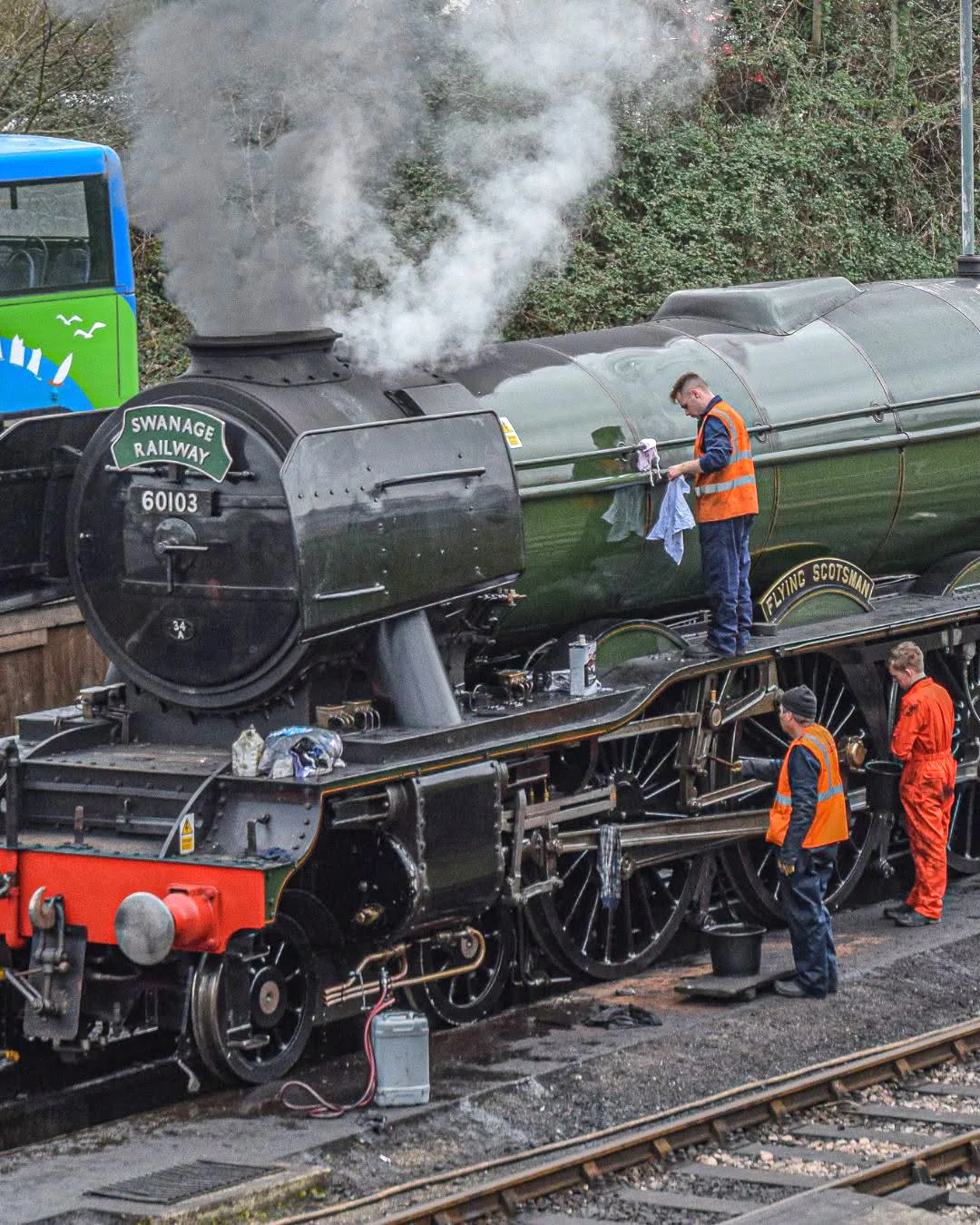
The line is a vital part of Purbeck’s community: the second largest employer in the region, it has 50 employees and 450 volunteers. The annual turnover is £4m, with profits in 2024 of £760,000. Such is the interest in the line’s turnaround that other heritage lines have been to visit and learn more, including the North Norfolk and West Somerset lines. Says Sean Butler: ‘All are looking to restructure, to make things better – and they see us as leading the way.’
As always, there are tons of projects on the go. Work is needed on bridge infrastructure, while a reverse osmosis plant installation in 2027 will remove impurities in boilers, extend their life and save significant volunteer labour – such as scrubbing out thick layers of rock-hard calcium scale every few weeks.
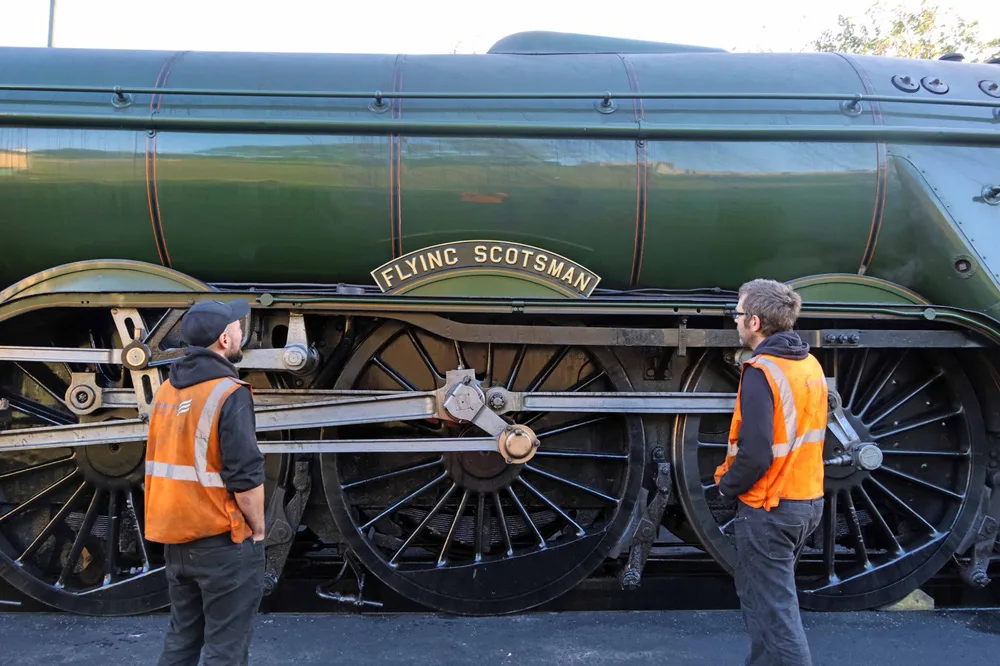
A new education centre is also planned in a former carriage. And that ties in with the inspiration part, of keeping the kids interested and encouraging wider community support and interest. In its submission to the Charity Commission, the company replied to the question Who Does the Charity Help? – ‘The general public and mankind.’ But are the kids still interested? Back to Josh, fresh off the footplate. ‘Yes! Most of our passengers in the summer is families, and you always get children wanting to come up, touch the engine.
‘There is amazement on their faces – and that’s where we can inspire the next generation to take on the skills we have now. That’s one of the most important things, not just the finance, it’s the rest of it as well – to want to get involved, to keep steam alive and just keep it in a good place. Steam is in good hands.’
Indeed, there is a youth volunteering group at Swanage Railway, the Sygnets, for kids from 13 to learn and take part in the running and operation of a heritage railway. Running since 1997, they meet once a month on a Saturday with adult volunteers, some of whom are ex-Sygnets.
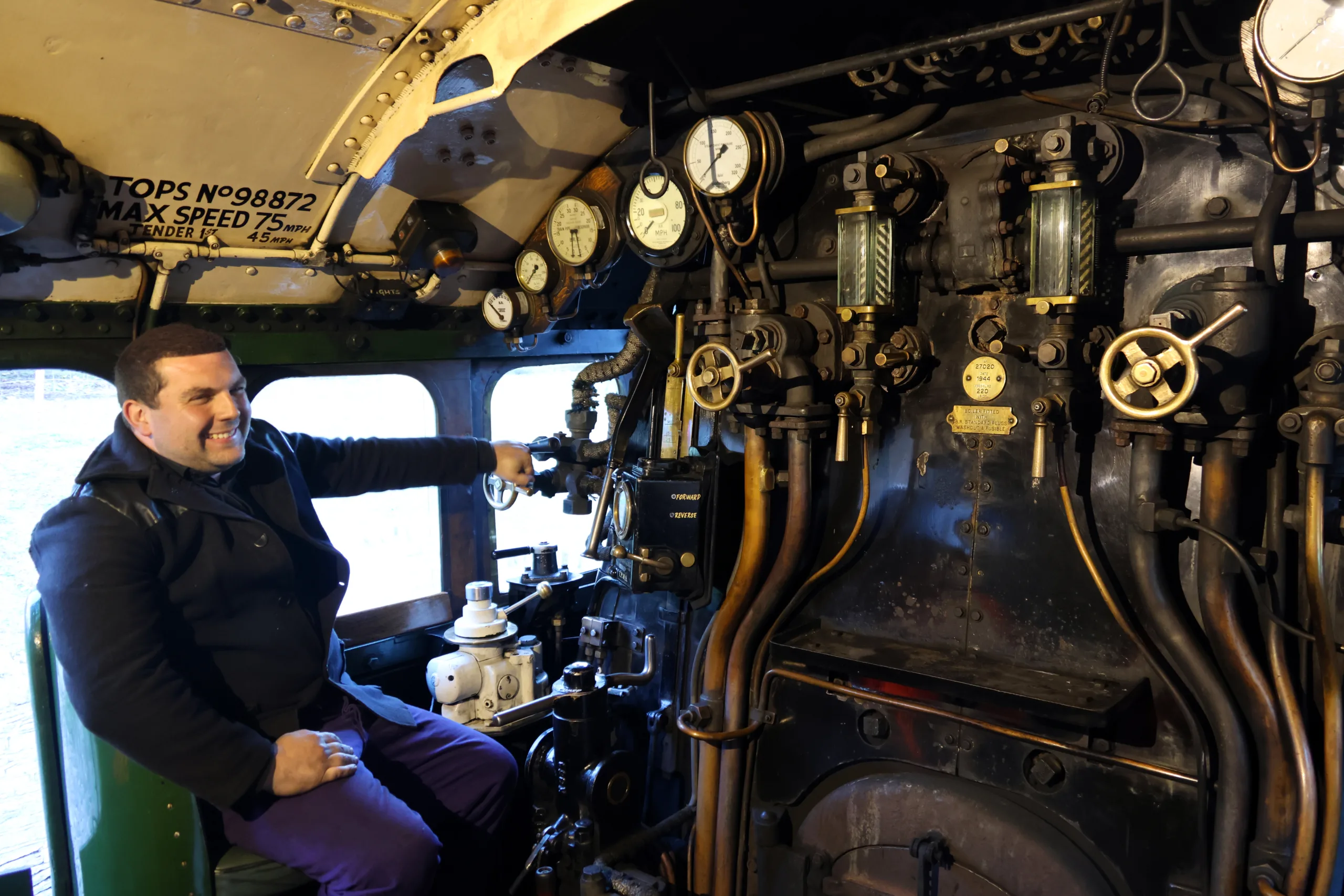
Adds Josh: ‘Sygnets is very successful. There is a waiting list. They can get their hands dirty at times – it’s very controlled at that age but they can do. They’re working on wagon restoration at the moment. The idea is to inspire them to become a signalman, a guard or a driver, working on the station’s portering etc, because we need all roles.
‘The footplate is the glamorous side – but while there are some people working on the footplates, some are working by washing the dishes or in hospitality and catering. Every role is vital.’
Tickets to ride the Scotsman – or simply board it on static days – are still available. The remaining excursions are on October 25, 28, 29 and November 1. Platform static days are October 26, 27, 30 and 31. Prices vary by package: standard return travel is £49 per person, premium £55. Under 5s free. Book at swanagerailway.co.uk/flying-scotsman-returns
By Steve Keenan