

Think a day at the races requires a working knowledge of form, a substantial betting budget and the sort of wardrobe that involves feathers? It really doesn’t. Editor Laura discovered Wincanton racing rather late in life – here’s what she wishes someone had told her before she went.
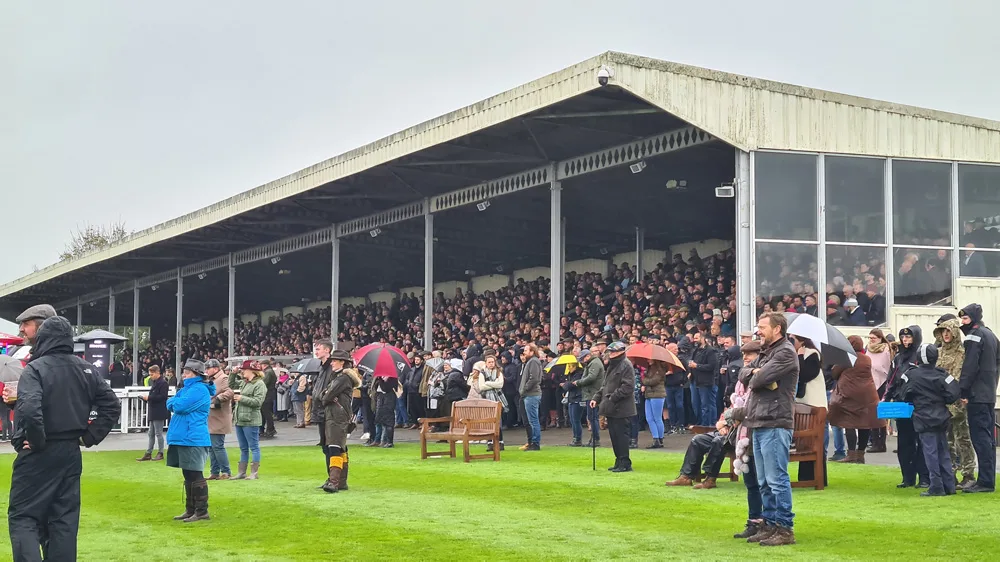
There is an odd problem with horseracing. Everyone knows what it is, most of us have watched the Grand National and we all understand the basic principle – horses run, fastest one wins.
And yet, if you’ve never actually been racing, walking through the gates of a racecourse can feel oddly … intimidating. What do you wear? Are you supposed to bet? What’s a paddock? How do you know which horse to pick? Is everyone else going to know what they’re doing while you wander around clutching a racecard upside down?
I know this because I was that person. My first visit to Wincanton Racecourse was on a spectacularly wet and windswept November day in 2022. I knew precisely nothing about racing. I had always assumed it belonged to other people: racing people. Country people. People who actually understood what ‘odds’ were.
So, with Wincanton beginning its new season next month, here is the Dorset Life’s Genuinely Useful Beginner’s Guide To Racing I could have done with.
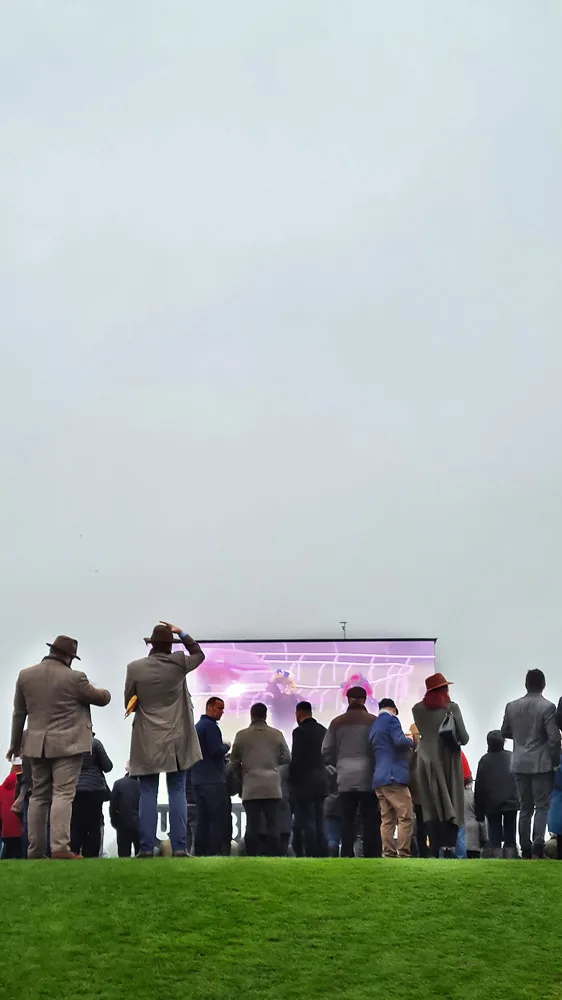
First: you don’t need to know anything about racing
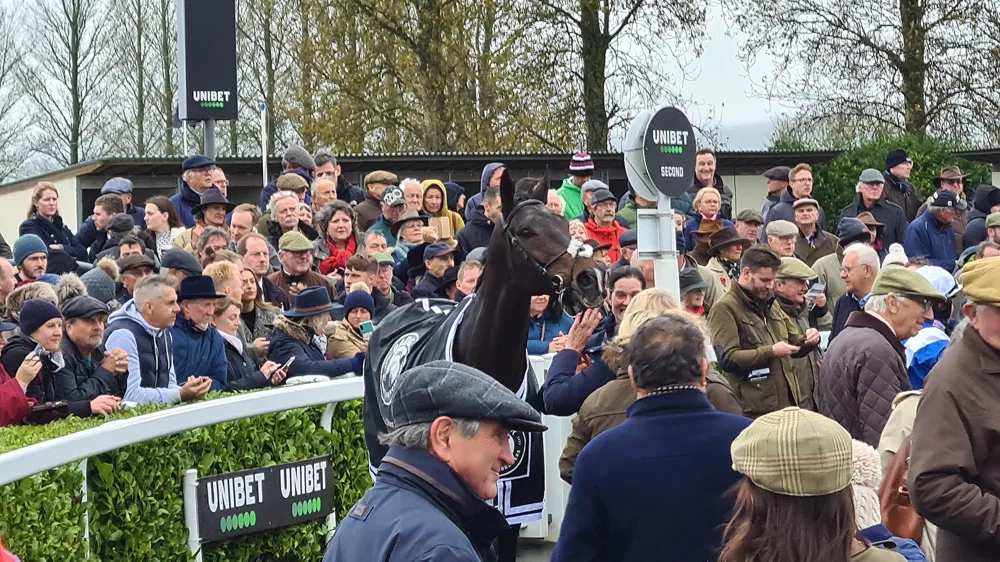
Honest. Nobody tests you at the gate. The easiest way to understand your day is simply to follow the horses. Before each race they come into the parade ring – you may hear people call it the paddock – where you can see them walking around before the jockeys mount.
Go there. Even if you couldn’t identify a fetlock in a police line-up, this is one of the best bits. Thoroughbred racehorses seen at close quarters are astonishing: lean, glossy, powerful athletes fizzing with barely contained energy. Just pick one you like. That’s a perfectly legitimate beginner’s system.
Then, when the jockeys mount, follow the general migration towards the track. Find somewhere to watch and wait.
You have now successfully gone racing.
Do I have to bet?
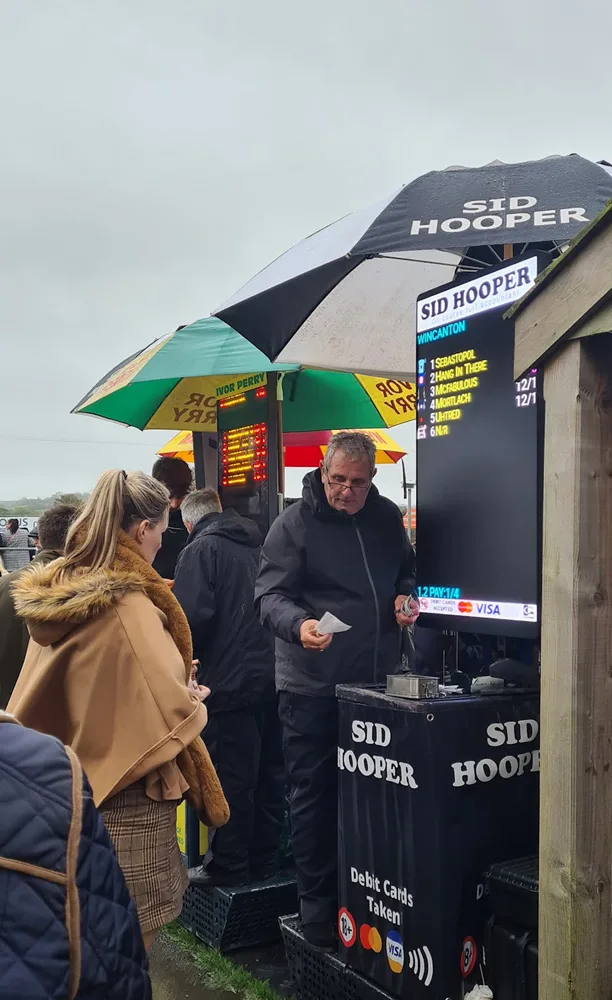
No. This seems obvious once you’ve been, but I genuinely thought betting was somehow integral to the whole thing. It isn’t. You can spend the entire day watching the horses and never hand a bookmaker a penny. And if you want to have a flutter, you don’t need to stride confidently towards a bookie and start barking mysterious numbers.
You can bet a couple of pounds. You can ask for help. You can choose the favourite because everyone else seems to think it will win. You can choose the grey one. You can choose the horse with the excellent name. Literally nobody cares.
On our first visit we spent more on coffee than gambling – and still had the ridiculous satisfaction of collecting a tiny amount of winnings … before promptly losing them again on the next race.
What do I wear?
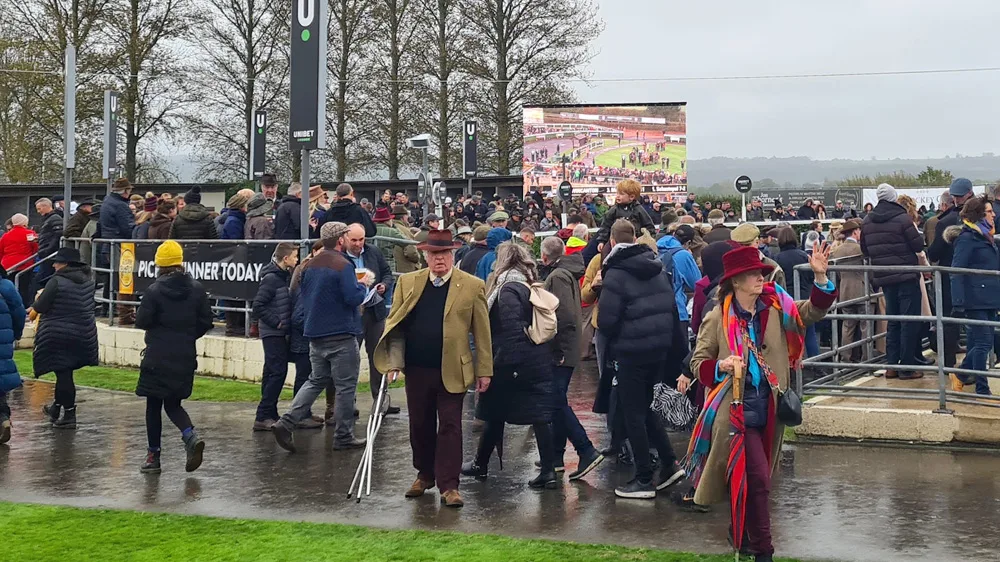
This is probably the question that stops more first-timers than it should. For an ordinary day’s racing, the answer is basically clothes. Yes, you’ll see tweed. This is Somerset and Dorset; you’ll see tweed in Tesco. You’ll also see jeans, trainers, boots, smart coats, battered Barbours, dresses, suits and people who have plainly made considerably more effort than you have.
The most important thing is the weather. Racecourses are exposed places and you will beoutside: this is not the moment to discover that your beautiful new coat is neither warm nor waterproof. Comfortable shoes are sensible too. You’ll walk more than you expect. Wellies are perfectly acceptable – although I was reliably informed that the racing world may distinguish between your Aigles and your basic green Dunlops. Still, nobody’s going to throw you out for wearing them.
Isn’t Ladies Day different?
A little – and that’s part of the fun. Wincanton’s first big meeting of the season is Badger Beer Ladies Day on Saturday 7th November, with seven jump races including the Badger Beers Chase, plus live music and Style Awards for the best dressed.
So yes, if you’ve been waiting for an excuse to dress up, this is it. But ‘Ladies Day’ doesn’t mean you have to arrive looking ready for Royal Ascot. Apart from anything else, Ascot’s held in June, not November. A great coat, good boots, a dress or smart trousers and something fabulous on your head will do nicely. Equally, if elaborate millinery is not your natural habitat, don’t let it put you off.
My one piece of hard-earned November racing advice remains: dress for the weather first and Instagram second. Cold feet can destroy glamour remarkably quickly.
What’s the racecard for?
Buy one. Initially it will appear to contain approximately the same amount of comprehensible information as an aircraft maintenance manual.
Don’t panic.
It tells you which horses are running in each race, their jockeys and trainers, what weight they’re carrying and information about their recent form. There’s usually a key explaining the mysterious strings of numbers and letters.
You don’t need to understand all of it. Use it to know what’s running next, pick out the horses you’ve just seen in the parade ring and gradually you’ll start making sense of the rest.
And then there’s the actual racing
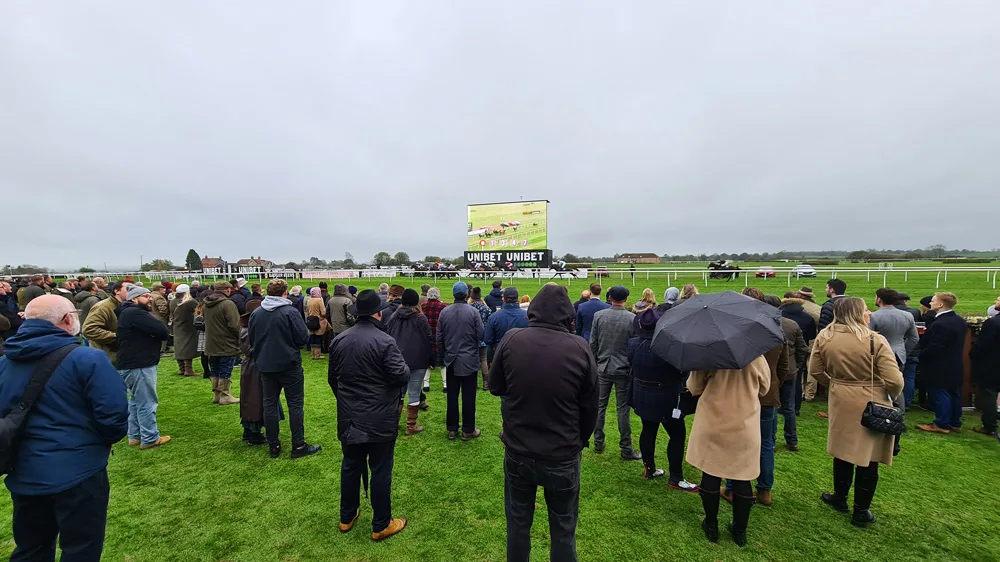
Television makes horseracing look strangely distant. You see the whole course, the graphics, the odds, hear the commentary … but what television doesn’t give you is the physical experience of a field of racehorses coming towards you at speed.
Stand down by the rail at least once. You’ll hear them before they reach you. Then they thunder past just a few feet away, the crowd starts roaring and, whether or not you knew or cared which horse was favourite five minutes earlier, suddenly you’re yelling with everybody else. That was the moment – that was when I got it.
Is racing actually for me?
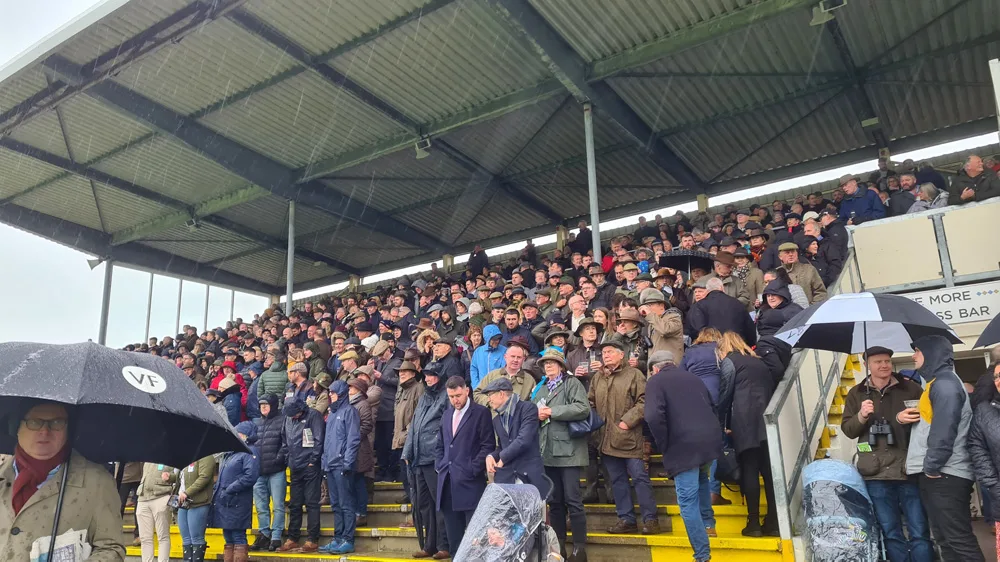
Possibly. That’s the point. One of the biggest surprises on my first visit was the crowd – if I’m honest, I had made assumptions about ‘racing types’. Instead there were farmers in workaday tweed, groups of 20-something friends dressed to the nines, older couples, serious-faced racing enthusiasts and plenty of people apparently there simply because a day out with horses, food, drink and friends sounded like a good idea.
And don’t worry about looking like a newbie. Racing people, we discovered, are surprisingly generous with their knowledge – if you’re baffled, just ask someone who looks as though they know what they’re doing.
So here’s your plan: go to the parade ring. Pick a horse. Watch it run. Have a bet if you fancy one. Don’t if you don’t. Find something good to eat. Ask somebody if you don’t know where you’re going. And when the horses come down the home straight, get close to the rail.
By the time the first field has thundered past you, you probably won’t need the beginner’s guide any more.
thejockeyclub.co.uk/wincanton