

The new planning reforms promise faster decisions and more homes, but they will also reduce the number of applications decided by elected councillors. In rural Dorset, that shift could have consequences far beyond the planning office
England’s planning system is changing on several fronts. A revised National Planning Policy Framework was published in August, while separate reforms to planning committees will require more planning applications to be decided by officers rather than elected councillors. The aim is to speed up decision-making. But what does that mean for local democratic oversight?
How planning works now
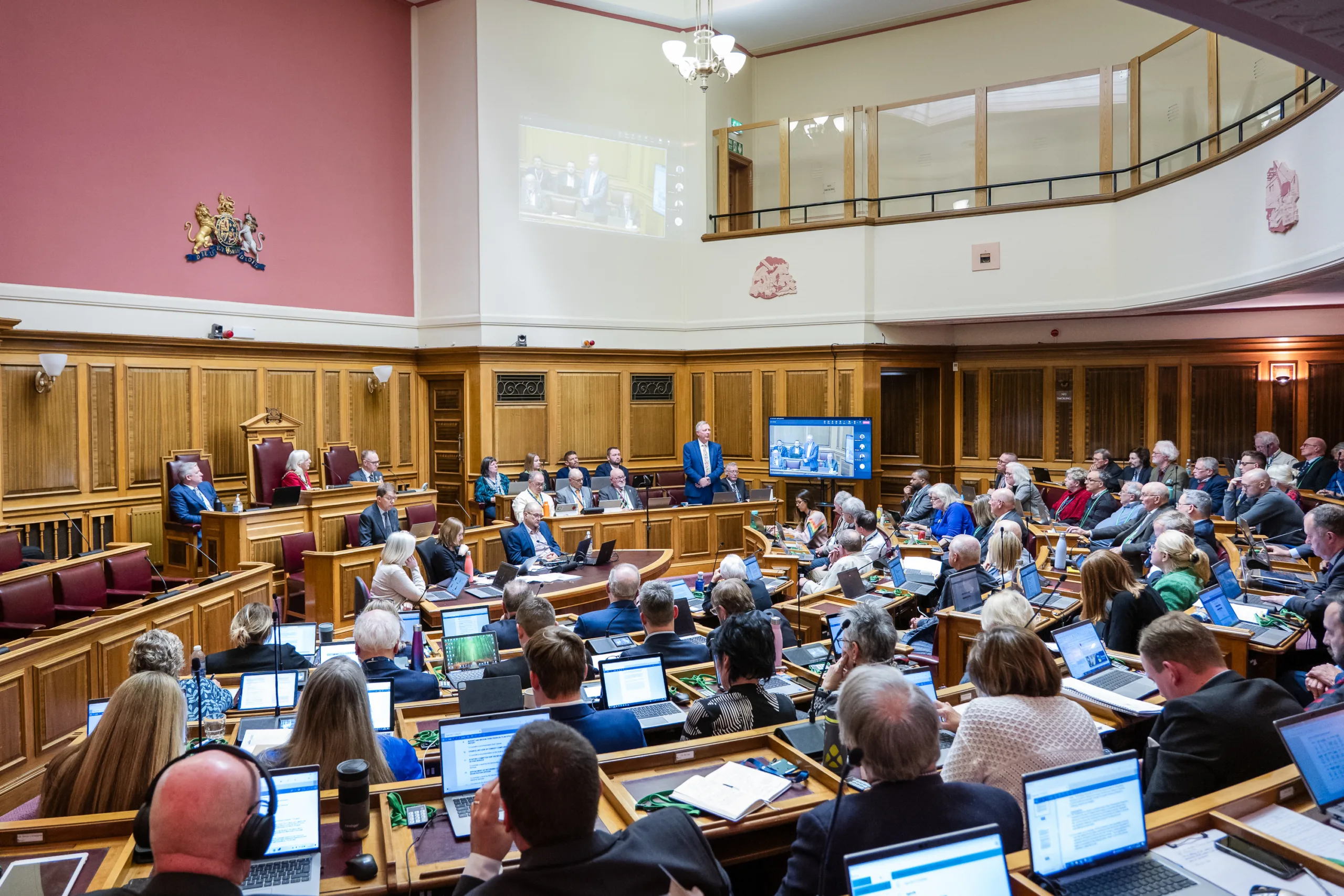
Most planning applications are already decided by professional planning officers rather than elected members of Dorset Council’s planning committees. Parish and town councils can comment on applications, but they do not make the final decision. Very few applications actually get heard at a council planning committee meeting – because a lot are straightforward, and don’t need a committee to sort them out, just the expert eye of a planning officer.
The Government, however, aims to speed up the planning process so more homes can be built. But how will that work in reality?
One of the biggest changes concerns how small developments are decided. Applications for between one and nine homes on sites smaller than 0.5 hectares will be decided by planning officers rather than going to committee. There will still be the period of consultation, but the final decision will be taken by a single planning officer. While that can speed up decisions, could the new threshold encourage developers to bring forward adjoining sites as a series of smaller applications rather than one larger scheme? And could that make cumulative development harder to assess? Will we see more development creep where we would have once seen a single, cohesive large housing plan?
Nine homes may be relatively modest in a larger urban setting, but in a rural community they can represent a significant development. However, in a small village, a development of fewer than nine homes could be the perfect fit. And the new planning framework states that homes being built in rural areas should be sympathetic to local character, landscape setting and design. There’s also support for barn conversions and regeneration of brownfield sites.
More local discretion needed
Dorset Council opposed aspects of the reform during consultation, arguing that councils should retain more discretion over which applications go before elected members. The authority accepts that fewer applications will now reach committees but says it will continue referring cases where the regulations allow: ‘Dorset Council is committed to ensuring that our planning committees continue to have a crucial role in key planning decisions affecting Dorset,’ a Dorset Council spokesperson told Dorset Life. ‘We did not support some of the changes, particularly as we felt that more local discretion was needed. Our aim will be to ensure the planning committees continue to determine applications where it is the rightful place for the decision to be made’

How democratic is it?
If more decisions are being made by planning officers, where does that leave elected councillors – the people we voted for to make decisions on our behalf? Dorset Council says that parish and town councils will be able to contribute as they always have done. The public will also be able to comment on planning applications via the planning portal. However, with fewer plans coming to a planning committee, elected councillors will inevitably make the final decision on fewer applications.
‘It is too early to tell how the new regulations will work in practice,’ a council spokesperson told Dorset Life. ‘It is a matter of public record that our elected members have a concern that the new regulations diminish Dorset Council’s discretion. This should be a local decision, not one dictated by Government.’
Another significant change is the power given to regional mayors under the English Devolution and Community Empowerment Act. A regional mayor will be able to call in a significant development (one of potential strategic importance) to approve or refuse – the proposed threshold includes schemes of more than 150 homes. Dorset currently has no regional mayor, so unless its governance changes it would not have this additional layer of strategic planning intervention which is available in mayoral areas.
The new framework also puts much greater emphasis on building around well-connected railway stations. Within around 800 metres, roughly a 10-minute walk, minimum housing densities of 35 homes per hectare will apply, rising to 45 around the busiest qualifying stations.
But the definition is tightly drawn: stations must sit within one of England’s top 80 Travel to Work Areas by economic output and meet minimum service-frequency requirements. That means most Dorset stations such as Dorchester, Sherborne and Gillingham do not currently qualify.
Professional vs elected
Residents will still be able to comment on applications, and parish and town councils will still be consulted. But on a wider range of applications, the final decision will now sit with a professional officer rather than elected councillors.
For Dorset Council, which argued for greater local discretion, the real test will come after the new delegation rules take effect this autumn. Whether the gain in speed is worth that reduction in local discretion is the question Dorset will now have to test in practice.