

After missing SFI24 and successfully navigating this year’s six-hour scramble, George Hosford argues that the problem is bigger than the size of the pot
Dad used to tell me there were subsidies for fertiliser many years ago. I checked – by 1961–62, the fertiliser subsidy alone was costing the taxpayer around £33 million, out of agricultural production grants of more than £100 million.
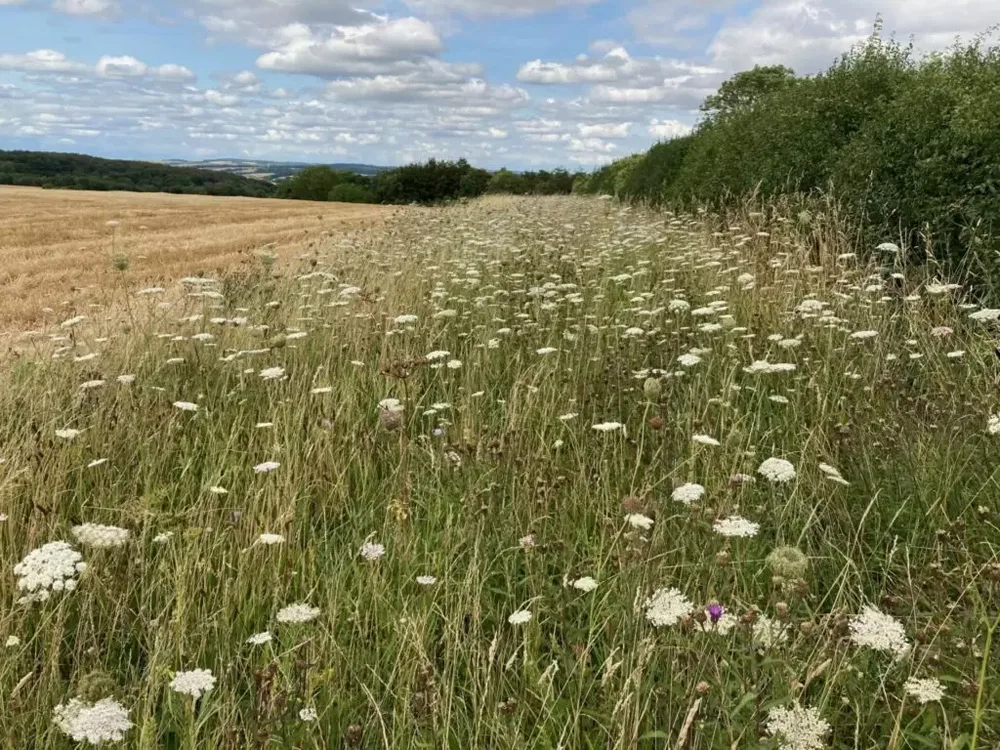
He loved to tell visitors, when standing on our ‘Conservation Piece’ field, how back then he was also offered grants to push out hedges and plough the valley from one side to the other. This area is now rich with hedges and wildflowers – because he declined the grants and we farmed it to preserve and enhance the flowers and hedges ever since. I should point out we are not saints – it is very steep, with thin soil, and would never have yielded much!
A blunt instrument
All of which leads me to the latest SFI saga. The Government needs to target its SFI options much more carefully. They think that because they can automate the whole process it is far more efficient. What they miss is that there is no quality control whatsoever. The system seems to have been designed so applications that meet the requirements will be accepted until the money has gone.
This really does mean Fastest Finger First wins – as long as you have done your homework, your field maps are correct and you don’t have the remnants of an old scheme still lurking on the RPA system … That is what mucked us up last year, contributing to the delay that eventually killed our application when SFI24 closed suddenly on 11th March 2025.
The system doesn’t for a moment mean that the best applications get funded. Only the fastest.
There can be a huge gap between what best suits any one farm environmentally, and the ability of the farmer to spot which of the 71 SFI options will give the best environmental gain for the money – as well as the best financial return to the farmer for the least hassle. Which is only human nature, after all.
It is a pretty blunt instrument.
Many farmers are not knowledgeable enough on their own to know what will best improve their farm ecologically, and therefore which options they should apply for. But in the desperate search for money to replace BPS, they will inevitably look for what they think will be easiest to comply with, at the least cost and maximum income.
You may now be saying the rules need to be tighter.
I would agree.
To ensure the rules are observed would be quite expensive, requiring many inspectors, but surely it is sensible to make certain the options being funded really will make a difference to depleted nature and to soil, water, hedgerow and woodland ecosystems.
We weren’t getting caught twice
Because we got our fingers badly burnt last year by missing out on SFI24, we invested a lot of time in making sure we optimised our application this time.
We ensured the maps were correct. We used the bush telegraph, local knowledge, FWAG and anything else we could.
The word was going around that, because Window 1 had opened at 10am, there was a good chance Window 2 would do the same. And so it did.
And we were ready and waiting – we had finished the job by 10.30, having deliberately kept our application relatively simple.
I am relieved we got it in. But the fact that we did does not make the system sensible.
Farming that is sustainable
The Government can say there’s no money, but farmers still need far more clarity about where the agricultural budget is going. The NFU has repeatedly asked for greater transparency.
Large chunks of money are going into dozens of Landscape Recovery projects, including schemes in Dorset, which will do nothing to encourage farmers to produce food more sustainably.
I am sure they will make a few rivers into glorious wildlife reserves. Nice though that would be, we must not lose sight of ordinary working farms.
My passion is to get us all producing food and wildlife together, with healthier soils and food.