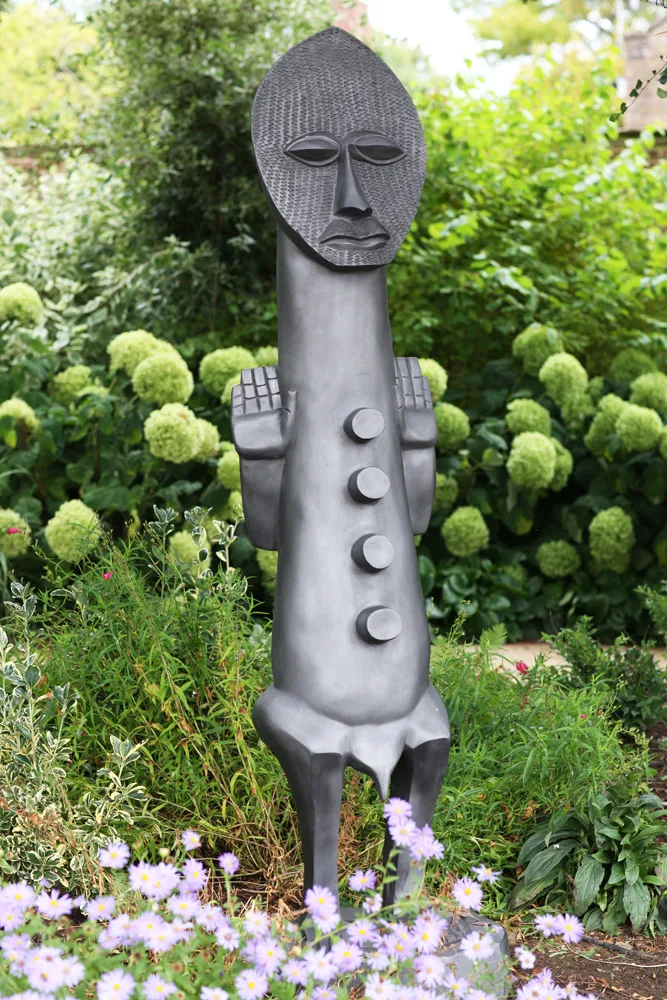
Thirteen identical figures, each standing more than two metres tall, have taken their places in the historic garden at The Sherborne this autumn. Their hands are raised above their heads.
Are they surrendering? Protesting or celebrating? Or offering peace?
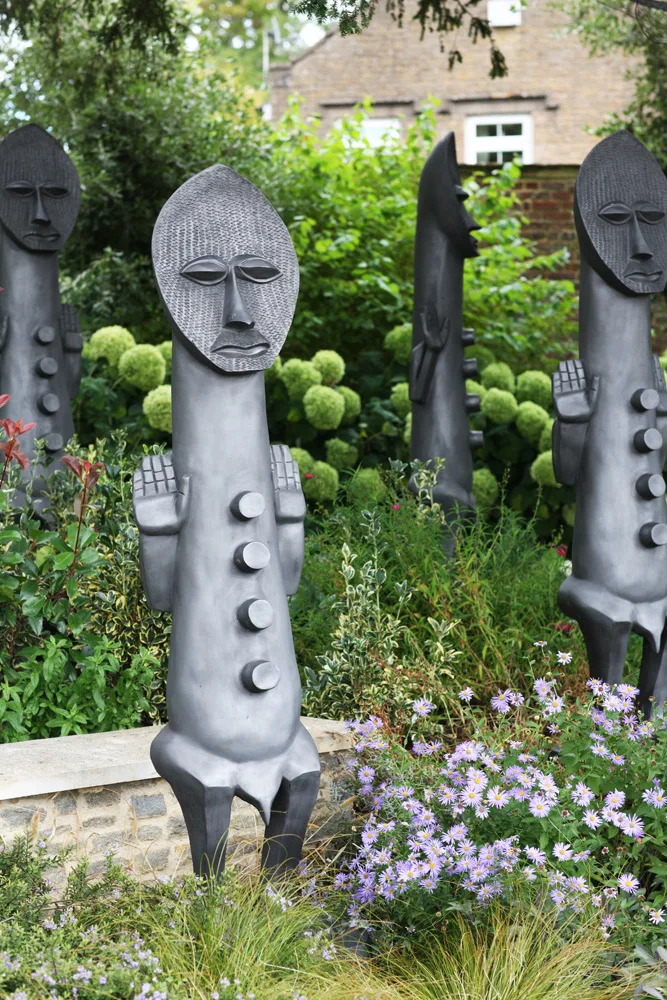
Thirteen identical figures, each standing more than two metres tall, have taken their places in the historic garden at The Sherborne this autumn. Their hands are raised above their heads.
Are they surrendering? Protesting or celebrating? Or offering peace?
That ambiguity lies at the heart of British artist Zak Ové’s The Invisible Man and the Masque of Blackness, a monumental installation exploring identity, visibility, belonging and the African diaspora.
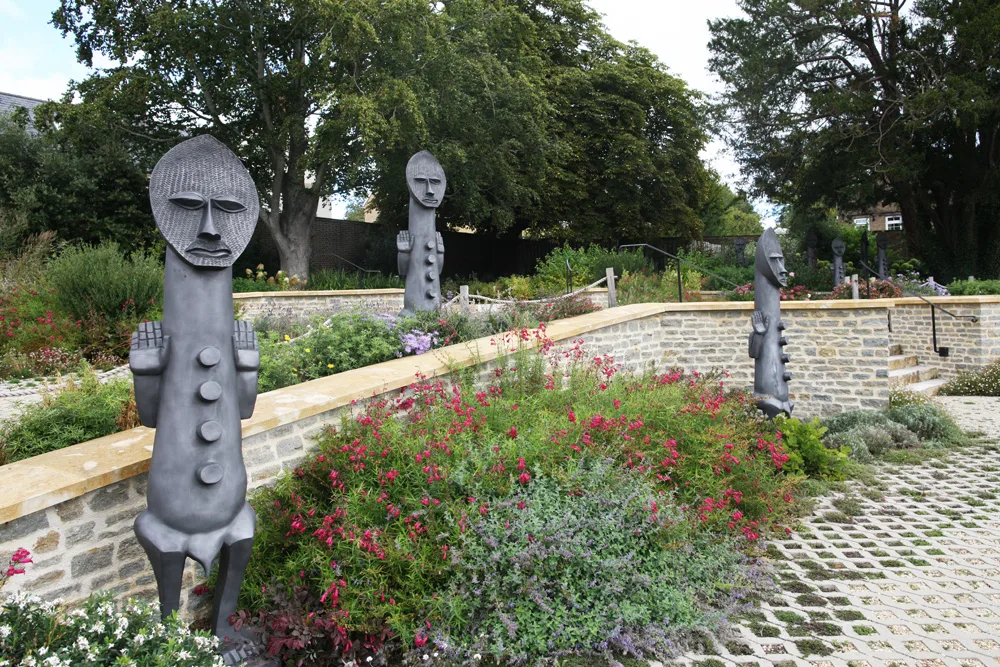
The thirteen figures will remain at The Sherborne for a year, encompassing Sherborne’s tenure as Dorset Town of Culture 2027.
Who is seen?
The figures themselves have an unexpectedly personal beginning. Ové based their form on a small wooden African sculpture given to him as a boy by his father, pioneering Trinidad-born filmmaker Sir Horace Ové. From that childhood object came these towering figures, cast from graphite mixed with resin – a material the artist calls ‘future world black’.
The title draws together two works separated by more than three centuries. Ralph Ellison’s 1952 novel Invisible Man explores race, identity and the experience of being socially unseen. Ben Jonson’s The Masque of Blackness, first performed at the Jacobean court in 1605, featured Queen Anne of Denmark and her ladies in blackface. Ové’s title brings those histories into conversation, asking who is visible, who is represented and on whose terms?
The work was first presented as a group of 40 figures at Somerset House in 2016, and has since appeared in different formations internationally. At The Sherborne, CEO Liz Gilmore has co-curated a new arrangement with Lieutenant General Sir Robert Fry, former Commandant General Royal Marines and former chair of The Sherborne House Trust.
Fry’s military experience brings another reading to the garden. The figures inevitably suggest troops in formation, but he describes them instead as ‘a peaceful deployment’ – a collective presence inviting questions about identity, power and responsibility. The positioning also draws on his understanding of the dispersed modern battlefield, where technology has left individual soldiers increasingly isolated and exposed.
Questions of identity
Yet no interpretation is given. A raised hand can signal resistance as readily as surrender; thirteen identical bodies can appear threatening, protective or united.
Even the formation will not remain fixed. The figures may move around the garden as the seasons change, with some potentially travelling out into Sherborne during its Town of Culture year.
For Ové, whose work spans sculpture, film and photography, questions of identity and representation have long been central. He was the first Caribbean artist to have work permanently acquired for the British Museum’s African collection and in 2019 curated Get Up, Stand Up Now at Somerset House, marking five decades of Black creativity in Britain.
The Invisible Man and the Masque of Blackness is open now. The Sherborne is open daily from 10am to 5pm (Sundays and Bank Holidays closing at 4PM).
Entry is free.
thesherborne.uk