

The Sustainable Farming Incentive is supposed to pay farmers for delivering environmental benefits alongside food production. But when this year’s main funding window opened, the money was gone by mid-afternoon. Laura Hitchcock looks at what SFI actually pays for – and what happens when long-term environmental work suddenly loses its funding.
At 10am on Tuesday 22 September, the second window of the Government’s Sustainable Farming Incentive opened to farmers across England.
At 3.48pm it closed.
Around 12,200 applications had been submitted in less than six hours – almost three-quarters of those came from farms whose existing environmental agreements were due to expire within months.
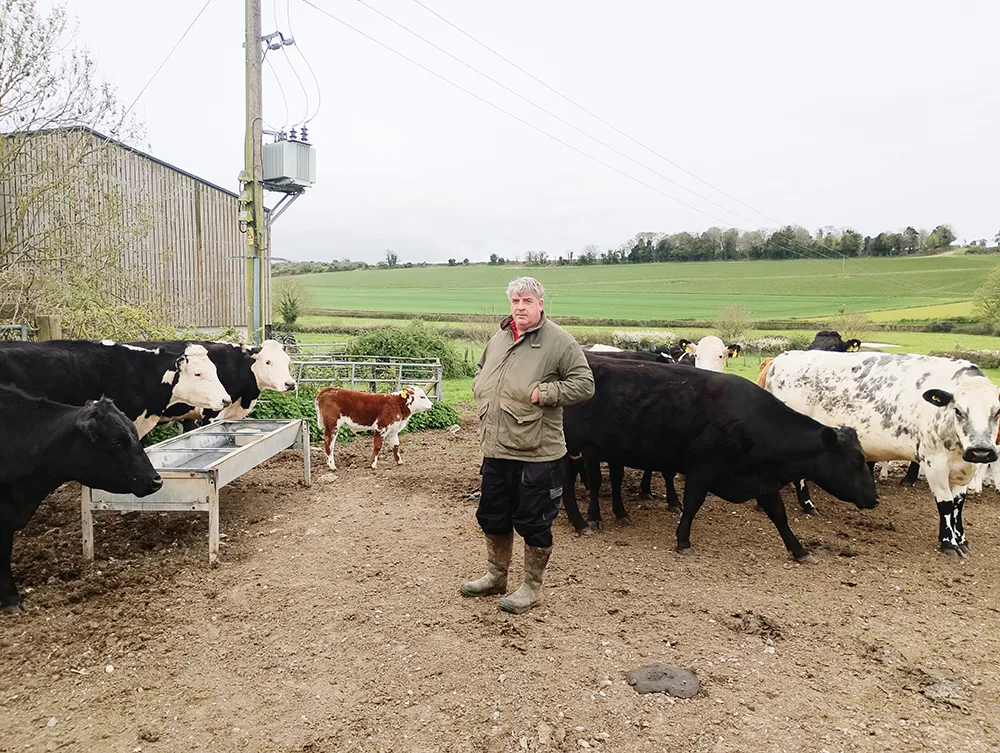
On Cranborne Chase, arable and livestock farmer Nigel Friend wasn’t sitting at his computer waiting for the starting gun. He was in Wales, collecting some sheep.
‘I was going to do it when I got back,’ he says. ‘I got back at five o’clock, and the window had closed at ten to four.’
Nigel has spent 28 years in successive environmental schemes, and his current agreement ends in November.
‘We were one of the very first people into SFI,’ he says. ‘The grants are about £45,000 a year that we rely upon, in return for various actions that we do on the farm.’
Those actions affect around 15 to 20 per cent of his land. Without another agreement, he says he cannot simply leave the land as it is and hope another funding window opens next year.
‘Can we afford to leave it all alone and wait until next year, and then have the same happen again?
‘No, we can’t.
‘So we’re going to change our business model now, and unfortunately it’s going to be a detriment to all the previous good that we’ve done.’
What actually is SFI?
Outside farming, the Sustainable Farming Incentive is easy to dismiss as yet another agricultural subsidy – more government money handed out to farmers for owning land.
That is not how it works.
For decades, farmers received support through the EU’s Common Agricultural Policy and, latterly, the Basic Payment Scheme. Broadly speaking, payments were linked to the amount of eligible land being farmed: the greater the area, the larger the payment. After Brexit, England began replacing that system with Environmental Land Management schemes, based on the principle of ‘public money for public goods’.
SFI is one of them. Rather than paying simply for land, it pays farmers and land managers for doing specific things which enhance the environment – managing hedgerows for wildlife, growing herbal leys, reducing fertiliser use, planting winter bird food, protecting soils or avoiding insecticide on crops.
Nigel puts it simply: ‘It’s not a subsidy – that’s the first thing we have to get clear. It’s public money for public goods. And those goods cost the farmer.
‘Take insecticide. A farmer can be paid not to use it on a crop – obviously a benefit to the farm wildlife, but the farmer accepts the risk that insects may reduce the yield. The payment helps compensate for that risk.
‘The payment is basically to make up for the loss of income for doing certain things,’ Nigel says.
On his own farm, environmental agreements have led to grass margins around fields, wild-bird plots, hedgerow planting and management, and changes to the farm rotation.
And he is not suggesting any of that has been pointless:
‘Everything we’ve done has been good for the environment and also to the benefit of our business, long term,’ he says. ‘We can see the benefit of the work. But how do you put a financial figure on that? I don’t know. The environmental benefit does not remove the cost of doing it.’

Image: Nigel Friend
A six-hour scramble
This year’s SFI was split into two application windows. Window 1 was aimed at smaller farms and those without a previous environmental agreement. Window 2, opening in September, was available to all eligible farmers and land managers. The government had warned that the funding was finite and the window would close once the available budget had been allocated– and that happened within hours.
Government figures published afterwards show that around 12,200 applications were submitted – almost twice the number received in Window 1. More significant, however, is who was applying.
Around 8,800 applications came from farm businesses with an existing SFI, Countryside Stewardship or Environmental Stewardship agreement due to expire by the end of February 2027. That means 72 per cent of the applicants were not newcomers chasing a fresh pot of money.
North Dorset MP Simon Hoare was scathing about the outcome, telling Dorset Life SFI26 was ‘chaotic, underfunded’ and ‘an unspeakable disaster’.
‘It is devastating news for North Dorset farmers, many of whom have been left high and dry,’ he said. ‘It also completely undermines the environmental benefits part of recent agriculture policy.’
Like Nigel, almost three quarters of applicants were farms already doing environmental work and
approaching the end of agreements already in place.
Farming decisions cannot necessarily wait for the next funding round.
Fields have to be planted. Rotations have to be planned. Land left for wildlife is land not producing a commercial crop.
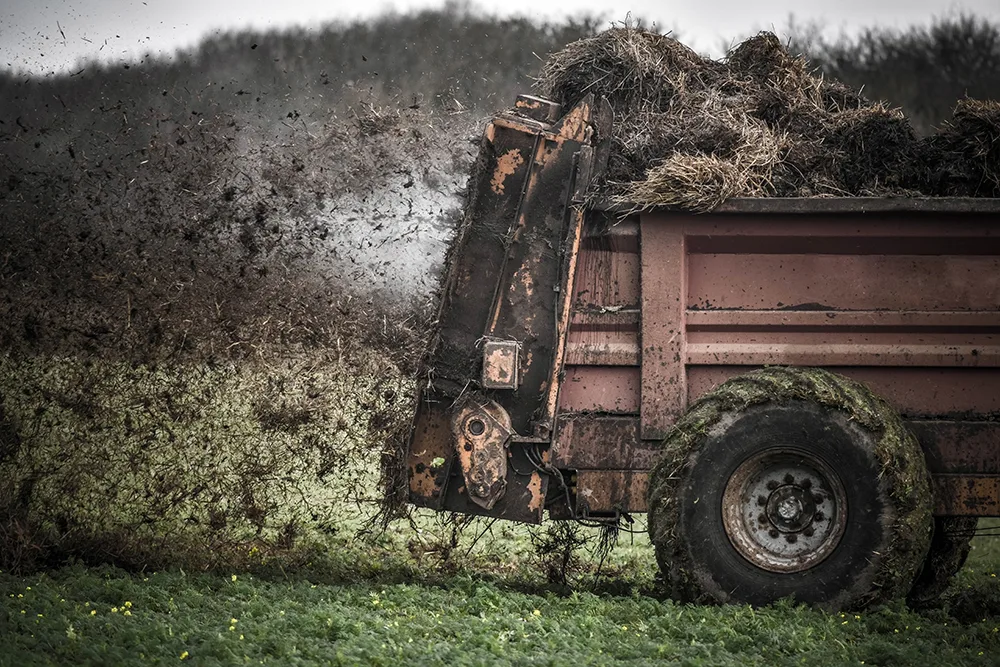
Nigel says that, once his agreement ends, much of the land currently managed for wildlife will have to earn its way again.
‘Now it will all be ploughed up,’ he says. ‘Everything we’ve done will be reverted back.’
What that means varies across the farm. Established hedgerows, for example, have separate legal protection. But field margins can return to cropping. Bird-food plots need not be replanted. Lower-input land can return to conventional production.
This is not, Nigel stresses, because he has suddenly stopped believing in the environmental work. But he is running a farm, not a nature reserve: ‘We’re not philanthropic charities. We’ve got to pay the rent.’
Without the payment that compensated for giving up income, the business calculation changes.

Image: Nigel Friend
A farm still has to pay its way
The scheme’s issues raise an awkward question. Should farmers be building their businesses around SFI income? In almost any other industry, you’d question a business model that depended on getting into a government funding scheme before the money ran out. Nigel’s answer is that SFI is not an optional bonus sitting outside the business. Farmers have been encouraged to treat SFI as part of their normal farm income, and governments have deliberately used these schemes to influence how farmland is managed: farmers agree to do particular things and government pays them for delivering those outcomes.
‘You either do it through carrot-and-stick rewards like the SFI scheme to incentivise the outcomes you want, or you legislate it,’ Nigel says. ‘And then you’ve got to enforce that legislation. That’s costly, slow and time-consuming.
‘We stripped the hedgerows out because the government asked us to grow more food after the Second World War. Now they want us to replant them – but that’s an expensive business.’

Image: Nigel Friend
The government also needs farmers to deliver many of its own environmental commitments.
England has legally binding environmental targets, including halting the decline in species abundance by 2030 and restoring or creating more than 500,000 hectares of wildlife-rich habitat by 2042. Environmental farming schemes are one of the tools governments count on to meet this target. Nigel’s question is simple: what happens to those ambitions if farmers lose confidence in the scheme intended to help deliver them?
‘Is it going to affect Joe Bloggs in a year’s time with their cup of tea and their bread for their sandwiches? Probably not, if I’m perfectly honest,’ he says. ‘But is it going to affect the Government in two years’ time when they suddenly realise they’re not reaching their environmental goals? That’s where it’s going to have the biggest impact.’
Farming Minister Stephen Morgan has said the Government will look at alternatives to the ‘first-come, first-served’ system when SFI27 is being designed.
A change cannot come soon enough. Farmers are making decisions now about what happens to their land next year. Habitats cannot simply be switched on and off each time another funding window opens.
Nigel has spent almost three decades working within environmental schemes and says the benefits are clear. His problem is not with the work itself: he simply cannot keep doing the work unpaid while waiting to see what happens.
‘It’s fine saying, “There’s going to be another round next year”,’ he says. ‘But what’s to say the same doesn’t happen again?’
And that leaves Government with its own question: if farmers lose confidence in the system, who will deliver the environmental gains it is relying on them to provide?

Image: Nigel Friend
The loss of hedges
The 1947 Agriculture Act – and subsequent state subsidies – actively encouraged farmers to create larger fields for heavy machinery and intensive farming in order to maximise food production and clear field boundaries. The UK lost roughly 110,000 miles of hedgerows between the 1950s and the 1990s. This destroyed vital connectivity and habitats, contributing to steep declines in farmland birds, hedgehogs and pollinators.