

From 35-degree heat to 70mph winds, Helena Conibear has walked the entire Dorset county line. But the 216-mile journey was about more than endurance – it was a way to talk about young people, drugs and opportunity.
All images: Helena Conibear
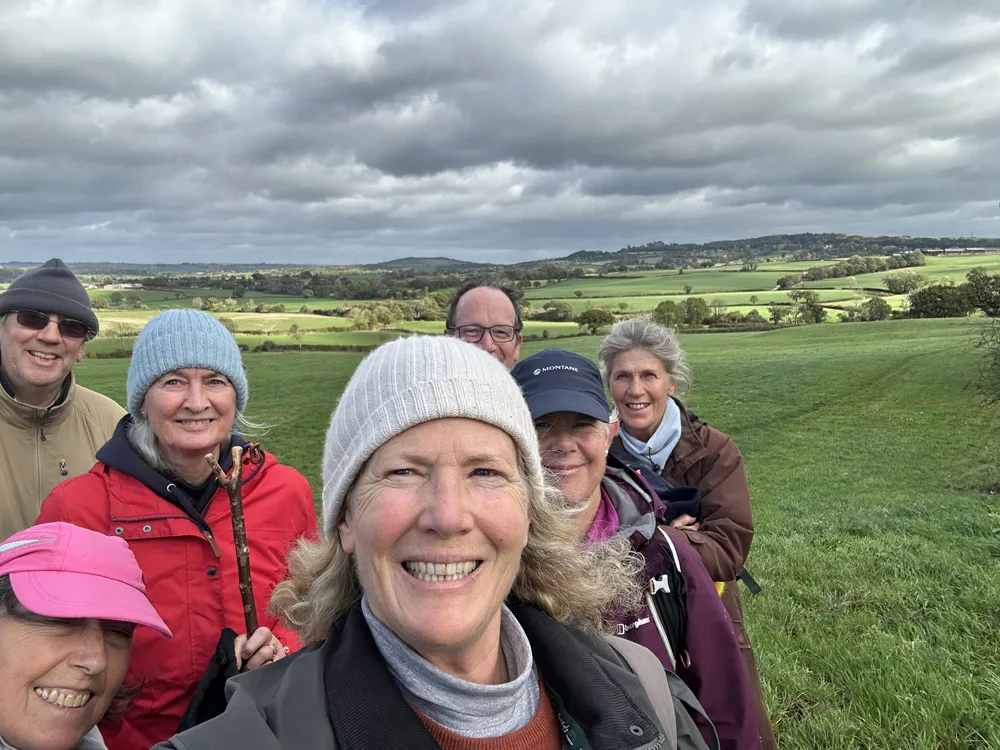
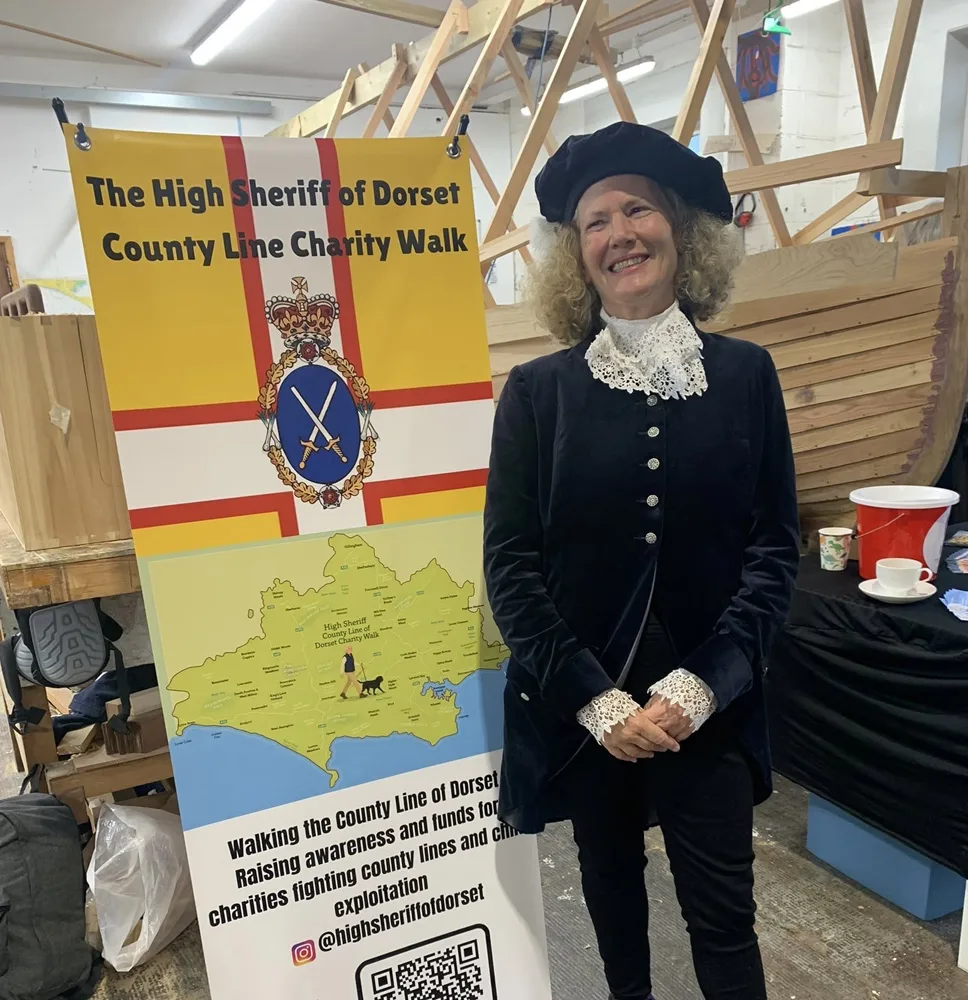
It’s the morning after Storm Austen and there are still sporadic showers in West Dorset. High Sheriff of Dorset Helena Conibear has battled through the storm’s deluge and wind to reach her final destination at Lyme Regis. Her 216-mile walk, taken in sections, was designed to raise awareness of county lines and drug trafficking – by walking the county line (the old name for the county boundary).
‘I set up a charity around 20 years ago aimed at the needs of young people,’ she says. ‘Unfortunately, drug dealers actively recruit really young kids because they are under the age of criminal responsibility, which is ten. They use the children as mules, both to get drugs and to deliver drugs – and I wanted to shine a light on that. My theme for the year was youth opportunity, and the idea came about of walking the county line of Dorset to raise awareness of county lines, going slowly and meeting as many people as possible along the way.
‘Wherever I have gone I have met people. Different communities shared their experiences of what’s happening, from the smallest village to large towns like Sherborne. In turn, we’re sharing information about how charities are working to provide safe spaces for young people with diversionary activities such as skate parks and youth clubs. We’ve spoken about what the police are doing, and what communities can do to help.
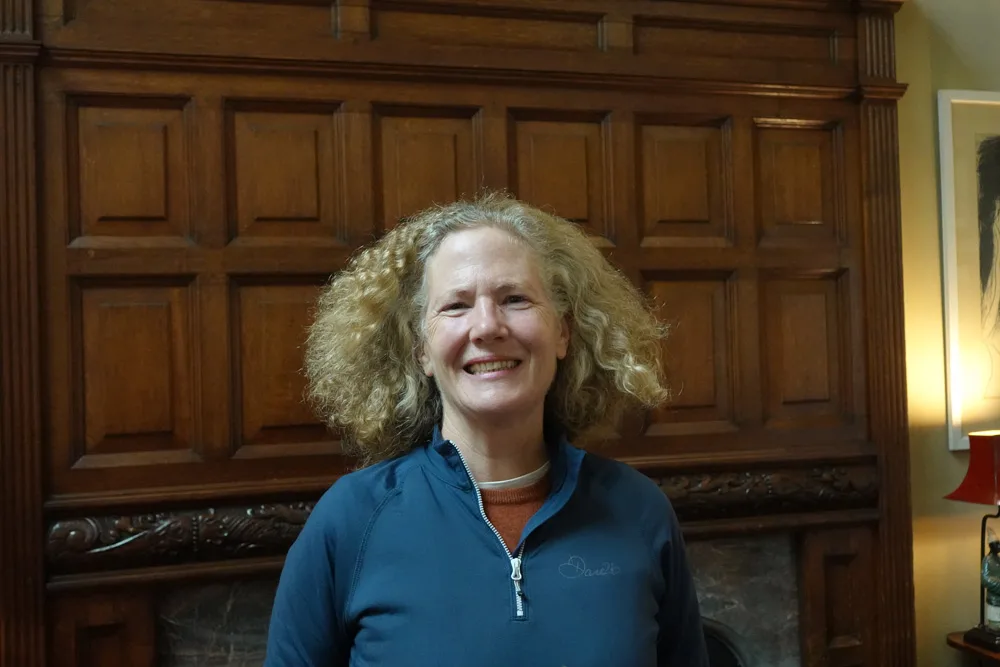
Image: Rachael Rowe
‘County lines [the name for the nationwide system of crossing boundaries to get drugs to even remote rural communities] is a challenge everywhere – even in Dorset, which is the fourth safest county in England. Wherever there is a potential market, there will be county lines and drugs. And sadly, a lot is hidden in plain sight. People can buy drugs on their phone, and there is always a network supplying them. We have an amazing police force in Dorset and they have a really good operation, and there’s lots of surveillance and counter-intelligence going on.’
The best of Dorset
While Helena walked the Dorset county line, she experienced several places that were new to her and also the hospitality of local people: ‘I’m Dorset born and bred,’ she says. ‘I thought I knew Dorset well. But I have been amazed at so many new places. I’m based in the middle in Frampton, and I know the coast quite well. But it’s been such a privilege to walk from Christchurch Harbour to Ferndown and Ringwood Forest. Then up to Shaftesbury and Sherborne, Halstock and Broadwindsor. Then Drimpton two days ago – I hadn’t even heard of Drimpton before! It’s been wonderful. By going slowly, and having time to have conversations with people – there have been more than 300 walkers from age six to 95 – they tell you the local history. The lady who guided the walk in Drimpton lived there, and her friends came to the village hall and made cakes. We had conversations about the rural isolation and problems for young people. I have learned something new every minute I have walked.’
Helena found it impossible to choose a favourite, though highlights included walking behind The Fleet, Abbotsbury, Kimmeridge, Shaftesbury and Tollard Royal. However, there were also low points of the journey – one of them being Storm Austen.
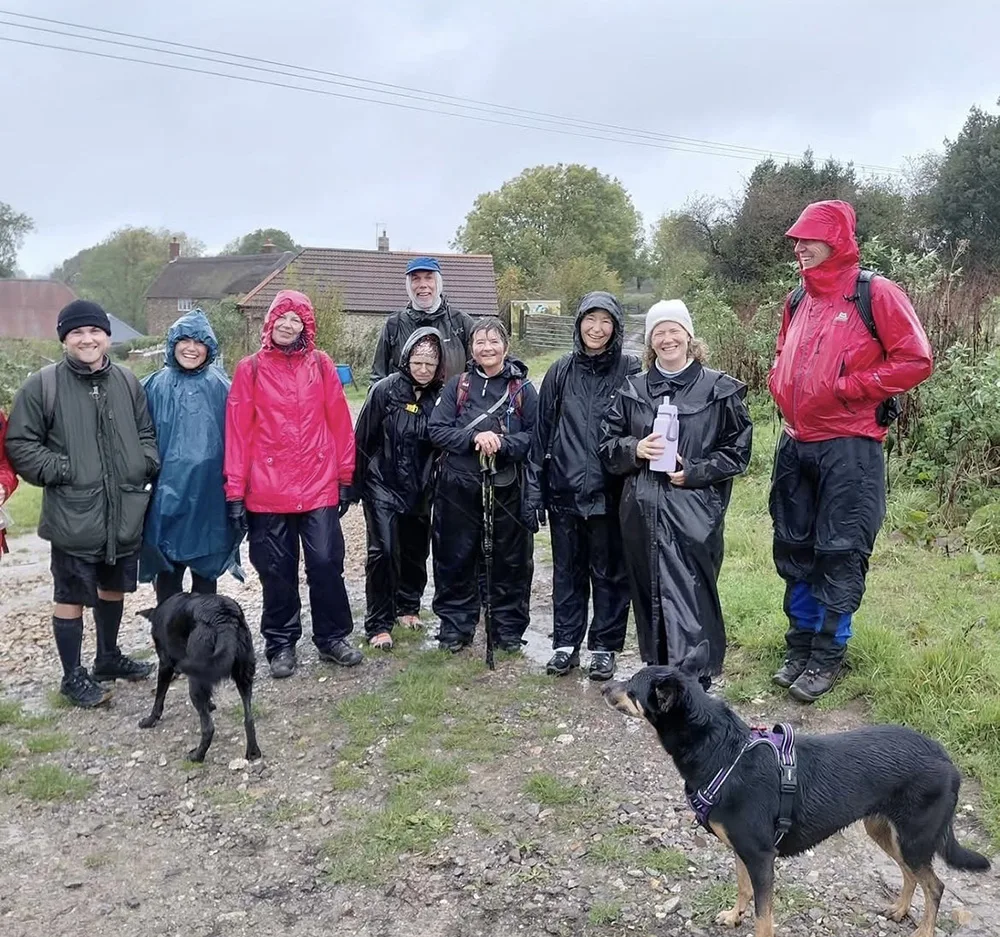
‘It threw everything at us, from 70-mile-an-hour winds to five hours of solid rain. It was the only time I wanted to stop.’
In contrast, Helena climbed Dorset’s two highest points during June’s heatwave, in temperatures of 35 degrees.
‘The hospitality from mayors and councillors, and people having me to stay – they have all made it such a lovely journey.’
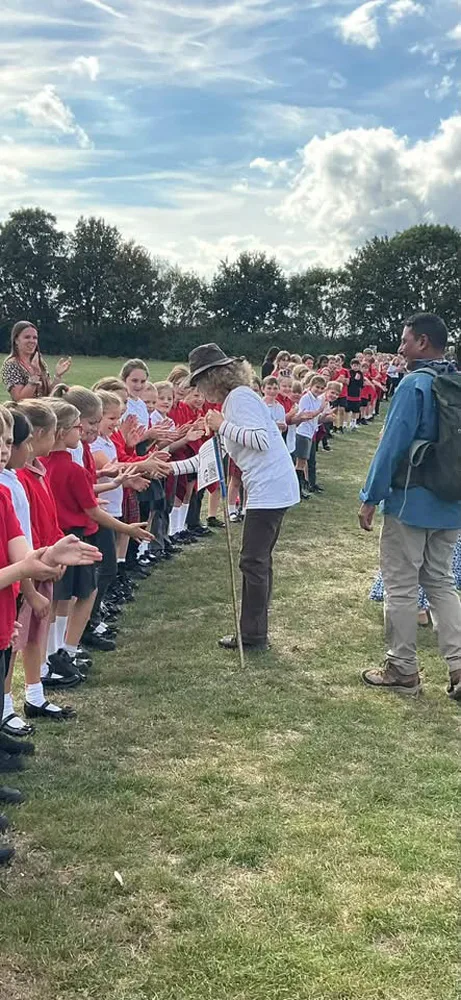
Even a stress fracture didn’t stop her. The 216 miles were completed in manageable stages, generally over four days each month. There were many memorable moments for Helena, but she said two stood out: ‘In Ferndown there was this amazing 95-year-old chap called Eric who came whizzing out of his care home with his wheels. He insisted on walking a mile with me, with his carer trailing along behind – mostly because he knew there was a glass of Pimms and a cream tea at the end! And then at Sherborne Abbey Primary School I found myself shaking hands with each of the 350 pupils! Then they nominated ten children to walk with us. They were so confident, chatting away …’
What does the High Sheriff do?
The modern High Sheriff’s role is closely connected with those who work to keep the county safe – from the judiciary and police to emergency services and voluntary organisations. Dorset has form with High Sheriffs. In 789, an Anglo-Saxon reeve named Beaduheard – the forerunner of the later office of sheriff – was killed after confronting Viking arrivals on the coast at Portland. ‘It’s the oldest position in existence,’ she tells me. ‘It survived the Normans, and in the Magna Carta there are 32 clauses designed to remove power from the sheriffs. The Tudors introduced the Lord Lieutenants, who had the power to raise armies. Now, the role is about everything that keeps you safe in the county: the police, the coastguard, judiciary, fire brigade, voluntary service – it’s a really important role. You see the worst of society and the very best of society.’
After such a successful walk, Helena has her sights on more that can be done in Dorset:
‘I feel very strongly that four per cent of our young people don’t have a job, or any hope of one. I want to discuss young people not in education, employment or training (NEET) and what we can do in the local community. It’s about bringing together employers who are trying to recruit people and young people who struggle to get an interview, and also understanding the range of those who can’t get a job.’
The issue is not confined to young people without qualifications. Across the UK’s NEET population, nearly 30 per cent have five good GCSEs or equivalent, more than 21 per cent hold a Level 3 qualification and 15 per cent have a university degree.
‘It’s not just the most vulnerable, though it does include them,’ Helena says. ‘Shining a light on what we can do in Dorset will really make a difference.’
The Dorset Life Community News section is sponsored by Wessex Internet