

From a fourfold rise in bluetongue cases to new opportunities for young farmers and evidence from farmer-led conservation showing the impact of cluster working, we round up the stories affecting Dorset agriculture this month.

Bluetongue cases rise from 12 to 52 Dorset premises
Bluetongue has continued to spread rapidly through Dorset. At the end of August, 12 premises in the county had confirmed BTV-3; by midnight on 27th September that figure had risen to 52, with two more Dorset cases added in the latest update.
Nationally, 1,768 premises have now recorded cases during the 2026/27 season. Dorset NFU says the disease has remained a major concern locally, with farmers raising delays in testing and mapping, vaccine availability and the cost of fallen-stock disposal.
West Dorset farming pressures reach Westminster
The combined impact of drought, bluetongue and changes to farm support was raised directly with Defra in September by West Dorset MP Edward Morello.
He asked what support was available for beef farmers facing increased costs and livestock losses, and what assessment had been made of the effect on farm viability. Farming minister Stephen Morgan said Defra recognised the pressures, pointing to the Government’s August farming support package, including funding for on-farm water infrastructure, temporary environmental-scheme flexibilities and veterinary support.
Separate figures released in response to another Morello question show the scale of West Dorset’s involvement in environmental farming schemes: there are currently 4,165 live Sustainable Farming Incentive agreements and 658 live Countryside Stewardship agreements in the constituency. Defra said the uptake reflected strong participation in nature-friendly farming. With almost 5,000 live agreements across West Dorset, uncertainty over future support is not a marginal issue for local farming businesses.
Sherborne agronomist shortlisted for national farming award
Sherborne-based agronomist Steven Mears has been named one of three finalists for Farmers Weekly’s 2026 Arable Adviser of the Year award. Mears, a partner at Crop Management Partners, advises 24 farming businesses covering around 9,300 hectares across Dorset, Wiltshire and Somerset. His independent approach to agronomy, including nutrient management, soil health and the use of digestate in high-yielding rotations was particularly commended. Judges also noted his emphasis on practical recommendations tailored to individual farm businesses and profitability rather than a fixed system.
Ten years of farmer collaboration delivers wildlife gains
Long-term monitoring of farmer-led conservation across Dorset, Hampshire and Wiltshire has produced encouraging evidence that coordinated action across neighbouring farms can reverse some wildlife declines.
The Martin Down and Allenford Farmer Clusters cover more than 13,500 hectares, with farmers working collectively on habitat and species management while continuing food production.
The Game & Wildlife Conservation Trust says ten years of monitoring show improvements in threatened farmland birds and insects across the landscapes involved, contrasting with continuing declines nationally. See the full results here.
Rather than individual holdings working in isolation, farmers have been managing habitat at landscape scale, allowing wildlife measures on one farm to connect with those next door.
£35,000 awarded to the next generation of Dorset agriculture
Melplash Agricultural Society has awarded £35,000 to 22 students pursuing agriculture and other land-based careers this year.
Fifteen recipients aged 16 and over are studying subjects including agriculture, livestock production, forestry, horticulture, gamekeeping and rural land management, while seven previous recipients continue to receive support.
Courses range from local study at Coastland College’s Kingston Maurward campus to agriculture and rural estate management at Harper Adams and other specialist colleges.
The society says it has now awarded £327,000 to 122 students through the programme.
Among this year’s support are also travel bursaries for two young people heading to Australia to work with a 12,000-sheep enterprise – practical experience on a rather different scale from the average Dorset holding.
Dewlish farm gets go-ahead for new shop and restaurant
A Dorset farming business has been granted permission to convert historic farm buildings at Manor Farm, Dewlish, into a farm shop, restaurant and workshops.
The approved scheme includes 60 square metres of farm-shop space and a 68-square-metre restaurant, with the business intending to sell and serve meat and cheese produced by the farm.
The development will reuse agricultural buildings within the Dorset National Landscape and Dewlish Conservation Area, including structures adjoining a Grade II-listed former stable.
Plans also include flexible workshop and office space, outdoor seating and growing areas around the existing courtyard.
increasingly, Dorset farms are looking beyond commodity production alone and developing direct-to-consumer income from food produced on the holding.

Rare dormice return to a farm near Bridport
A Dorset farm has attracted national attention after dormice were recorded following habitat restoration work. The Countryside Regeneration Trust, which manages Babers Farm at Marshwood, uses nature-friendly farming and habitat management alongside agricultural activity. Dormice are highly dependent on connected hedgerows, scrub and woodland edges, so their presence can be an indicator that fragmented habitat is recovering.
It’s one of a growing number of examples of agricultural land contributing to the recovery of declining species. For Dorset, it provides another practical example of wildlife restoration happening within a working farm landscape rather than through the removal of farming altogether.
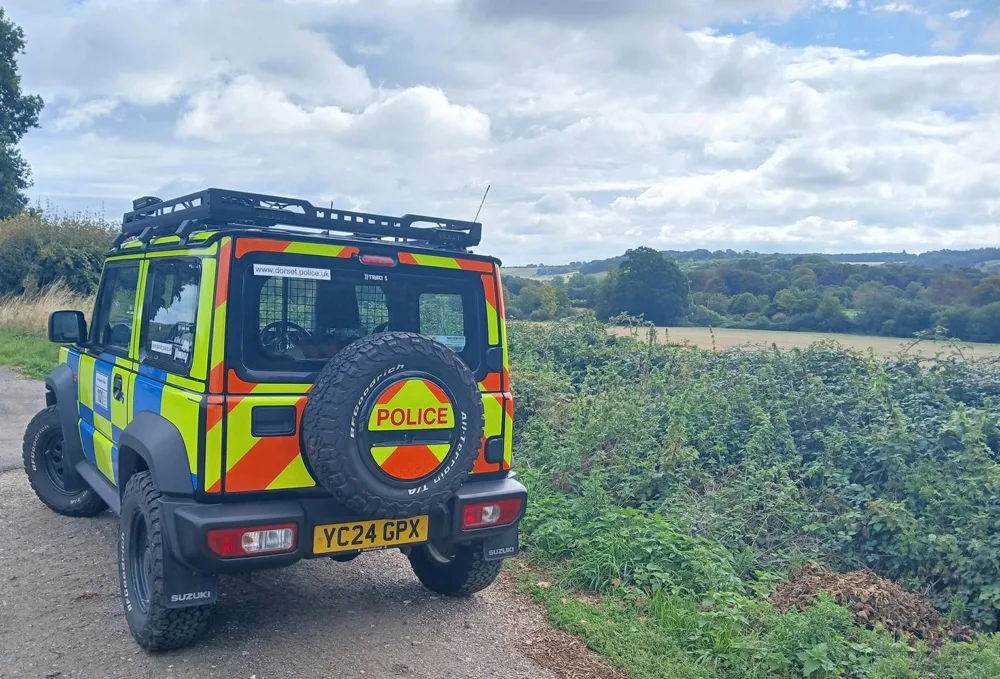
Stolen farm machinery recovered in rural crime operation.
Dorset Police recovered stolen plant machinery parts worth several thousand pounds during September’s Rural Crime Action Week. Officers also seized a car displaying cloned number plates, located a vehicle linked to a recent machinery theft and investigated suspected deer poaching. A 26-year-old man was arrested on suspicion of theft, weapons and driving offences and later released on bail. The Rural Crime Team also visited farms and yards, advising on equipment security and encouraging farmers to record serial and chassis numbers.