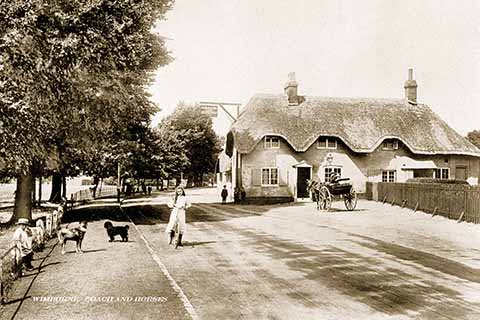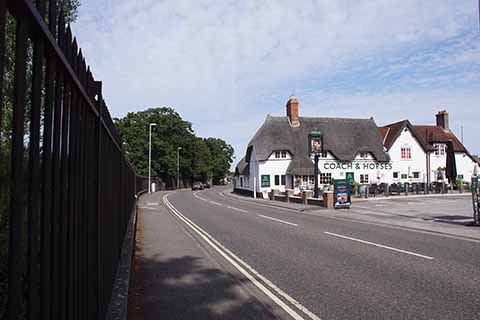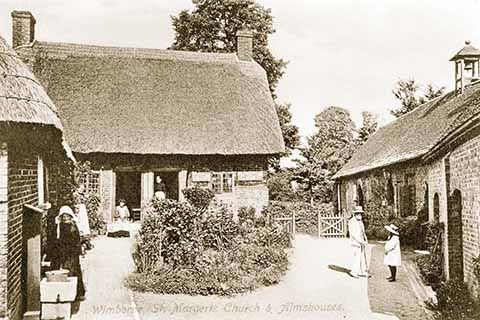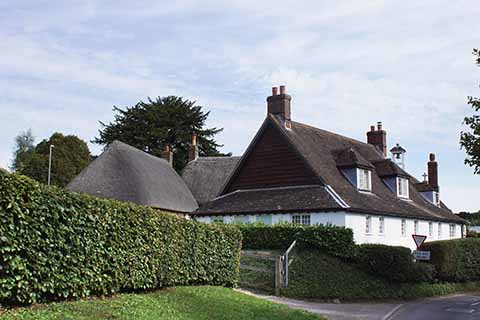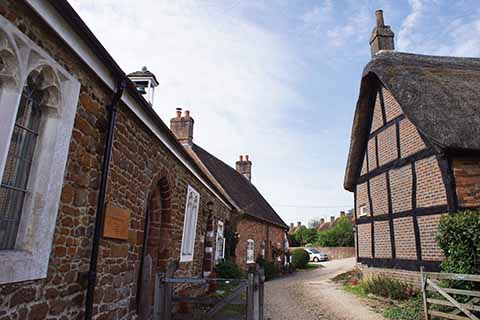
When one looks at the heart of Wimborne, it seems that, the road surface and volumes of traffic aside, not much has changed over the last 110 years. Shops are still shops, although the nature and range of things they sell has altered drastically in the last century.
Before 1847 and since 1977 Wimborne hasn’t had a railway, but the design and volume of building around the town that came with the railway undoubtedly changed Wimborne. Sir Frederick Treves was not a fan of Victorian villas as he called them, but these handsome brick-built buildings are perhaps Wimborne’s most common style.
Here and there whole buildings have gone and been replaced with modern ones, but the feel of the streets, especially around the town centre, is remarkably similar to how it appeared in the shots from 1900 to 1910 that appear in this article.
There is no doubt that the increase in population, especially of late (from about 4000 in 1900 to around 15,500 now) has had a major impact on how busy the town is, but although cars have replaced carts and children no longer look to be mini-versions of Edwardian men and women, the town has not been butchered, as many have been, by the passage of time and the fell hand of the urban planner.
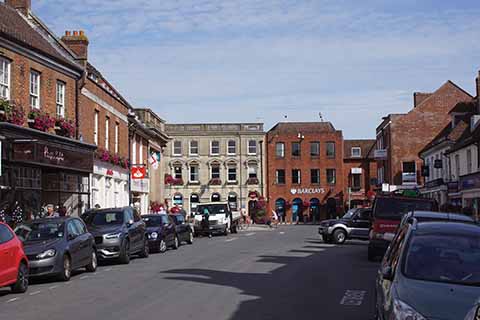
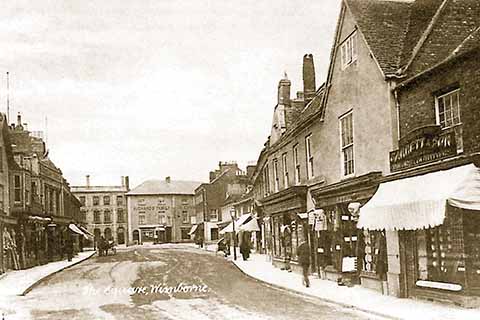
The number of cars aside, the only real changes of significance over a hundred years are the loss of an ornate stone frontage on the left of the picture and the replacement of the Richards Family building with the dog-legged red-brick Barclays building, the right-hand side recessed part of which allows for smoother flowing traffic than the near flat-fronted Georgian building it replaced
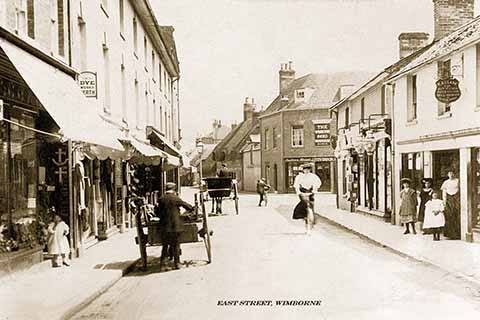
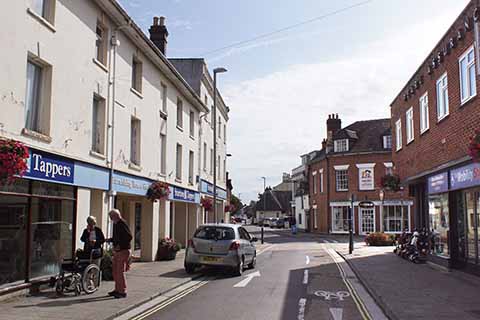
The large thatched building just beyond the Fruiterers and Florist and Wimborne Seed Warehouse (which is now Ensors) has gone and been replaced by a much larger, set-back building. The shop frontages are certainly less ornate now. The lamp standards outside what was (and would for many years remain) the hardware store are absolutely astonishing in their scale and design.
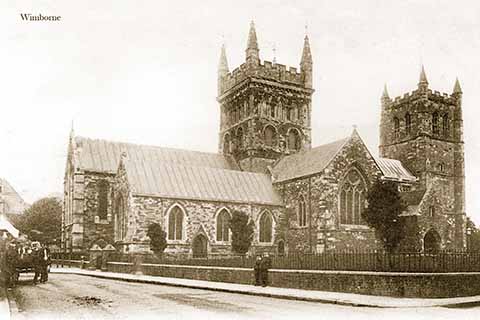
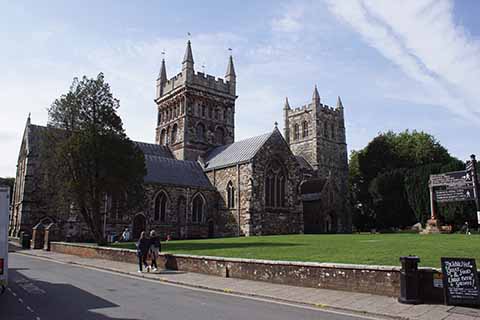
The Minster is little changed although two world wars have had an impact. Gone are the iron railings on which the young boys are leaning, but a new item appears, which is the memorial to the town’s fighting men. On the Minster itself, the stonework appears to be in rather better condition now than it was 110 years ago.