

‘I’m very fortunate,’ says Philip Proctor, ‘to be able to work in style and comfort with the hope of making people’s lives better – I have a wonderful job.’ The forty years of hard work that have gone into creating that good fortune are proof positive that Shaftesbury-based architect Philip Proctor means what he says about improving lives with his buildings. He draws inspiration from the assertion of Roman architect Vitruvius, translated by 17th-century diplomat Sir Henry Wotton, that ‘well building hath three conditions: firmness, commodity, and delight.’
‘Lots of people can build something that stands up,’ Philip suggests. ‘Some can build a thing that does the job it is intended to, but the architect’s skill is to build something that raises the spirits. That ethos lies behind everything we do. I’d add a fourth condition – weathering. We believe buildings should look better as they grow old and grow into the landscape. The trouble with a lot of rendered buildings is they look streaky and worn out after a few years because rendering holds moisture which attracts mould and fungus.’
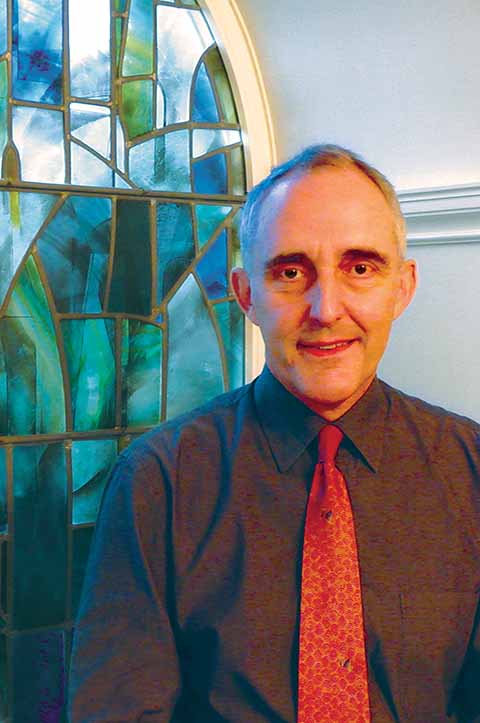
Having been invited to work in Shaftesbury in 1978, ten years later Philip became principal of Philip Proctor Associates, where he is now joined by Brian Watts, Geoff Cole and Simon Rutter as Proctor Watts Cole Rutter in a practice based in Grosvenor House, the former High School for Girls. It specialises in low energy, low cost, low maintenance buildings that sit well with local styles or use those details to create more contemporary looks. Where possible, local tradespeople, suppliers and materials are used.
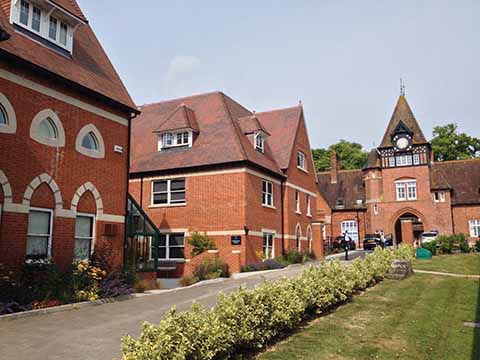
Philip has been architect to more than 150 medical centres including Westbourne, Beaufort Road, James Fisher, St Albans, Strouden Park and the Panton Practice in Bournemouth; Merley, Lilliput, Wessex Road and Birchwood in Poole; Queens Avenue and Fordington in Dorchester; Whitecliffe Mill and Eagle House in Blandford; The Apples, Bute House and Newland in Sherborne as well as surgeries in Puddletown, Corfe Castle, Fontmell Magna, Stalbridge and Child Okeford. ‘As a patient, you want to enter a surgery and feel at ease. You want to sit comfortably and not be frazzled by direct sunlight. You don’t want to overhear doctors in the consulting rooms, but you do want to be collected from the waiting area, not summoned over a speaker. You want to move easily between consulting and treatment rooms and if you are upset, you want to be able to leave the building without having to walk back through the waiting area. Doctors don’t want to have to go far to collect patients and their staff want a security line behind which they can safely retreat in an emergency. The building needs to look welcoming, be accessible and have enough car parking – why shouldn’t the NHS have beautiful buildings?
‘An architect will have a client, the person who pays for the job, but we also have to think of the wider community as a client because our buildings have an impact on them. The old saying is that a doctor’s mistakes are buried and a solicitor’s mistakes are locked up, whereas an architect has to grow ivy. You need wit in this work.’
Philip’s portfolio also includes new buildings at Clayesmore and Sandroyd schools; a host of private homes; the UK’s only community owned and managed sports and leisure facility, RiversMeet at Gillingham; the refurbishment of Shelley Manor, the home Percy Florence Shelley built for his mother Mary at Boscombe; and the redevelopment of Sturminster Newton’s historic cattle market to incorporate a supermarket extension, medical centre and The Exchange arts and community centre.
Behind each lies a story, from raising a second mortgage to get work started in a narrow six-month window of opportunity at Sturminster Newton; to being muscled out of the development of flats at Shelley Manor by RBS NatWest’s ‘turn around’ unit, only for the flats to end up in the hands of the bank’s own property division. A damning report by the Financial Conduct Authority into the RBS Group’s treatment of small and medium-sized business customers was published in February.
‘The profit from the sale of the flats was to have paid for the refurbishment of Shelley Theatre, but we had to think quickly and adapt,’ says Philip, who co-owns the theatre and is a director of Shelley Theatre Trust, as is his husband, Gary Jefferson. ‘The shows staged there by Sir Percy often raised money for good causes, including Boscombe Hospital, so there’s a nice synergy there with the medical centre and the theatre is there to support the arts across the entire spectrum.’

Philip’s passion for enhancing communities also encompasses the town that has been his home since 1978. During an initial ten-year stint on Shaftesbury Town Council he was mayor in 1986-87 and was then co-opted back in 2013. Two years later, following bitterly contested elections, he was returned as part of the apolitical One Shaftesbury: Working Together for Change group in the town’s West ward, where turnout was 72.85 per cent. ‘The council had virtually ground to a halt, it seemed as if its job was to obstruct all progress and the voters knew it. We gathered a group that promised to work together purposefully in the interests of the town. The first thing we did was to have a discussion meeting and came up with forty-five projects that would improve the town. Whether the voters agree we’ll find out next May, when the council is up for election again.’
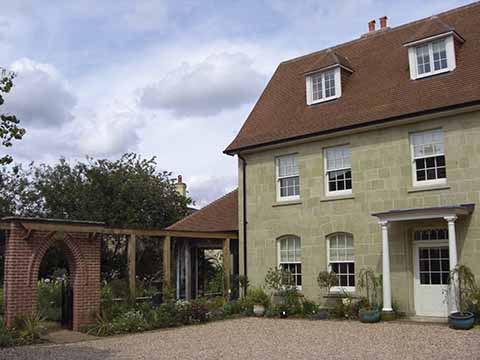
Philip’s own home, The Walled Garden, on Parsons Pool is an elegantly proportioned town house run as a luxury boutique bed and breakfast. It appears to have been part of the landscape for generations but was built to his own design eleven years ago from local green sandstone. The welcome in its walls proves no barrier to discussion of Dorset’s affordable housing crisis.
‘What is affordable?’ asks Philip, with good reason. ‘House prices are too high, but the only way to bring them down is to flood the market with houses and yet we want to preserve Dorset’s green spaces and prevent urban sprawl. To build cheaper you have to build smaller. In other countries they build up so perhaps we’ll have to do the same – build higher and smaller homes. It seems the key is to get people started on the home ownership ladder so we have to lower the first rung, otherwise people get trapped renting.’
For now the problem remains as intractable as ever, but as long as beauty in the built environment is a consideration, we should perhaps follow the lead of Philip Proctor and turn to Vitruvius…while keeping a weather eye on how our buildings age, of course.