

November is an honest month in the garden.
The exuberance of summer has gone, most of the autumn colour is disappearing and suddenly there is nowhere for a badly placed shrub or an empty corner to hide. What remains are the bones of the garden – its trees, hedges, paths, evergreens and structure.
I rather like it.
This is a good time to stand at the kitchen window – preferably with a mug of tea – and actually look.
If everything has disappeared into a rather depressing expanse of fence and damp lawn, make a note. You don’t necessarily need to do anything immediately, but November is very good at showing you where the gaps are.
Evergreens really earn their keep now. You don’t need ranks of conifers: pittosporum, hebes, sarcococca and many euonymus varieties provide year-round structure without taking over. In a small garden, one well-chosen evergreen shrub can make an enormous difference at this time of year.
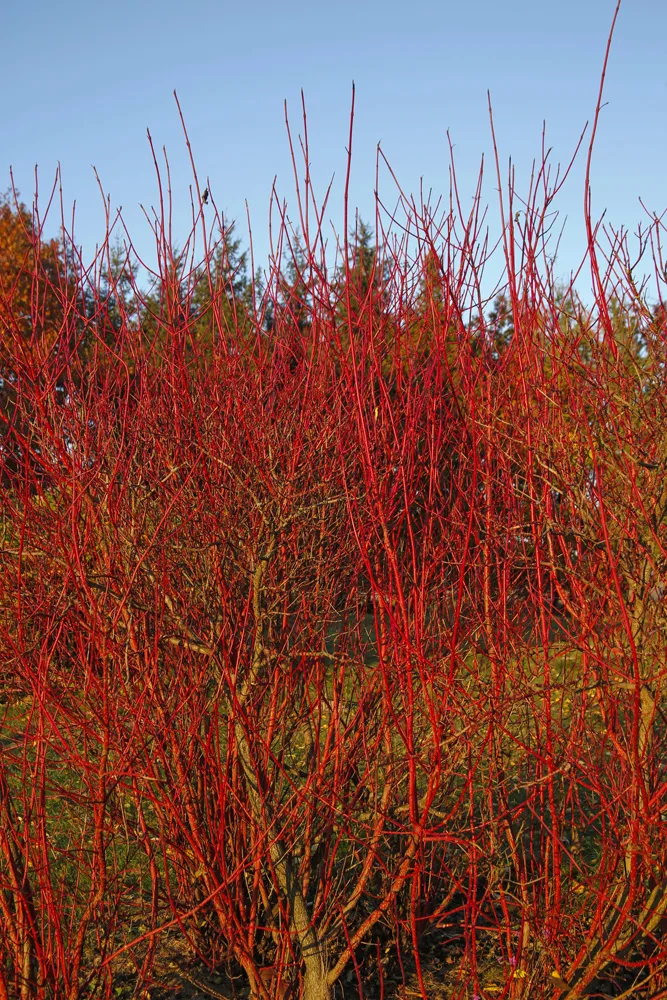
Then add something that positively enjoys winter. Dogwoods give wonderful red or orange stems once their leaves fall. Hellebores will begin flowering just when very little else is bothering, while winter-flowering viburnum and mahonia provide both colour and scent. If space is tight, a simple pot of winter cyclamen near the door can cheer up the bleakest November morning.
Get it in the ground
There’s still plenty to plant, too. Bare-root trees, roses and hedging become available from November and are considerably cheaper than their container-grown equivalents. Plant while the ground is neither frozen nor waterlogged and they’ll begin establishing roots ready for spring.
And if you haven’t planted your tulips yet, don’t panic! November is actually a good time to get them into the ground, as the colder soil helps reduce the risk of tulip fire. Plant them generously, and deeper than you might imagine – roughly three times the height of the bulb is a useful rule. Pots work beautifully if border space is precious. Daffodils prefer being planted earlier, but if a forgotten bag is still sitting in the shed, I’d plant them now rather than wait another year.
There are also some less glamorous jobs that deserve attention before winter properly arrives. Check tree ties and stakes before the gales do it for you. Move vulnerable terracotta pots somewhere sheltered or raise them onto pot feet so they don’t sit waterlogged and crack in a hard frost. Clean out gutters on sheds and greenhouses, and make sure outside taps and exposed pipes are protected.
Tender plants need some thought too. Dahlias can often survive in the ground in milder, well-drained gardens beneath a generous mulch, although in colder or wetter spots I’d lift and store the tubers somewhere frost-free. Move tender container plants into a greenhouse, porch or other sheltered place before the first serious frost catches you out.
If you’re feeling particularly industrious, November is also a good month for hardwood cuttings. Currants, gooseberries, dogwoods and many deciduous shrubs can be propagated this way. Take healthy sections of this year’s growth, remove the soft tip and insert them into a sheltered patch of soil or a deep pot. Then just leave them alone. By next year you may have new plants for almost nothing – one of gardening’s more satisfying bargains.
But don’t feel obliged to fill every November weekend with jobs. Some things are better left alone. Seed heads can stay for the birds, fallen leaves can remain beneath shrubs, and dormant perennials don’t require constant interference.
The garden may look as though it is shutting down, but underneath, quite a lot is still happening.
November simply gives us a better view of it.
Maggie x