

Why is Dorset’s Local Plan proving so difficult to deliver? Dorset CPRE’s Mike Allen argues that the Government’s housing target bears little relation to population growth, affordability or actual demand – and asks what a better plan might look like.
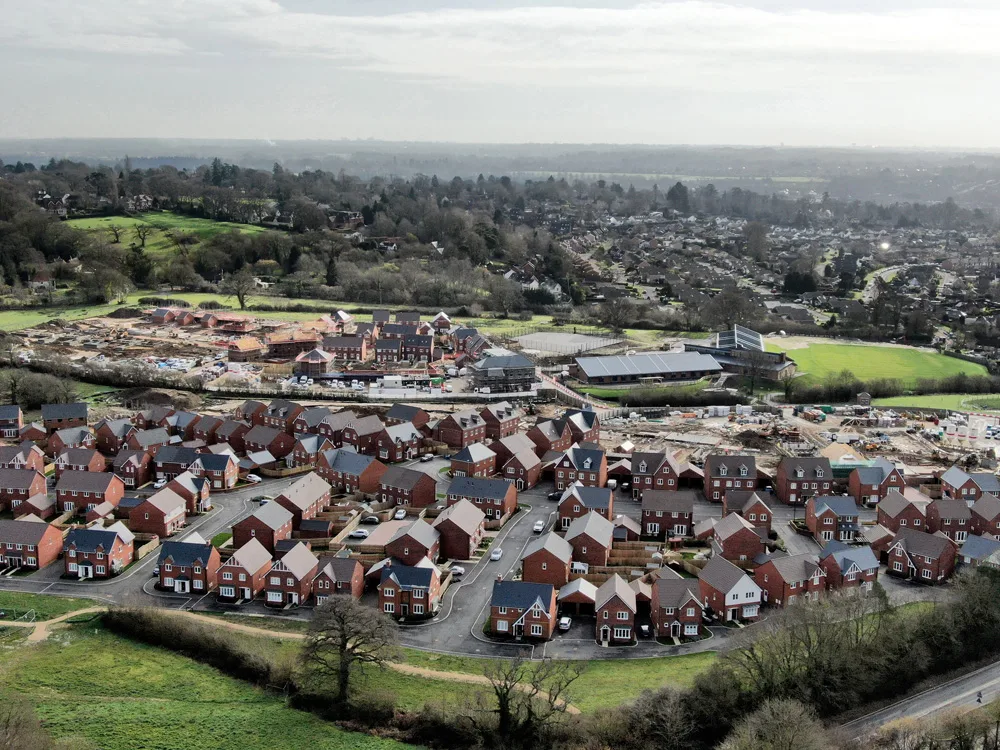
Since its inception in 2019, Dorset Council has been seeking to create a Local Plan. We are now into the third iteration, with previous attempts in 2021 and 2025. Why is it so hard to plan housing and employment land for the next 15 years?
I think it’s particularly difficult here because Dorset people care so much about the place where they live. In a city, new housing often means a derelict brownfield site is being put to better use, and everyone can applaud.
But in a village, shaped by a millennium of gradualism, people see a 200-home addition far less positively – especially in fields they played in as kids and still treasure. Dorset people are apt to complain about such plans and ask hard questions of their councillors and MPs. We wonder why these new estates are needed, and whether a rural county with neither a city nor a large town is really the right place for them.
The current target, given to Dorset Council by the Government, is 3,273 new homes per annum.
Are all these estates really necessary? Looking at population growth, house prices and household size can help to answer that vital question.
Over the next ten years, Dorset’s population is projected to grow by less than 2,000 people per year. The average home houses two people, so that’s just 1,000 extra homes a year. Clearly, population growth alone is not driving that 3,273 homes target.
High prices and low incomes
The average house price in Dorset is ten times the average wage of people working here, and that’s not good for young people or the local economy. Interestingly, that ratio has hovered around ten for the last 20 years, so it must have structural elements. Dorset is a great place to live, with valued amenities, but many jobs are not highly paid. It’s a familiar story of people moving in with equity earned elsewhere, driving up prices and out-bidding local earners. That’s a structural problem that can’t be solved by building extra market rate homes because they are always priced at existing local levels – the very levels that local people can’t afford.
Delivery of new homes in Dorset has averaged under 1,600 per year recently, while there are 10,000 house plots with permission that remain unbuilt.
It’s no good planning thousands more plots to create a notional surplus of cheap housing. Developers have surplus land already. They won’t build more – because they wouldn’t be able to sell more.
Falling household size
How then can developers sell 1,600 new homes each year when population growth only justifies far fewer? In fact, demand is driven by falling household size too. Increasingly, people in Dorset are living alone. So extra homes are needed for the same number of people. Lots more young people might like a place of their own too – but again demand is limited by finance, not by lack of planning. Speculative developers don’t build homes for those on low wages.
Returning then to the question, are all these new estates really necessary? The Government target says yes, but the evidence says no. With falling house prices, already-allocated land remaining unused and new homes remaining unsold for a year, it’s a struggle to see the case for almost doubling housebuilding to 3,273 homes every year.
People care about the rural places where they live and they sense this gap between the target and real need. And so it’s hard – and getting harder – to come up with a good Local Plan based on an unjustifiable Government target. What if that target were to be set aside? What then would a good Local Plan look like? I’d suggest five key features.
Five attributes of a good plan
First, enough land needs to be set aside to enable the speculative building industry to meet local demand, maintaining a supply of land that is allocated but unused. We’re in that position already.
Secondly, a good plan would recognise the value of steady, gradual rather than step change. Pouring hundreds, if not thousands, of new homes into a village fails to recognise and value the local character that has accumulated over generations. Gradual change is better.
Thirdly, there’s a need to say enough is enough.
For instance, for decades planners have maintained green belt policies around major conurbations like BCP, valuing those policies for their permanence, protecting the surrounding countryside and preventing endless sprawl. It’s foolish to deride that wisdom now as if it doesn’t matter any more. Big conurbations should recycle their land rather than sprawl ever outwards.
Similarly, it’s sensible to set a threshold for the connectivity of sites for new housing: if the location of a large site increases average car use, then planning is going in the wrong direction environmentally. Such sites are just not sustainable and should be rejected.
Fourthly, a good plan would map out where extra people are going to live, so house building would be aligned to expected population growth. Those who plan roads, water, waste, health and so on, need to plan for people not unrealistic housing targets. We will never be able to get our infrastructure (and our local economy) right while targeting housing that is unlikely to be built.
Fifth, assessments consistently find that the pressing need is for social rent housing. Market housing has failed to produce even a fraction of what’s needed for those on low incomes. A good Local Plan would address the problem directly, looking to obtain land nearer to existing use value and employing modern methods of construction (MMC) to build at scale through a Land Corporation.
None of these five features are new: they’ve all been part of planning before and could be again. They involve balancing the hopes of everyone involved, but surely that’s what planning should be?