

Fed by water that has spent decades filtering through the chalk beneath Dorset, the watercress beds near Dorchester are part of an industry stretching back to the Victorians. Courtenay Hitchcock pulls on his wellies to discover a farming operation far bigger – and far more complex – than he expected.
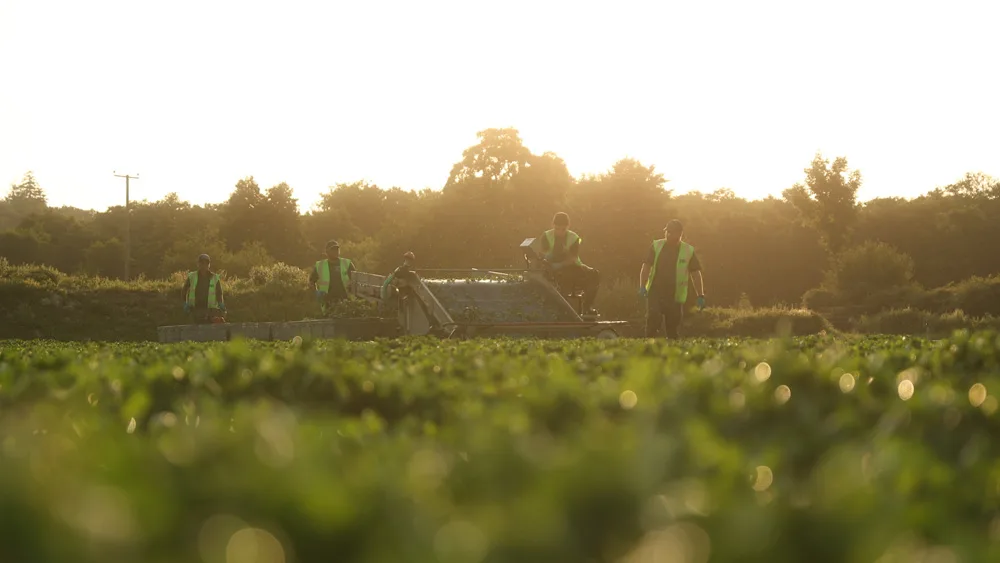
Image: The Watercress Company
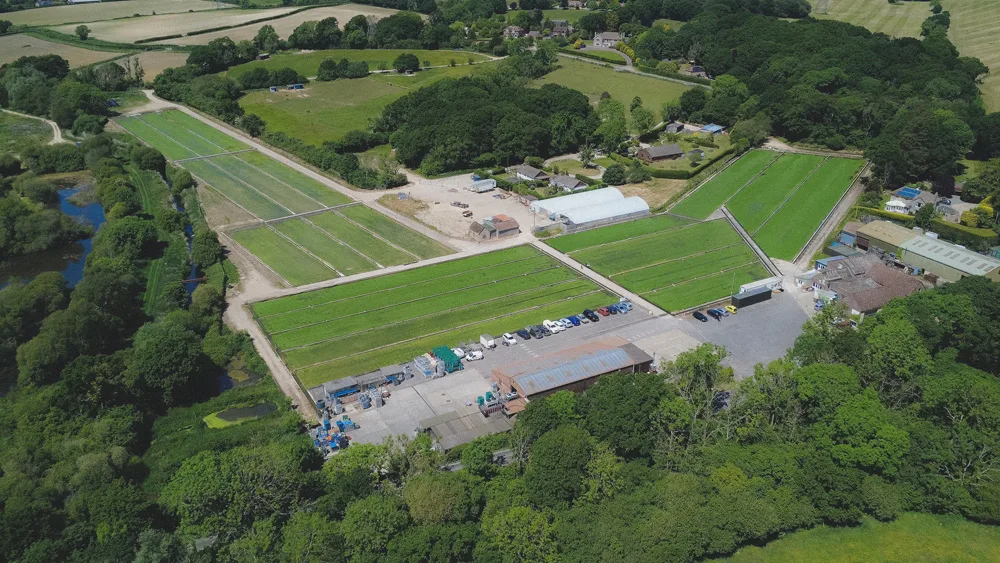
You don’t really appreciate the scale until you walk into it. The water is ankle deep, running steadily through long, intensely green beds of watercress. They stretch away across the site in regimented strips, separated by narrow concrete paths … suddenly the familiar little bag of leaves in the supermarket looks rather different.
There are tractors, workshops, vans and machinery – this is emphatically a working farm. But beneath it all is the element that dictates everything that happens here – the water.
It rises naturally from deep beneath the Dorset chalk and flows through the beds, providing the environment in which millions upon millions of watercress plants grown.
And there really are millions.
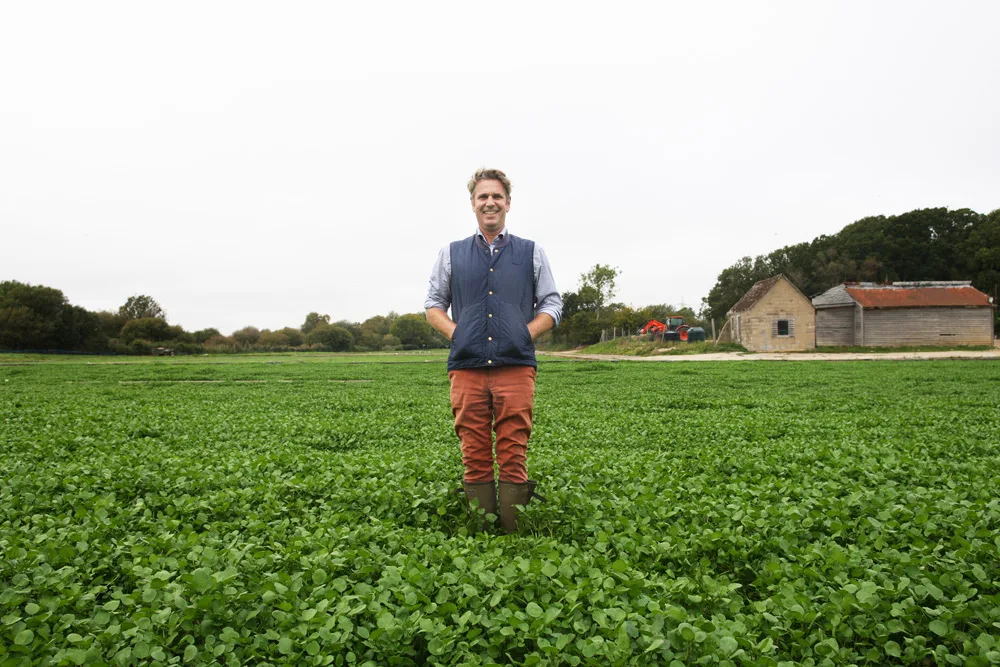
Image: Courtenay Hitchcock
‘We’ve got 20 hectares here,’ says Tom Amery of The Watercress Company. ‘Roughly 2,500 plants per square metre – that’s 500 million plants growing in our beds at every point through the year.’
Tom has been growing watercress near Dorchester for 27 years. He arrived in 1999, in his early 20s, having left the Wirral and trained in commercial horticulture in Essex. ‘I didn’t even know what watercress was,’ he says. ‘You certainly don’t think in your early 20s that you’re going to be growing watercress for another 27 years.’
What he discovered was an industry rooted deeply in this particular corner of the country.
Following the water
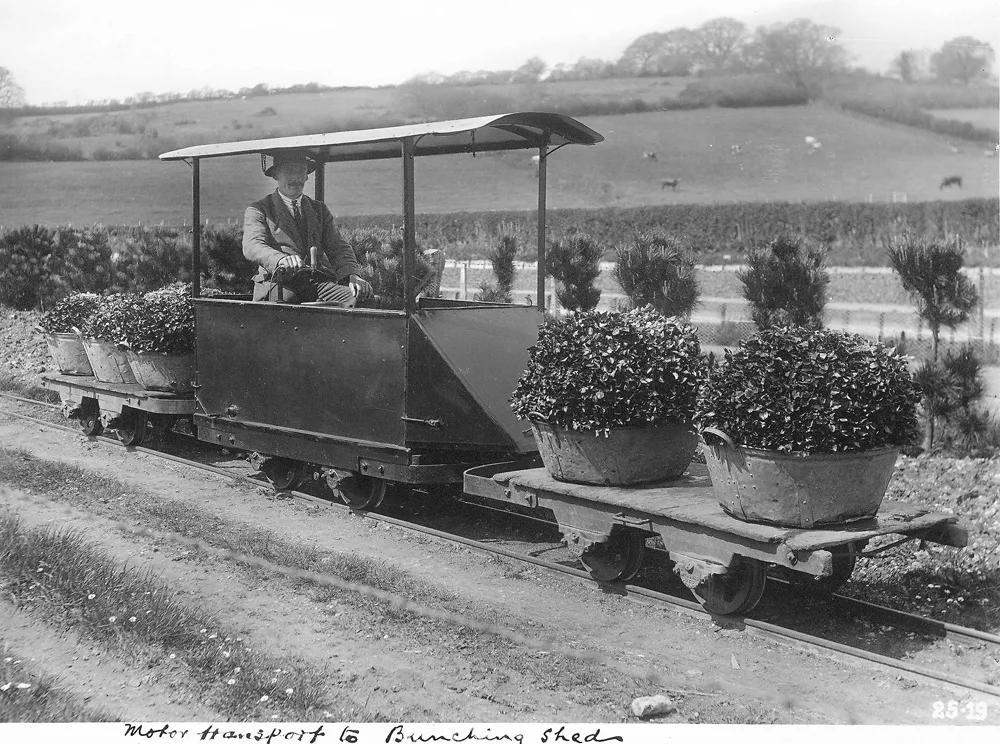
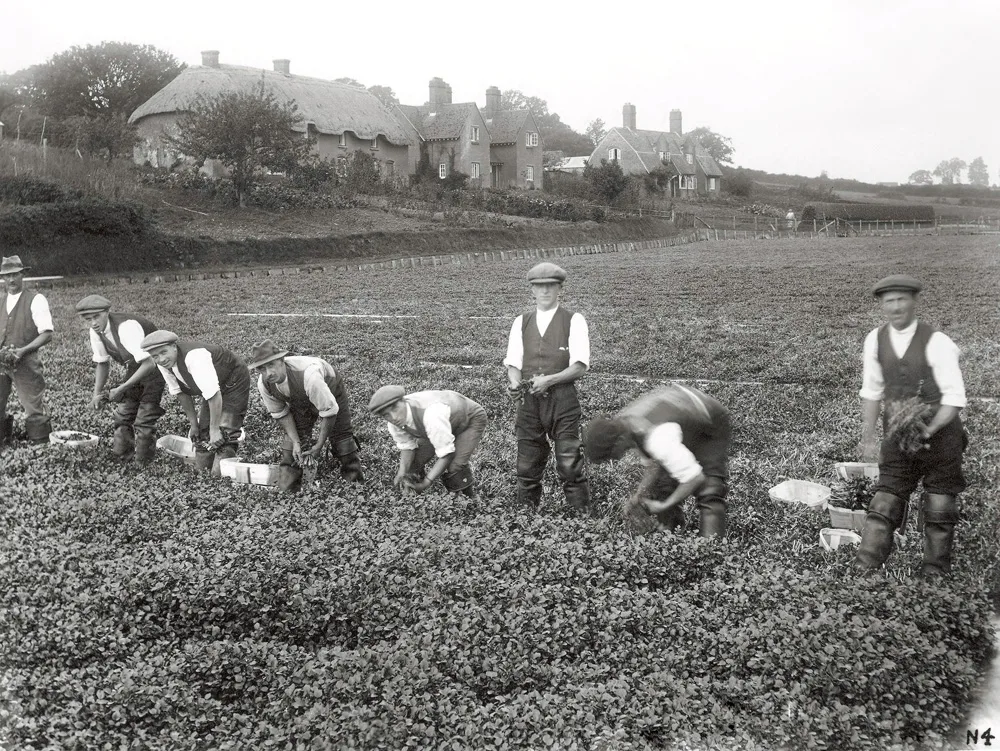
Roman soldiers and settlers introduced watercress (Nasturtium officinale) to Britain, but commercial production in Dorset took off in the Victorian period for a simple combination of reasons: Dorset had the water and the new railways could take the crop to its customers.
‘Small watercress farms used to be scattered all across the country,’ says Tom. ‘Then the railway system turned up and totally changed how the country ate. Food could suddenly be transported all over the UK.’
Dorset’s clean, free-flowing spring water made it ideal watercress country. From the 1880s, commercial beds were established, and the crop was sent by rail from Moreton, through Bristol and onwards to Leeds, Sheffield, Manchester and Liverpool: ‘We’ve got amazing records of members of the Jesty family working all over the north of England,’ Tom says. ‘They were receiving the watercress and selling it. Huge quantities were being shipped from Dorset to the northern cities.’
The Jesty family swiftly became one of the county’s established watercress-growing names. By the mid-1990s, however, some of the old family businesses needed new investment. Farms belonging to the Jesty and Barter families were bought by Dorset businessman Peter Old, and became part of the fledgling Watercress Company.
Tom joined a few years later.
‘When I arrived, there were people here with all that history. Bill Jesty was a really big part of my career because he had all that knowledge. He gave me everything I’d ever need to know about what had been going on.’
It is a recurring theme in Tom’s story: an apparently simple crop requiring generations of accumulated knowledge.
Not the cress from school
There is also one misconception to clear up: this is not the cress you grew on damp cotton wool at primary school.
‘That sort of cress is basically an immature plant,’ Tom says. ‘Watercress is completely different. We’re growing it outside permanently, in free-flowing water.’
Beneath our wellies is a solid gravel bed. The plants anchor themselves lightly into it while the flowing water provides their growing environment. Only the top ten centimetres or so are harvested, with another 20 or 30 centimetres of plant remaining below.
Depending on the time of year, a crop can take up to 12 weeks – or as little as three weeks – to reach harvest, and a bed may produce up to five crops in a year.
But the plants themselves are only half the population. Tom estimates there can be around 5,000 insects per square metre, representing perhaps 45 different species. The farm stopped routinely applying pesticides decades ago and he says a complex ecosystem has developed among the crop.
‘You’ve got insects that are eating each other, or composting and regenerating nutrients from the crop that has died back. Over the years we’ve created a biosystem that works with us.’
It is an unexpectedly wild idea in a landscape that, at first glance, looks carefully controlled.
An underground reservoir
Then there is the water.
Tom says much of it has filtered slowly through the chalk for decades before reaching the aquifer below the farm.
‘Our water is coming from 40 to 60 metres below us. Water percolates down through the bedrock – it might take 40 years to get there – and once it gets into the aquifer it’s under pressure and has to come out somewhere.’
Here at Waddock Farm, some of it simply emerges naturally as springs. It gives the business a remarkable degree of protection during dry summers, although Tom is under no illusion that horticulture can simply carry on unchanged as the climate shifts.
‘Trying to grow in 40º summers – what’s that going to be like? We’re going to have to bring in new technology and new opportunities.’
The company already grows watercress in Spain, allowing production to switch seasonally between the two countries, and is trialling new technology as it considers how growing methods will need to change. For Tom, adaptation has become the defining theme of the second half of his career.
‘The first half of my 27 years was probably the easy half … it was all about growth. The second half has been all about how to navigate all the challenges.’
More than a bag of salad
Tom estimates that today The Watercress Company accounts for 70 to 80 per cent of the entire UK watercress supply. Its crop goes into most of the major supermarkets, as well as independent shops, restaurants and hotels.
But he believes its future cannot simply be getting another bag on another supermarket shelf.
‘It’s got to be so much more than that these days.’
The company already makes watercress pesto and freezes some crop for use as an ingredient. It has worked with researchers interested in watercress for everything from nutrition to skincare, and Tom has spent years connecting scientists with the crop to investigate the compounds it contains: ‘It’s very high in vitamin K, vitamin C, calcium and iron,’ he says. ‘But then there’s the phytochemical side as well. We’ve paired watercress up with scientists all over the world because we need to add some detail to the old message of “eat watercress, it’s good for you”.’
Once, while driving to an early meeting, hearing a Radio 4 discussion about epigenetics sent him searching for a scientist working in the field. Within a week he was on a plane to visit the professor’s laboratory. The resulting research relationship lasted four years.
The next generation
Despite supplying supermarkets across Britain, the business retains some pleasingly Dorset relationships. Local village halls are given bags of watercress to sell at coffee mornings. People will arrive at the farm asking whether they can buy directly. Some have become regulars.
‘They bring gifts,’ Tom says. ‘Hobnobs come in, and we give them watercress back.’
After an hour walking through 20 hectares of beds, past harvesting machinery and through ankle-deep water, it is difficult to reconcile the scale of the place with the little green leaves most of us barely notice decorating a sandwich.
One of Dorset’s most familiar crops has been growing here for almost 150 years, fed by water that began its journey through the chalk decades before it reached the surface.
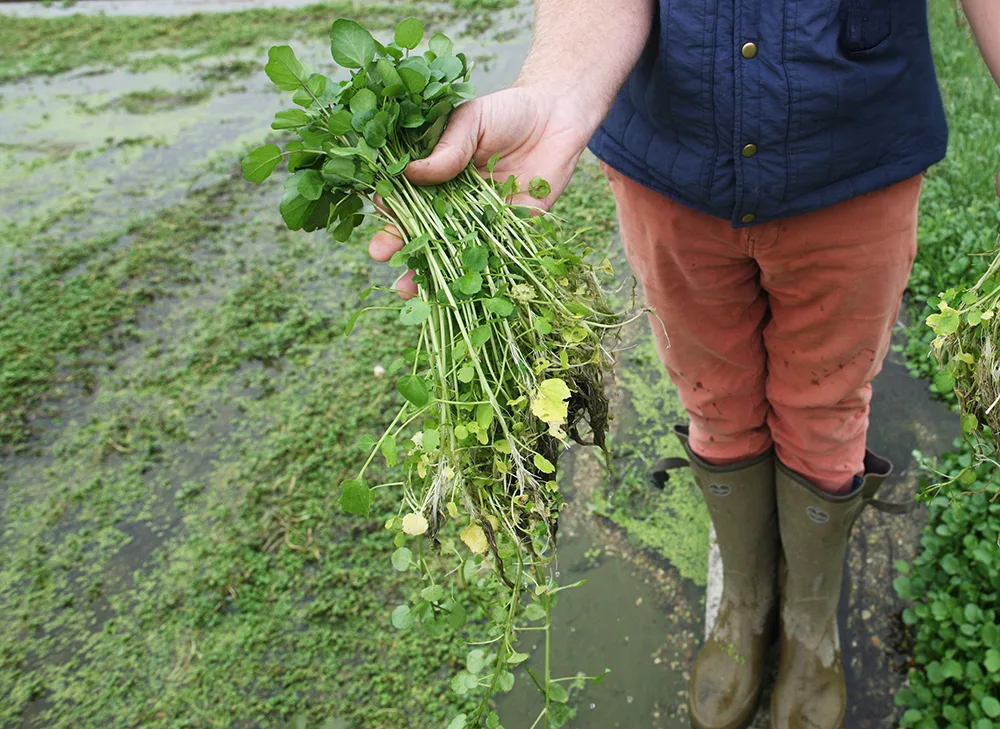
Image: Courtenay Hitchcock
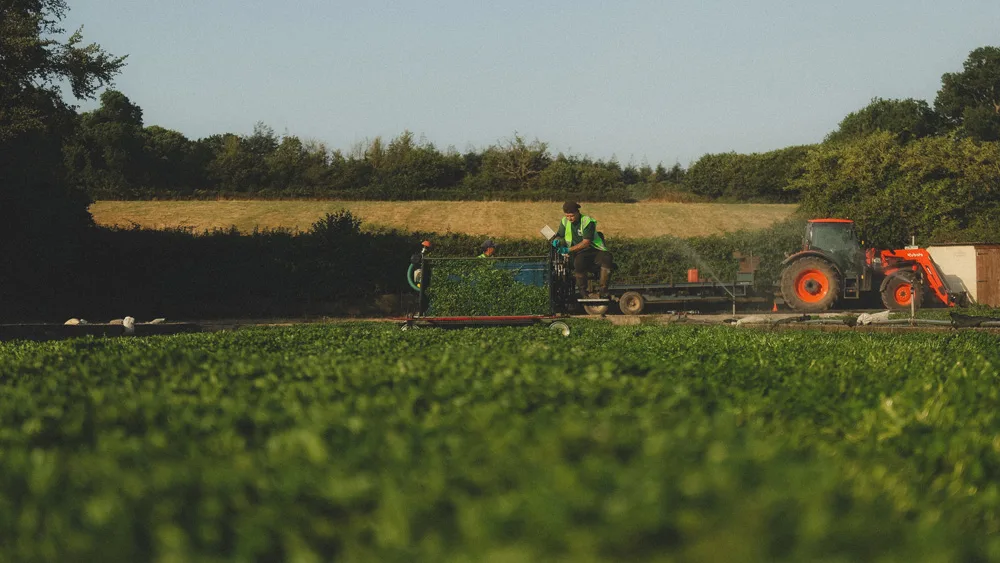
The survival of the industry now depends on passing that knowledge on again. The entire workforce on the Dorset beds is currently under 30 – Tom says this is the result of a deliberate effort over the past five years to bring young people into the business:
‘The most important thing with all these industries is keeping the skills going. Whether you’re talking about the 1880s skills or the latest developments, it takes years to learn them.’
He also wants the younger team to challenge what they inherit.
‘They’re allowed to make mistakes, because they learn from them. New solutions to old problems come from mistakes.’
There is something fitting about that attitude on a farm where Victorian beds, chalk-filtered spring water and modern horticultural technology exist side by side.
thewatercresscompany.com
The Dorset Life Business News section is sponsored by
Beeson & Beeson