

After 12 years away from the concert platform, Julian Lloyd Webber is playing again. Ahead of his visit to Sturminster Newton, he talks to editor Laura about unexpected second chances, difficult conductors and why Britain is failing its young musicians.
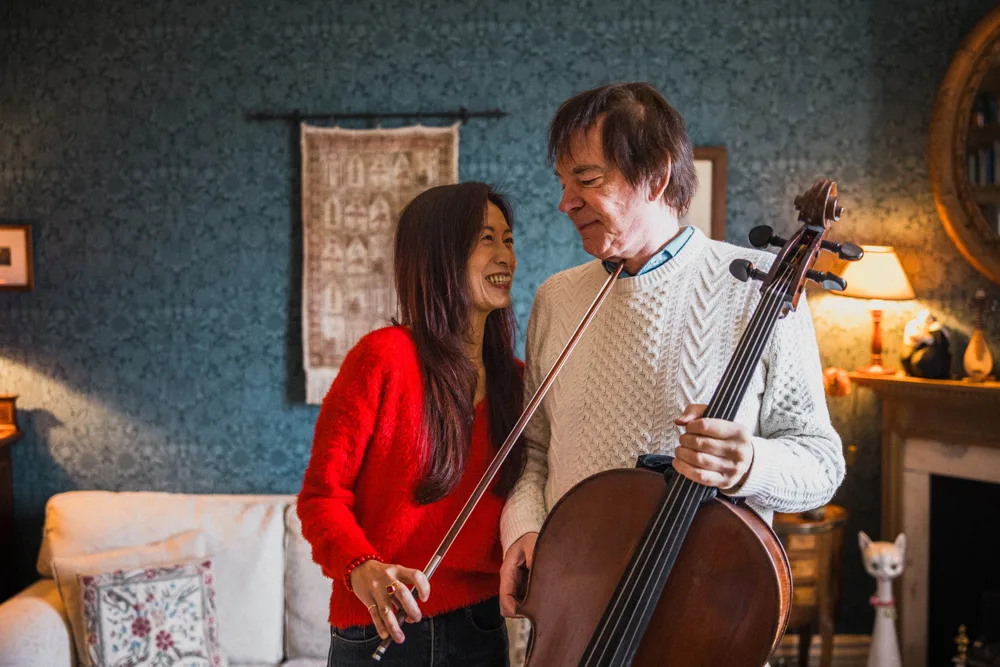
© Clive Conway Productions
At 75, Julian Lloyd Webber is learning to live with the cello again. Not the famous Stradivarius he sold when a neck injury brought his performing career to an abrupt end in 2014, but his wife’s instrument. After 12 years of believing he would never play professionally again, in 2026 the internationally acclaimed cellist has returned to the stage.
‘Strange. Very strange at first,’ he says. ‘But now I’ve been on stage a few times, it feels kind of normal again. I really never thought I would play again. I guess that will never go away, but I haven’t played big concertos again, so I don’t really know. Other things hurt instead now!
‘To pick up an instrument again at 75 when you haven’t played for 12 years is a little bit against nature. But I’m battling it.’
I wonder whether there might be a certain freedom in this unexpected second career. After decades of demanding the highest standards of himself, perhaps being able to choose what he plays, rather than meeting the expectations of international concert halls, is something of a liberation?
‘No,’ he says firmly. ‘I wish I could play everything that I played, but that’s not going to happen. It’s early days. I don’t even actually have a cello – I’m playing my wife’s – and I’m really enjoying it. I don’t believe in forcing these things. I was forced to give up, and I’ve come back at this point. It’s a completely new journey.’
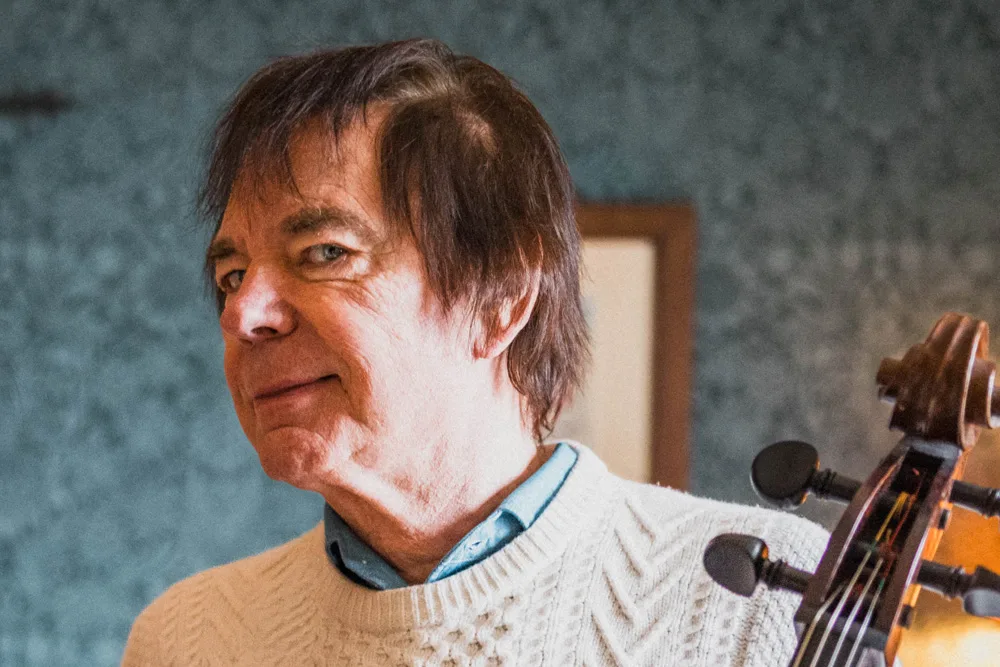
Behind the music
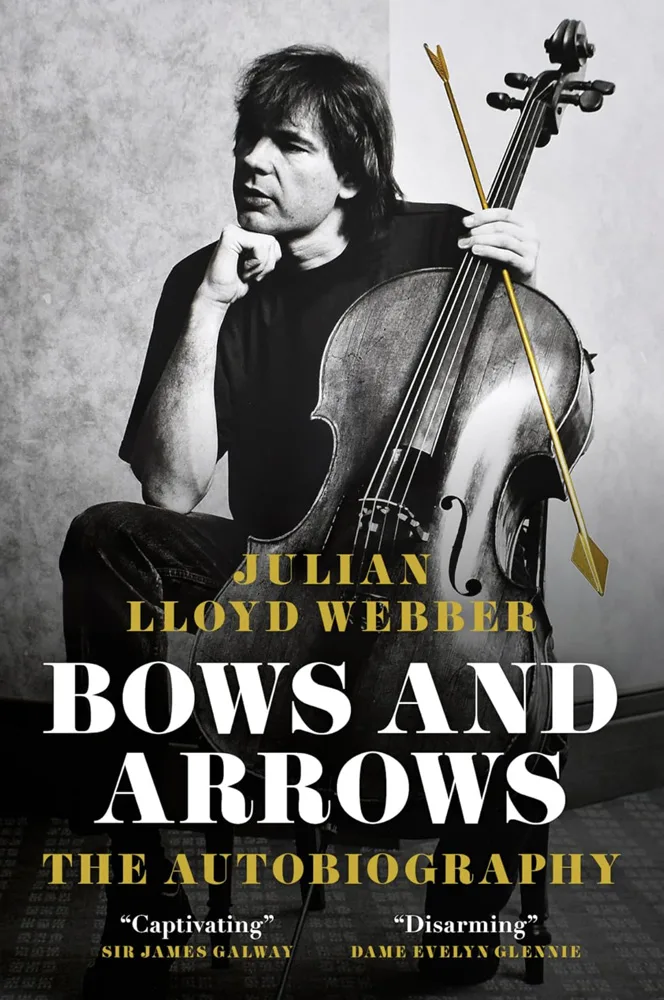
Julian has recorded more than 60 albums, won a Brit Award and worked with musicians ranging from Yehudi Menuhin to Elton John. His recently published autobiography, Bows and Arrows, is notably candid about the less glamorous side of classical music. BBC Music Magazine reviewed it as featuring ‘a prominent cast of drunken conductors, brutal teachers and cheating record-company executives’ – a world of powerful agents and professional relationships that were not always particularly healthy.
For a profession that rather likes to present itself as the civilised end of the entertainment industry, was it ever as civilised as it appeared from the stalls?
‘No! If you look at composers’ behaviour over the years, I don’t think so at all. I noticed it was Paganini’s birthday yesterday. They refused to bury him in sacred ground because they thought he was in league with the devil!’
Even without the alleged devil-worship, Julian’s own career has provided plenty of examples of the less-than-civilised behaviour that can go on behind the scenes. He is particularly frank about the power conductors wield over young soloists.
‘To be a soloist is a very specialised occupation,’ he explains. ‘You’re dependent on certain people, particularly conductors, who will either book you or won’t.’
It’s an extraordinary imbalance of power. A soloist may spend years perfecting an interpretation, only to find that their opportunity to perform it depends on the goodwill of the person holding the baton.
It’s not simply a matter of bruised egos or difficult personalities. The consequences could be felt in the performance itself.
‘They can ruin your playing and your interpretation by just not bothering in rehearsal, or, as I say in my book, turning up drunk.’
A young soloist whose future bookings depend on that same conductor is hardly in a position to object. And that’s the difficulty, Julian acknowledges. Standing up for yourself is all very well when you’ve established a reputation:
‘They can take advantage of you because they’re the ones who book you. It took me long enough, until I was in my 30s, to realise that I’d had enough of that, and I stood up for myself more.
‘But for a 20-year-old, it’s a different story. Maybe you have to have some kind of reputation before you can start telling conductors what to do.’
He believes a young musician with his ability could still build the career he enjoyed, even in today’s very different industry. But there are lessons he wishes someone had taught him before he embarked on it.
‘I think my book might be helpful. I mean, I never read a book like that when I was that age. That actually would have helped me a lot, to see some of the perils, to read at first hand someone who’s been through those situations and to see the result of actually standing up to people … that would have been a great help. Because it’s not the sort of thing you were taught as a student at music college.’
Who gets to make music?
It is music education, however, that brings out some of Julian’s strongest opinions.
He has recently called for music to be made compulsory in schools, arguing that the gradual dismantling of provision has left entire areas without meaningful access.
‘It’s very easy to destroy something over the years, and much harder to bring it back. A lot of music teachers have moved out of areas because they’re just not being employed. You have whole parts of the country where there’s hardly any music in schools at all.’
He has little patience with the suggestion that classical music is inherently elitist.
‘That’s a load of rubbish. They make it elitist because parents have to pay for lessons and expensive instruments, which at one point they didn’t have to. And now, in some areas, even if they did, it would be very difficult to get that tuition.’
He wants political leadership rather than another well-meaning promise. But he also believes ordinary people have more influence than they realise: ‘People say to me, “Well, what are you going to do about it?” I always say, “Well what are YOU going to do about it?” Write to these people. Make a noise. Music’s worth making a noise about!’
It’s a concern particularly relevant in rural Dorset, where geographical distance can be as much a barrier to musical opportunities as the cost.
Julian knows the region well through his long association with the Bournemouth Symphony Orchestra. He was appointed patron of the BSO Vibes scheme in 2012, supporting outreach, youth engagement and classical music access for young people across the South West. He particularly regrets the loss of the Bournemouth Sinfonietta, the smaller orchestra that once brought live performances to communities across the South West.
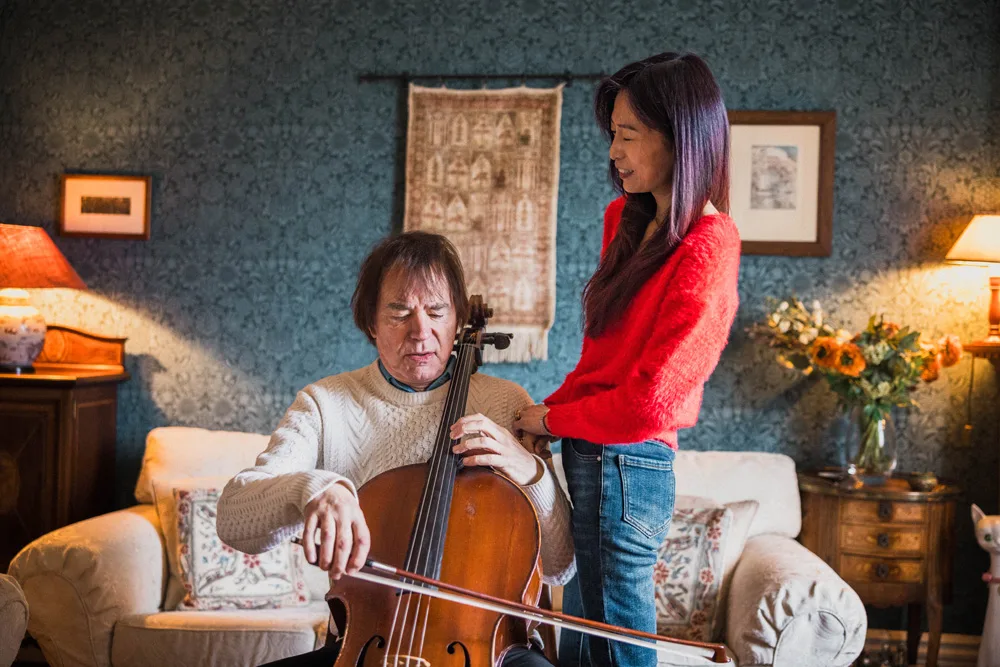
‘That was a tragedy. They used to go into the smaller parts of Cornwall, Devon, Dorset and play in small halls where they just didn’t have music. And they’re gone. I think that’s a really sad thing.’
He has always valued those smaller venues himself.
‘I enjoyed those concerts, playing in smaller places like Sturminster Newton, just as much as playing in the Albert Hall. It was a really important and enjoyable part of what I did.’
Nothing to be scared of
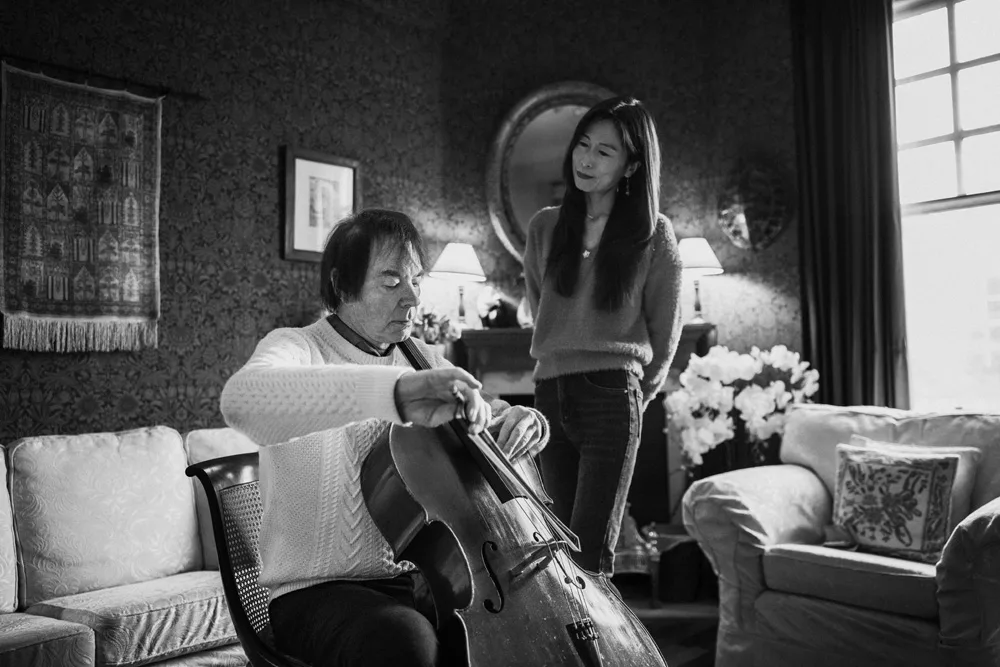
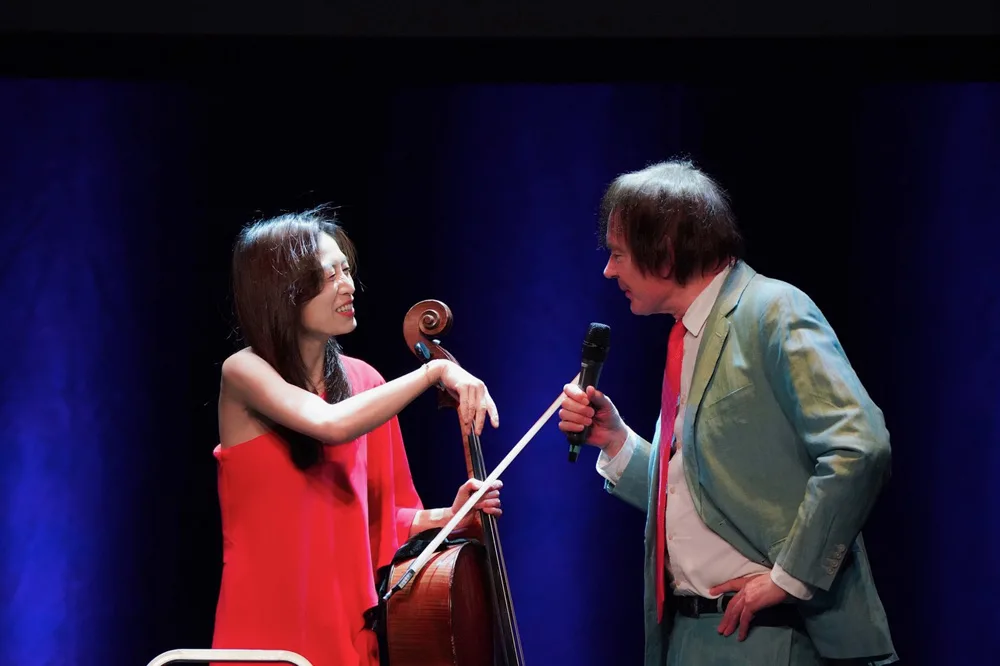
That philosophy brings him to The Exchange in November, alongside his wife, fellow cellist Jiaxin Lloyd Webber, for Bach, Bows and Arrows! The evening combines performances of Bach’s cello suites with stories, film clips and some entertaining revelations from his autobiography.
When I suggest that his name, and Bach’s, might be a little intimidating to someone unfamiliar with classical music, he is horrified:
‘No! No no no! It’s a fun evening! We have some jokes, and the second half particularly is a lot of fun. I show some videos which are not necessarily what people expect, and read funny bits from Bows and Arrows. Jiaxin joins me for the Q&A. There’s absolutely nothing to be scared of.’
And when two accomplished cellists who are also married disagree about how Bach should be played, who wins? ‘Probably Jiaxin,’ he says. ‘Although she would probably say me. She’s more the Bach expert. She really has played those pieces for a very, very long time, and she loves playing them. She does ask my opinion. And sometimes I give it.’
© Clive Conway Productions
And so to the Random 19…
- What’s your relationship, if any, with Dorset?
I played regularly with the wonderful Bournemouth Symphony Orchestra and have always loved Dorset’s peaceful countryside. - What was the last song you sang out loud in the car?
Rockin’ all over the world by Status Quo – Leyton Orient always play it when we win! - What was the last film you watched?
‘Obsession’, purely because I saw 5 star reviews for it. I thought it was dreadful! - It’s Friday night – you have the house to yourself, and no work is allowed. What are you going to do?
Go out! - What is your comfort meal?
Welsh Rarebit (preferably with a pint…) - What did you want to be when you grew up?
A tube train driver, a detective and – from 13 – a cellist - What little luxury would you buy with £10?
Pint of beer - What is your greatest extravagance?
Eating out - What’s the best biscuit for dunking?
I don’t dunk! - What was the first book you read and loved? And the last?
The first was Rebecca by Daphne du Maurier. And the last one was Good Me, Bad Me by Ali Land - What’s your secret superpower?
Resilience - What shop can you not pass without going in?
A secondhand bookshop. - What completely ordinary thing brings you disproportionate joy?
Leyton Orient winning. Sadly this cannot be called ‘ordinary’! - Cats or dogs? Tell us about yours?
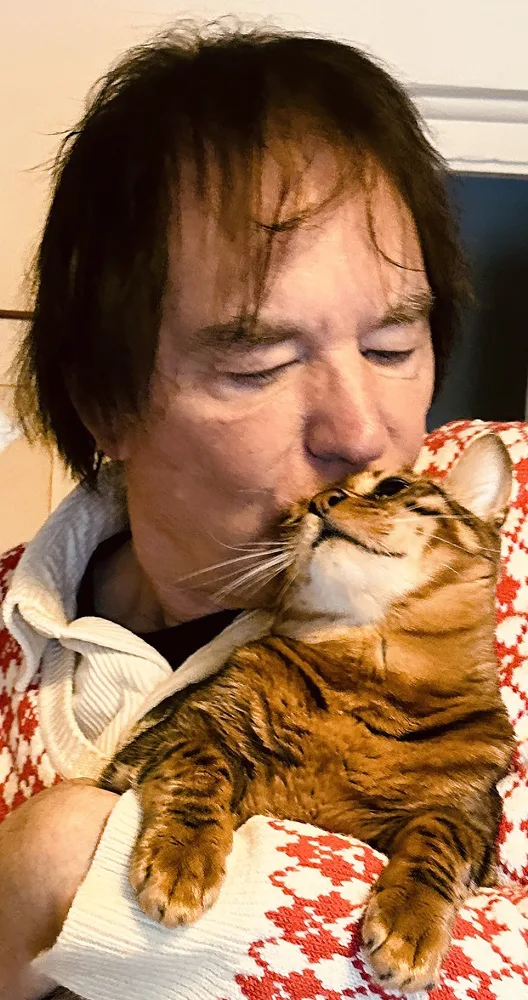
Cats. We had a beautiful ‘Toyger’ cat called Ambie who died last year when she was only four.
I will never forget her. - What’s your most annoying trait?
You had better ask my wife… - What would you most like to be remembered for?
Trying (and mostly failing) to give every child the chance to experience music. - What totally irrational thing makes you unreasonably cross?
Piped Muzak. But it’s not irrational because I don’t see why we should be forced to listen to background music we haven’t chosen. - Chip Shop Chips or Home Baked Cake?
Home baked cake - You have the power to pass one law tomorrow, uncontested. What would you do?
Re-introduce music in ALL our schools.
Julian and Jiaxin Lloyd Webber will bring Bach, Bows and Arrows! to The Exchange, in Sturminster Newton, on Thursday 19th November 2026 at 7.30pm. Tickets start at £25.
For details and bookings, visit stur-exchange.co.uk