

In 1991, the Chillcotts took a chance on 100 Christmas turkeys. Today, three generations help rear 1,400 free-range bronze birds on the family farm at Owermoigne
The first Christmas didn’t go entirely to plan.
Thirty-five years ago, Mark Chilcott and his family decided to try something new on their farm at Owermoigne, near Dorchester. They bought 100 young turkeys – 50 white and 50 bronze – and set about rearing them for the Christmas market.
There was just one small problem. The birds grew rather more enthusiastically than expected.
‘The big ones got too big!’ Mark says. Turkeys they had expected to weigh around 15lb were coming in closer to 20lb, and the family found themselves having to give customers rather more turkey than they’d bargained for.
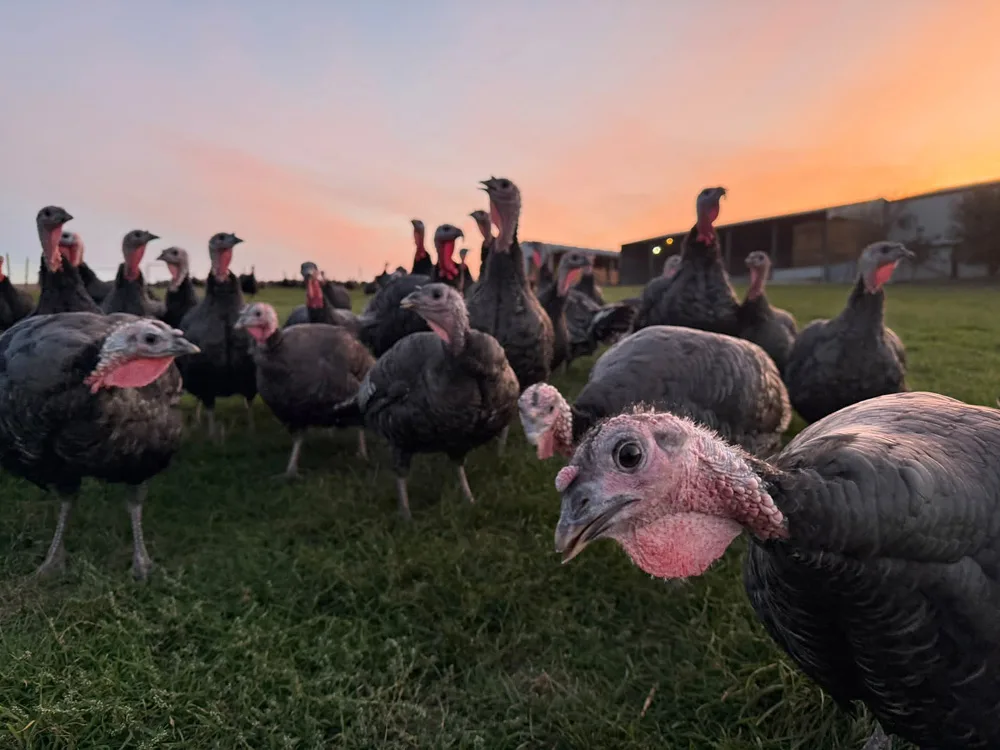
Now Mark is considerably better at predicting the size of his birds. These days, Chilcott Turkeys produces around 1,400 free-range bronze turkeys each Christmas, ranging from 4kg to 12kg (nine to 26lb in old money), although five- and six-kilo birds are the most popular.
Getting that balance right is more complicated than simply looking at a turkey and guessing how big it might become.
‘What controls the size is the strain and the sex,’ Mark explains. ‘We have five different strains and two different sexes and we order the right number of each particular strain to try and get the right weight profile. But it’s not an exact science – some years they just grow faster than others.’
Even after 35 years, the birds can still surprise him.
When bronze was unusual
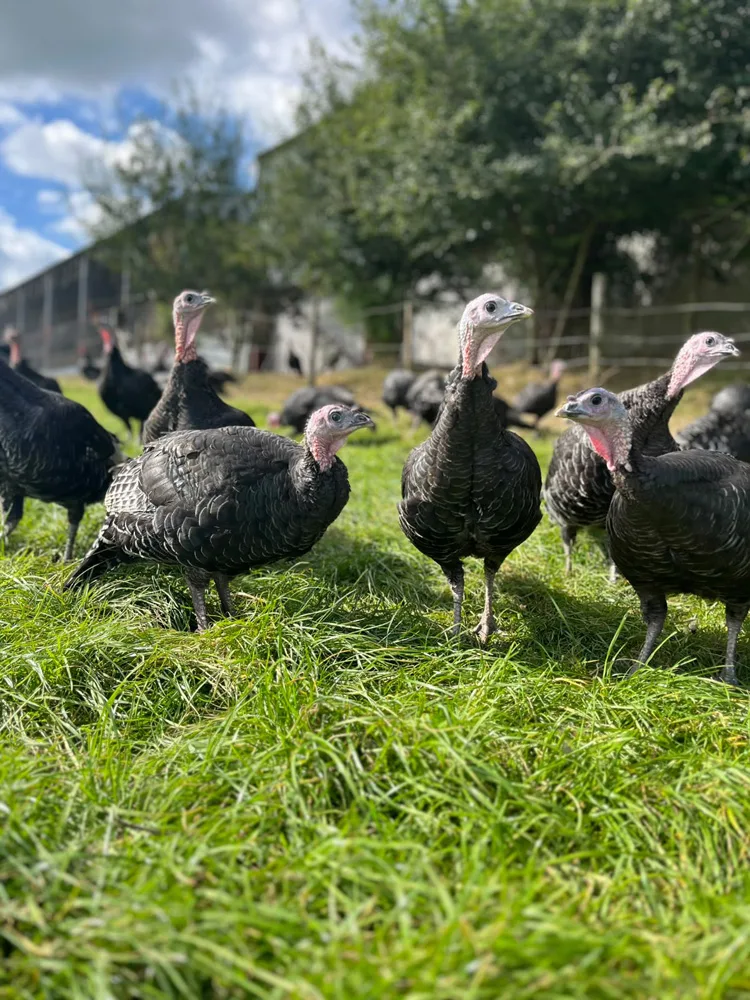
When the Chilcotts started out, white turkeys were the commercial norm. Bronze birds, with their dark, glossy feathers, were relatively unusual in the local Christmas market, and free-range production was far from commonplace.
Over the first decade, demand for the traditionally-reared bronze birds steadily increased until they became the farm’s entire Christmas turkey business.
The birds arrive as poults in early June, and spend the next 24 weeks growing on the farm, with access to the outdoors once they’re old enough. They forage through the grass by day and are safely shut inside at night. This year’s exceptionally hot summer might have been expected to cause problems, but Mark says it was surprisingly helpful: ‘Young poults need to be kept very warm for the first month anyway, so that was fine. It saved us on heating. ‘From then on, they coped really well with the hot weather.’
Problems? What problems?
Ask Mark about the biggest pressures facing a turkey farmer in 2026 – feed, energy, labour, rising costs or customers’ spending power – and he gently corrects the question.
‘We don’t call them problems. We call them challenges.’ It’s a distinction he takes seriously. ‘It’s all about having the right attitude, really. There are always challenges in each business, and we just have to deal with them as best we can. You have to not let it get you down.’
The Chilcotts also grow cereals and rear beef cattle.
‘In most years, one enterprise or another on the farm has its challenges,’ says Mark. ‘The advantage of a mixed farm is that the other enterprises can help carry it through.’
Keeping it in the family
If the birds are the most visible part of Chilcott Turkeys, the people behind them are equally important.
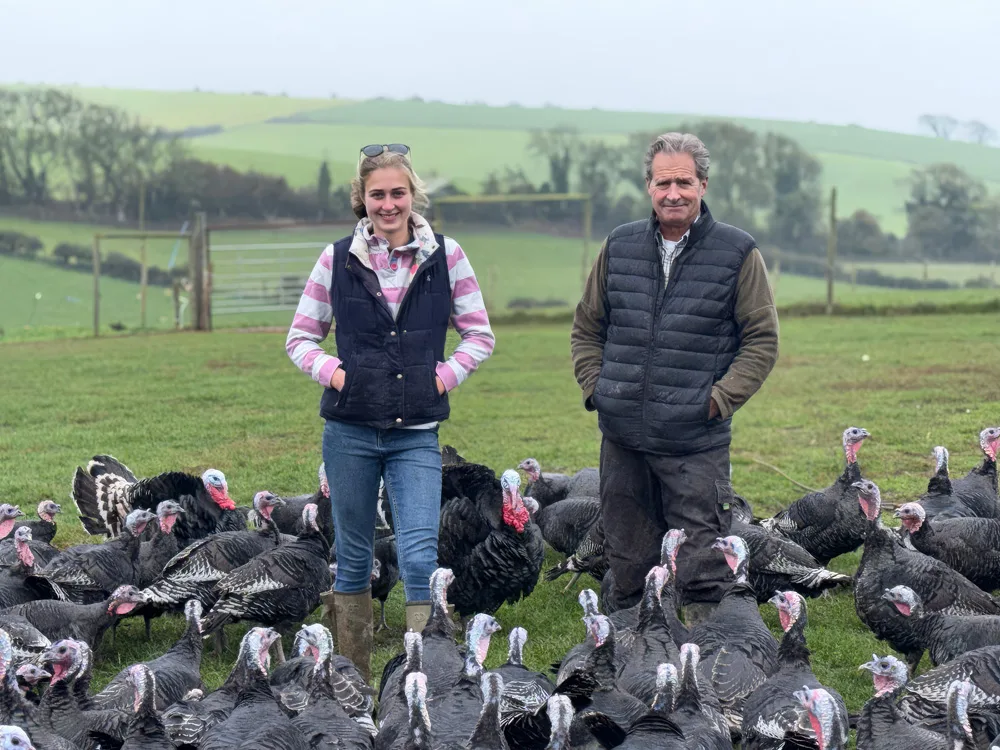
This is emphatically a family operation, with three generations involved in running the farm. Mark’s parents are still part of farm life, while his wife Jo and son Harry help with the evening routine of shutting up the turkeys when Mark and daughter Lottie are busy with the arable work.
Lottie graduated from Harper Adams University in Shropshire, in September 2025 and has spent the past year working alongside her father. And, rather than treating it as a temporary stop before moving on to another job, she plans to stay.
‘No, I’m staying on the farm. We’re trying to balance it so Dad can do the arable, I can do the beef and we can both do the turkeys.’
Does this mean things are gradually handing over, or is Lottie still being told what to do?
‘I’m the one who gets told what to do!’ says Mark
‘I think it depends who you ask …’ adds Lottie.
Grandma Anne is still very much involved, too – and even after decades of Christmas turkeys, the family isn’t entirely immune to festive mishaps.
‘A friend from university came to stay for a few days to help us with the turkeys,’ Lottie recalls. ‘One evening, Grandma cooked us all roast turkey and we had Christmas pudding too. Except she picked up the wrong box from the fridge and accidentally served the pudding with bread sauce instead of brandy butter … We were all so tired we didn’t even notice – it wasn’t until we cleared the table that she realised! It wasn’t bad, actually … but I’m not sure we’d recommend it to anyone!’
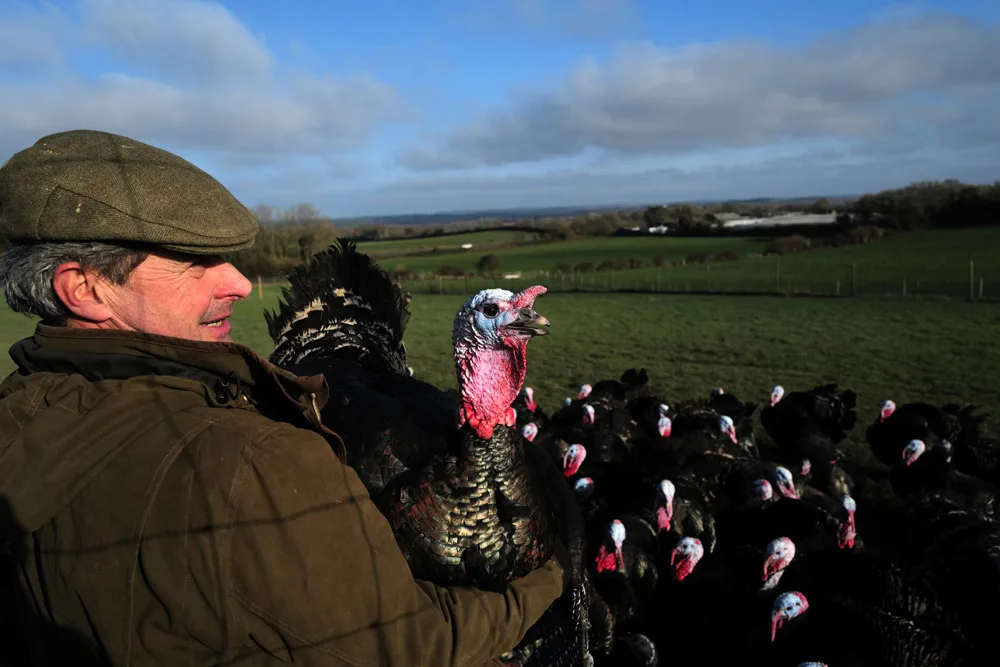
Image: Courtenay Hitchcock
The Christmas tradition
Over the years, the Chilcotts have kept every thank-you card, letter and email they’ve received from happy customers, some of them dating back to before Lottie was born. And yes, I should probably declare an interest here: we’ve been buying our Christmas turkey from the Chilcotts for more than 15 years. There would be something approaching a family revolt if I turned up on Christmas Day with anything else.
Although at least I’ve always remembered to collect it. Anne recalls one customer who was tending her horse late on Christmas Eve when she suddenly realised she’d forgotten the turkey.
‘She rang in a panic and came to collect it at about 8pm,’ Anne says. ‘We still laugh with her about it every year!’
For Lottie, what keeps customers returning is straightforward: the quality of the finished bird.
And although the family intends to grow the business, Mark says there is a limit: ‘We’ll continue to expand, but sustainably. There’s no point in going mad and letting the quality slip.’
Some things won’t change
In the early days, much of the Chilcotts’ Christmas production went directly to local butchers. The birds were supplied ‘long-legged’ – plucked, but with the head and feet still attached – leaving the butchers to complete the preparation themselves.
‘It was a lot easier from our point of view,’ says Mark. ‘The only ones that we dressed were for our own customers. Now, everything has to be dressed. We don’t sell any long-legged at all.’
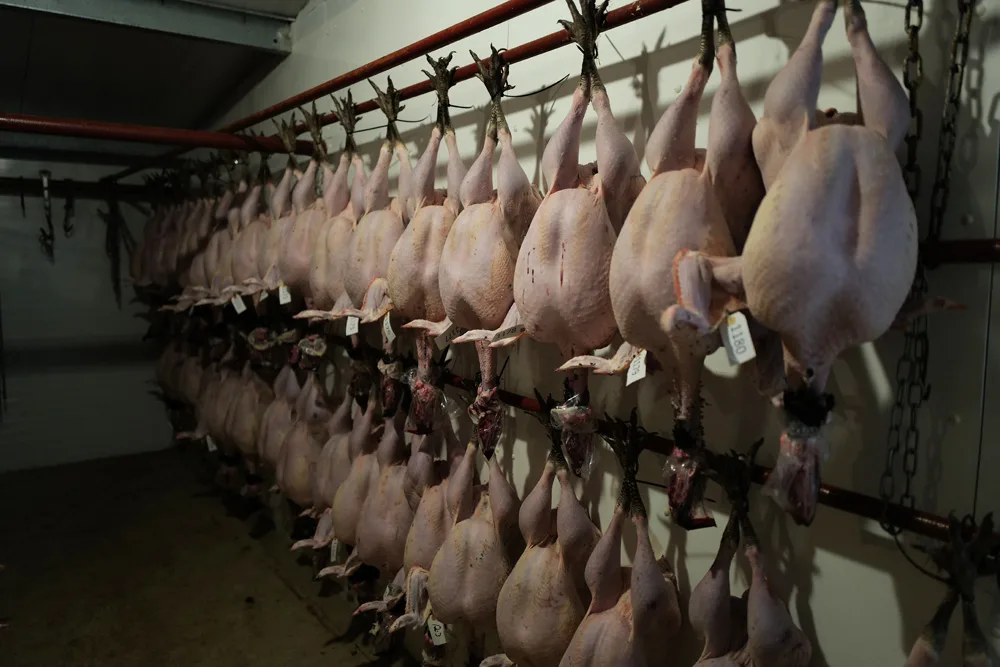
Every Chilcott turkey is raised slowly and prepared using age-old traditional methods. Each bird is dry-plucked, rather than processed using the faster wet-plucking methods common in large-scale production. The birds are then hung in a temperature-controlled cold store for ten days to mature.
It’s a slower, more labour-intensive approach, but Mark believes it has an enormous impact to the finished product: ‘It makes a huge difference to the flavour and the quality at the end of the day,’ he says. ‘It’s what we do that the big companies can’t – the dry-plucking and maturing them in a cold store. That’s something that we can do that the big people can’t, and we’re always going to stick with that.’
Thirty-five Christmases on, the Chilcotts may be better at judging how big their turkeys will become, but some things are deliberately the same. The birds are still reared on the family farm at Owermoigne, still dry-plucked and still matured slowly before Christmas.
And these days, at least, customers generally get the size of turkey they ordered.
chilcott-turkeys.co.uk