


A few weeks ago, we did something we’ve been talking about for years. We asked our readers for money. Which, when you put it like that, sounds dreadful!
Dorset Life has always been free to read, and we intend to keep it that way. We started with a fairly simple belief that good local journalism shouldn’t be something you can only access if you can afford to pay for it. Six years, a new name and an unreasonable quantity of coffee later, we still believe that.
What we hadn’t worked out was how to answer the people who kept asking how they could support us without buying an advert.
Well, now they can. We’ve introduced voluntary contributions, and the response has been … unexpected. Not because we’re suddenly loaded (C, stop browsing Knight Frank). But because people have chosen to pay for something they can already have for nothing.
We’re proud of Dorset Life. We know how hard we work, and we think we’re pretty good at what we do (modesty has its limits). But there’s something unexpectedly moving about discovering that other people value it enough to help sustain it, especially when money is tight for so many.
This month we’ve commissioned two specialist journalists to investigate important stories – the Arla dairy welfare allegations and the Leweston School closure. Both brought particular knowledge and experience to their subjects, and the time to dig deeper than the initial headlines. Not simply repeating what’s already online, but asking difficult questions, following up, checking and rechecking the facts until they’ve got the story right.
That sort of journalism takes time, experience and determination. And the people doing it deserve to be paid properly. That’s not an optional extra.
It’s also why your support matters. Every contribution helps us commission more of that work. More investigations, more difficult questions, more opportunities to get beneath the surface of what’s happening in Dorset, rather than simply reporting that something happened.
Because there are plenty of stories worth telling that will never attract an advertiser.
Meanwhile, behind the scenes, Courtenay and I still run Dorset Life from the office slap bang in the middle of our house.
Which is often inconvenient, frankly.
But during publication week I’m actually grateful for its location. As layout is my job, I suspect I wouldn’t see the family for nine days straight if they didn’t have to walk past me to get to the kitchen, their bedrooms or the loo.
So to everyone who has already contributed, thank you. You’ve given us something even more valuable than a few pounds in the bank. You’ve shown us that the work matters to you, too.
And if contributing isn’t possible, please don’t give it another thought. Keep reading, sharing, sending us your stories, photographs, corrections and strongly worded letters. All of it matters.
We know what we want Dorset Life to be. And thanks to you, we have a little more room to make it happen.
Laura x
PS – If you’d like to help us do more, you can support Dorset Life here
On the Treasury’s pay rise
As a small business owner, I find the Chancellor’s announcements about increasing the minimum wage rather frustrating. Of course I want my staff to earn more. But when the government takes the credit for giving them a pay rise, they don’t shout about the fact they just added a stealth tax to prop up the treasury coffers.
Next April’s 50p hourly increase means roughly £910 a year extra for someone working 35 hours a week. But of that, around £255 goes straight back to the Treasury in income tax and employee National Insurance. On top of the wages, I’ll pay another £137 in employer’s National Insurance too.
That’s almost £400 extra for the Treasury, every year, for EVERY employee on those hours. Ten employees? Nearly £4,000 in additional tax receipts annually for me, funded by a small business already struggling with rising costs.
And of course, I put my prices up to cover it … which means those who just received a pay rise find their living costs have gone up to match, and no one’s better off.
Except the Treasury.
I’m not against increasing the minimum wage. But perhaps we should stop pretending these announcements are simply acts of government generosity. They’re also a rather effective way of raising revenue without announcing a tax increase.
Name and address supplied
On another Beast from the East?
As an enthusiastic – but amateur –weather watcher, I’ve been keeping a close eye on the forecast models recently, as there’s something unusual happening high above the Arctic. The polar vortex – a steady circulation of strong winds – is showing signs of significant disruption. Some of the latest European models are suggesting we could see a sudden stratospheric warming event unusually early in November.
Readers will probably remember the Beast from the East in February 2018, when bitterly cold Siberian air flowed across Britain and brought heavy snow, freezing temperatures and considerable disruption? That event followed a major disturbance of the polar vortex.
Before everyone rushes out for snow shovels, a disrupted polar vortex doesn’t automatically mean freezing weather in Dorset. The effects can take weeks to reach us, and sometimes they don’t produce a cold spell here at all. The Met Office’s early November outlook has been fairly unremarkable, with temperatures not far from normal. But for me, the developments above the Arctic are worth watching as we head towards December.
I wouldn’t predict another 2018 just yet, but I really wouldn’t be surprised if this winter has a few exciting bits in store either. For those of us who enjoy following the weather, it’s shaping up to be a fascinating few weeks.
Matthew D, Wimborne
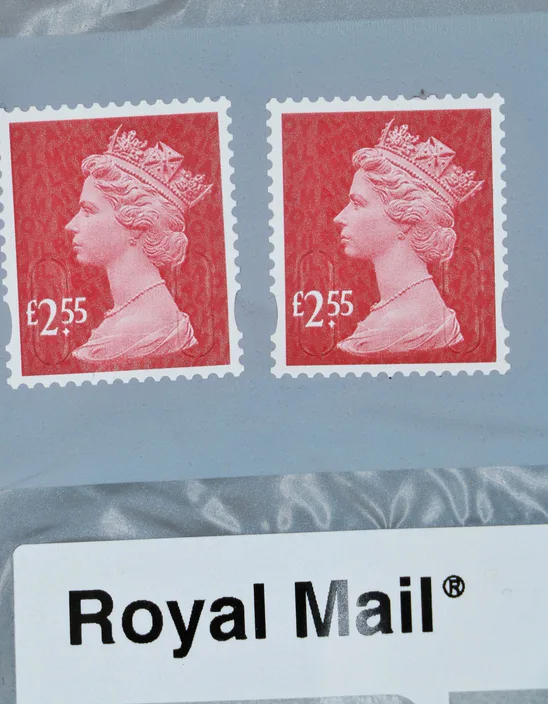
On the (lack of) post
Royal Mail’s delivery of 1st and 2nd class letters plus publishing and subscription mail (magazines etc) known as “flats” has collapsed in North Dorset.
Short staffed, local postal workers in Shaftesbury tell us they are instructed to concentrate on parcels and guaranteed items, to the exclusion of letters and flats – which we now receive no more than once a week, on random days, in large batches six to 12 days after posting.
Ofcom’s requirements are
1st Class letters:
Delivered 6 days a week (Monday to Saturday);
90% delivered next
working day;
99% delivered within 3 working days.
2nd Class letters:
Delivered on alternate weekdays (not on Saturdays);
95% delivered within 3 working days;
99% delivered within 5 working days.
The procedure for informing Royal Mail of delayed posts is (deliberately?) onerous. Restricted to one item a time, we have filed a complaint for one item (of nine), which took over an hour. We telephoned Royal Mail last Friday, but were told the wait to talk with an agent was 50 minutes!
In May this year the Commons Business and Trade Select Committee Chairman, Liam Bryne MP, declared Royal Mail a ‘national institution in meltdown’. Sold by David Cameron’s government in 2013, Royal Mail is now owned by Czech businessman Daniel Křetínský. Through your MP, letters to publications, social media, blogs etc, we all need to apply pressure on HMG to force Ofcom and Royal Mail to adhere to their above obligations under the terms of the Postal Services Act of 2011 as a National Service Provider with National Service Obligations. This is the only way to bring your letters and flats mail back to order.
Iain Laird, Motcombe
On parking
On Sunday 25th October I took my wife shopping to ASDA Gillingham. I parked my car in the car park, leaving ample room each side – in fact both bays were empty. When I returned to the car to wait for my wife, I found a car had reversed fairly close next to mine with its boot against a wall (I was facing the wall).
As I sat in my car a lady with a full trolley of shopping attempted to push her shopping trolley between our two cars in order to reach her car boot. I got out my car to find she was approx an inch away from scratching my car. I asked her if she wanted me to move, to which she replied ‘no I think I’ve made it’.
I don’t think she had picked up on the sarcasm in my offer, so I moved my car anyway.
Why are people so thoughtless when it comes to this sort of situation? She should surely realise it would have been far more sensible to drive in, leaving her boot easy to access?
Had she damaged my car I would not have hesitated to claim on her insurance. Drivers beware.
Terry F, Gillingham
On the lost art of reversing
I have come to the conclusion that reversing a car is becoming a lost art. Living in rural Dorset, I regularly meet drivers on our narrow lanes who appear genuinely astonished to discover another vehicle coming towards them. They stop dead, stare at you and wait for something to happen.
Usually, that ‘something’ ends up being me reversing 200 yards to a passing place, while they sit approximately six feet from one.
Last week I faced a man in an enormous 4×4 who looked positively horrified when I suggested he might reverse a little. His vehicle probably had more cameras than the BBC, yet apparently none of them could help him travel backwards.
I learnt to drive in a Morris Minor. We managed perfectly well with mirrors, judgement and the occasional prayer.
Perhaps the driving test should include a compulsory encounter with a tractor on a Dorset lane. That would sort things out.
Geoff Porter, Nr Blandford