

River Cottage began in West Dorset; nearly three decades later, Hugh Fearnley-Whittingstall is back for Bridport Literary Festival, talking fibre, food and the land that shaped his career … but first he tackles our Random 19
© MattAustin
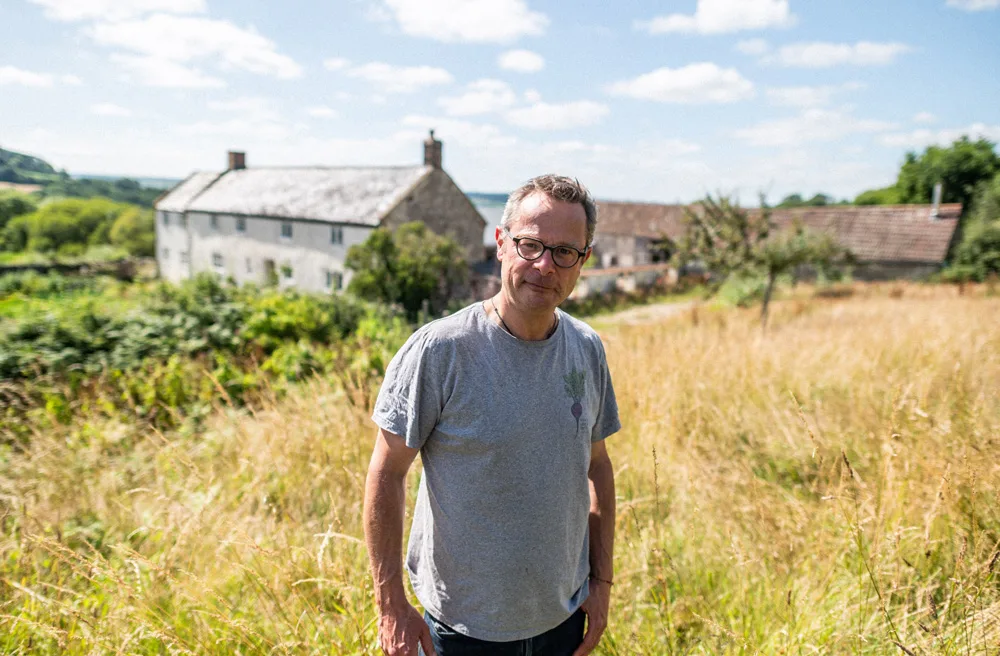
Hugh Fearnley-Whittingstall is coming back to the county where the River Cottage “empire” was born – the first three series were filmed at a small gamekeeper’s cottage in Netherbury, near Bridport. And Bridport Literary Festival has lured him back for an event at Bridport Arts Centre on Thursday 12th November.
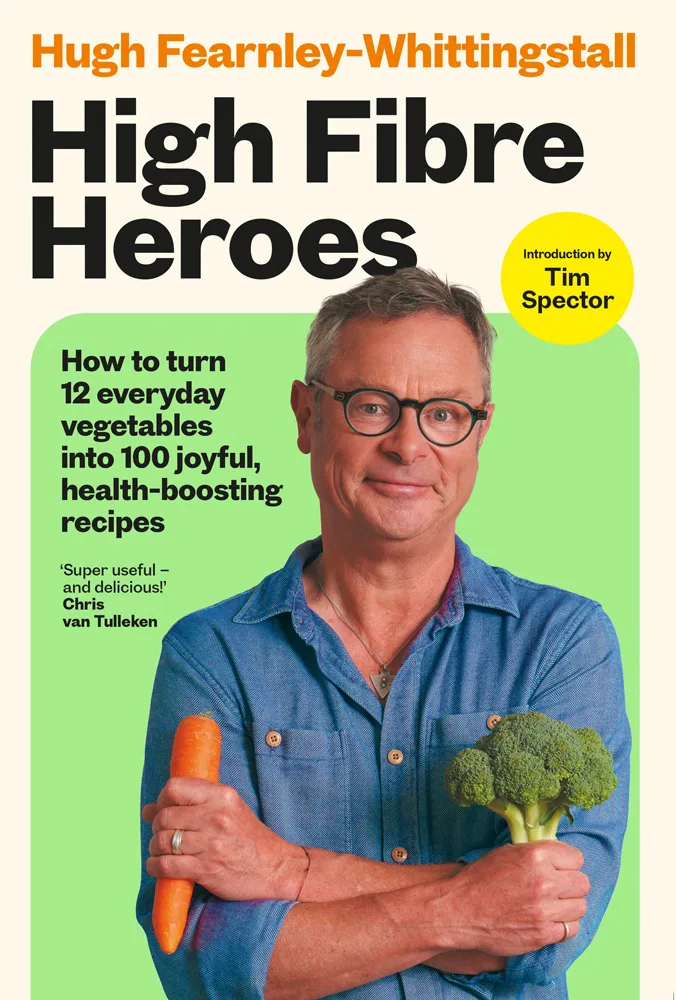
At 11.30am he’ll be talking to journalist Teddy Jamieson about High Fibre Heroes, his latest cookbook. Fibre is a subject that rarely gets star billing in the culinary world. For Hugh, this isn’t just another stop on a book tour. Dorset is where the career most of us recognise really began.
Born in London and brought up in Gloucestershire, he studied philosophy and psychology at Oxford, and initially imagined a future connected with wildlife and conservation. Food took over almost by accident. In 1989, entirely untrained, he landed a job in the kitchen at London’s River Café after surviving a lunchtime shift and producing a lemon tart that Rose Gray deemed good enough for the menu. He lasted only a matter of months before being fired – something he later described as one of the best things that happened to him.
He started writing about food, pitching magazine ideas, and eventually moved into broadcasting. In A Cook on the Wild Side he travelled Britain in a Land Rover converted into a mobile kitchen, foraging, fishing and cooking whatever he could find. But it was a small rented cottage near Netherbury that changed everything.
Where does our food come from?
Escape to River Cottage was first aired in 1999. Hugh grew vegetables, raised livestock, foraged, bartered with neighbours and cooked what the land around him produced. Crucially, he was also prepared to show where food actually came from: animals were not just adorable, picturesque additions to the smallholding, and viewers followed their journey all the way to the table.
River Cottage eventually moved from its original Dorset home to a larger headquarters, now at Park Farm just over the border in east Devon. But the same questions have run through Hugh’s work ever since. Where does our food come from? How was it produced? What does it cost the farmer, the animal and the environment?
His television work gradually widened into campaigns on intensive chicken farming, discarded fish, food waste, plastic and public health.
More recently, the focus has swung firmly towards plants. High Fibre Heroes, published in May, turns 12 decidedly ordinary ingredients – such as carrots, lentils, tinned beans and broccoli – into 100 recipes. And ordinary is rather the point.
A peculiar Dorset quality
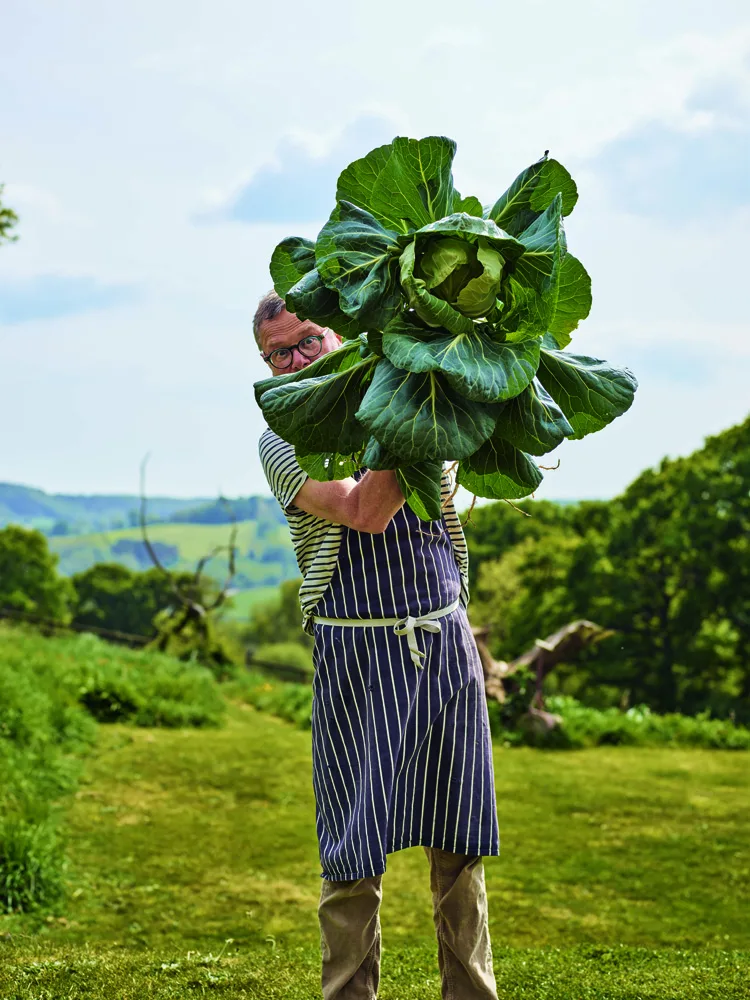
Hugh dismisses the endless churn of dietary trends and says fibre deserves more attention: ‘Unlike so many online trends, eating more fibre really will make a difference to our health. Also, for anyone who likes to do a bit of cooking, getting a bit more fibre on our plates is very doable. And it doesn’t involve buying obscure and expensive ingredients. The best sources of fibre are the everyday vegetables hiding in plain sight – carrots, peas, cabbage, kale, sweetcorn and lots of lovely pulses. We just have to stop relegating them to the boring-but-good-for-you bit on the side, and give them the chance to be the stars of some really delicious plant based dishes – hearty soups and big salads, satisfying stove-top suppers, and easy-win tray roasts. It’s fun to do and really rewarding.’
Does he have any particular favourites in the book?
‘Well, the carrot lasagne has become a bit of a hit! It’s incredibly easy as you don’t even need to pre-cook the filling. It’s actually based on a squash lasagne by the brilliant Anna Jones, which I tweaked around. I also swapped in carrots for squash, as both are quite starchy and quite sweet – but carrots are even cheaper and more accessible, and most of us have them in the fridge. I also have a penchant for bad food puns, so I couldn’t resist trying a “pea-ella” – paella, but with loads of peas! It worked well, so in it went!’
His enthusiasm for the South West, meanwhile, always comes back to the relationship between landscape and dinner plate. There is, he says, a peculiar sense of it here: ‘There’s a particular quality to the countryside down here, a sense that the food and the landscape are still properly connected.
‘You’re surrounded by good soil, good farmers, and a climate that’s kind to vegetables – it seeps into how you cook. Farmers, foragers, cheesemakers, fishermen, other cooks … It’s a generous, collaborative world down here. Everyone’s swapping seeds, sharing gluts and comparing notes on the weather.’
For anyone who feels less connected to that world, his advice is uncomplicated: ‘Start small, and start local. Talk to the person behind the stall at a farmers’ market. Grow some herbs or salad leaves on a windowsill. Cook with the seasons. Pick blackberries or wild garlic.’
It is, really, the River Cottage argument in miniature: pay a little more attention to what you eat, where it came from and who produced it, he says.
‘For hundreds of thousands of years to be human was to gather food every day and have a deep understanding of how the land around us can feed us. That still sits deep within all of us, and reconnecting with it not only gives pleasure, and great ingredients, but really nourishes the spirit too.’
And so to the Random 19…
- What’s your relationship, if any, with Dorset?
I used to holiday near Weymouth with my family in the 1970s, and came back to live there at River Cottage 25 years later. I now live in East Devon, but I love hopping back over the border – to see friends near Bridport and Beaminster, or fish out of Lyme Regis or West Bay. - What was the last song you sang out loud in the car?
Almost certainly Baba O’Riley by The Who – the opening line ‘Out here in the fields, I fight for my meals’ just seems to fit the bill of the life I have chosen. Even if it’s slightly over-dramatic for growing vegetables and keeping chickens! - What was the last film you watched – and would you recommend it?
I watched Good Bye, Lenin! a couple of nights ago – a brilliant, funny and touching story about an East German woman who falls into a coma just before the Berlin Wall comes down. - It’s Friday night – you have the house to yourself, and no work is allowed. What are you going to do?
I’m going to cook some nice food, open some wine, and watch a movie – probably some unchallenging action thriller or comedy that I know my wife would not enjoy. - What is your comfort meal?
Shepherd’s pie every time. I used to make it with my mum, for a midweek supper, with the leftovers from a Sunday roast leg of lamb. I particularly loved swirling the buttery mashed potatoes with a fork, so the ridges would get nice and brown on top. And I loved the way the sauce bubbled up around the edges and made the mash around the edge of the pie dish sticky and crispy, almost burnt. - What was the first book you read and loved? And/or the last?
The first was probably one of the Willard Price books, maybe Gorilla Adventure, or Whale Adventure. They were about two brothers, Hal and Roger, who caught animals for their father’s zoo – and got into lots of dangerous scrapes while doing it. They made me want to travel the world and discover wildlife, which I’ve been lucky enough to do.
The last was A Single Man by Christopher Isherwood. It’s wonderful writing, about how we try, and mostly fail, to carve a life of meaning from the weird world and almost unknowable people who surround us. - What little luxury would you buy with £10?
Probably some kind of fishing lure. - What is your greatest extravagance?
Fishing lures! - What’s the best biscuit for dunking?
There is only one – the digestive! Doves Farm are the best. - What shop can you not pass without going in?
Fishing tackle shops … - Cats or dogs? Tell us about yours.
Dogs! We have three lurchers, Knotty, Kiki and Quiz. They are total softies, but it’s something special to see them running at full tilt through a field or along the beach. - What’s your most annoying trait?
Probably butting in when my kids are cooking, and suggesting they do things slightly differently. I’m much better than I was, but I’m not cured yet. - What totally irrational thing makes you unreasonably cross?
Weather forecasts promising rain that doesn’t come. Or even, just cloudy days that aren’t actually rainy. - What are you surprisingly bad at?
Cooking rice. I can’t seem to get it fluffy. Tips welcome! - What was your first job – and what did it teach you?
Selling oriental carpets at Harvey Nichols. I’m not sure it taught me much, but I do have an eye for a nice kilim. - What completely ordinary thing brings you disproportionate joy?
Birds in the garden are, I guess, ordinary – at least in the sense that they turn up every day. But they still give me a thrill, every day. - What was the last gift you gave someone?
Some homemade nduja, made with my own home-reared pork. It’s an authentic recipe – about 30 per cent chilli! – so it’s seriously hot. But amazing spread very thinly on sourdough toast, with creamy scrambled eggs on top. - Chip shop chips or home-baked cake?
Home-baked cake every time – especially when made by my daughter. Usually with about 20 per cent less sugar than whatever it says in the recipe. - You have the power to pass one law tomorrow, uncontested. What would you do?
Serve decent, healthy meals at all schools and teach kids to cook as well. Knowing what real, good food looks like, and how to make it at home, is an invaluable life skill right up there with reading, writing and maths.
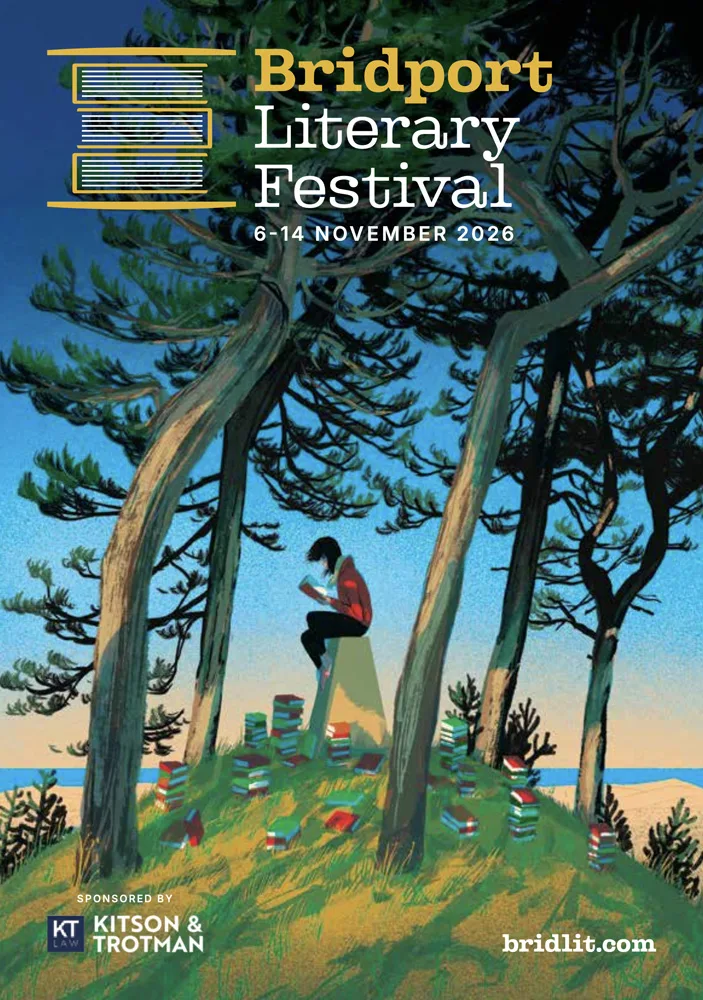
Hugh Fearnley-Whittingstall will appear at Bridport Arts Centre on Thursday 12th November at 11.30am as part of BridLit 2026 (Event 45). Tickets are £14. For details and bookings, visit bridlit.com
Support independents: High Fibre Heroes is available from Bookshop.org, or The Book Shop in Bridport while you’re there for BridLit!