I have a confession. I’ve started discriminating against robots. Not deliberately, initially. But somewhere around the fifth glossy, suspiciously perfect event poster featuring immaculate typography and that strangely familiar AI slippery sheen, I realised I’d started doing it.
Given two perfectly good stories competing for space in Community News, I’m always going to choose the one that comes with a real photograph. A slightly wonky village hall poster. An email somebody actually sat down and wrote.
And no, I’m not remotely anti-AI. That would be spectacularly hypocritical. I often use it myself, where it’s useful. It’s another tool on my desk, alongside Photoshop, InDesign, Google, my Mac, a pen tablet and an alarming quantity of coffee.
But I have a line.
AI doesn’t get to be creative. It doesn’t get to do the bit that makes something ours.
We admittedly do, on occasion, use an AI-generated image where there simply isn’t an image to be had – illustrating a 17th-century smuggler is an obvious example, photography having been inconveniently unavailable. And when we do, it’s clearly labelled.
But give me an actual photograph of six slightly awkward people standing with an oversized cheque over a beautifully generated approximation of ‘community fundraising event’ every single time.
The problem for businesses is that I don’t think I’m unusual.
Once you’ve seen enough AI-generated material, you start recognising the language and the colour and the imagery almost before you’ve consciously registered it. The same polished faces. The same lighting. The same relentlessly cheerful, vibrant copy. The same words and sentence structures and rhythm.
Everything technically fine. Nothing actually wrong.
But also nothing that belongs particularly to you.
Which is what I think businesses and charities and community groups need to be careful about. AI can make you look professional in seconds. But used lazily, it can also make you look exactly like everybody else.
Maybe that’s it – using AI isn’t the problem. Letting it make all the interesting decisions is.
I’m aware of the irony. I use AI. I use it to interrogate ideas, untangle spreadsheets, check things, challenge things and speed up jobs that used to swallow hours. I wouldn’t willingly give up my Mac and go back to a typewriter either.
But I still have to decide what I think. I still have to write like me. And I need Dorset Life to sound like Dorset Life.
So if you’re sending us something for Community News this month, don’t worry if your photograph isn’t perfect. Don’t panic if your poster isn’t slick. Send me the real people. Send me the badly lit village hall, the crooked banner, the photos with the feet chopped off and the eyes shut, the slightly out-of-focus watermelon dinosaur. Send me the actual thing that happened.
I’ll take human over perfect every time.
Laura x
On Dorset’s housing issues
Your correspondent on Dorset’s housing in the September issue denounces affordable homes as ‘…ridiculous. The more homes available, the lower the price will be.’ They also say: ‘The population is expanding, and the entire country needs to accept that many more new homes are needed in every corner of the land.’
In fact, there is ample evidence that housebuilding slows down when prices fall – as is happening currently. It is not possible to build our way to lower house prices in Dorset using speculative development.
Also, England’s population is not expanding in a way that requires many more new homes than have been built recently. For instance, current ONS projections for 2024–39 suggest growth of about 152,000 people per year. At, say, 2.2 people per household, that’s only 69,000 extra homes in England each year. We have been building many more than that for a long time.
Actually, the need for housing in Dorset stems as much from falling household size as from population growth. But even accounting for that added factor, there is no demographic evidence that housebuilding in Dorset needs to double – a target the Government is forcing Dorset Council to accept.
Prices are already falling here due to lack of demand. So perhaps opposing development isn’t ‘utter hypocrisy’, as your correspondent claims, but good land-use planning that seeks to balance permissions against real future demand?
Michael Allen, Sturminster Marshall
On the price of university
As thousands of 18-year-olds head off to university this month, am I alone in finding the sums involved increasingly surreal?
We take teenagers who, a few months ago, had to ask permission to leave a classroom, and calmly encourage them to sign up for tuition fees of £9,790 a year, plus maintenance loans potentially running into thousands more. Over three years, the numbers become enormous. And because very little of that money feels like ‘real’ money at 18, where is the pressure in the system to keep costs down?
Universities know the tuition money is available. Landlords know students have maintenance loans. Students themselves are largely insulated from the true cost until years later, when repayments inevitably follow them into working life.
I’m not arguing against university, nor against loans enabling young people without wealthy parents to attend. But surely we should at least question a system in which the answer to higher costs is simply to allow young people to borrow more.
If an 18-year-old walked into a bank asking to borrow £50,000 for almost anything else, we’d expect some very serious questions to be asked.
For university, we seem to hand them the forms and wish them luck.
Name and address supplied
On a reason to go into town
We hear endlessly about the death of the high street – usually accompanied by complaints about parking, business rates, online shopping and Amazon.
But I wonder if we’re missing something much simpler: you have to give people a reason to go into town.
I can buy almost anything I need without leaving my sofa. So why would I drive into town, pay to park and walk around a diminishing collection of chain shops selling things I can get cheaper online?
The answer surely isn’t another ‘event’ consisting of half a dozen market stalls and a burger van.
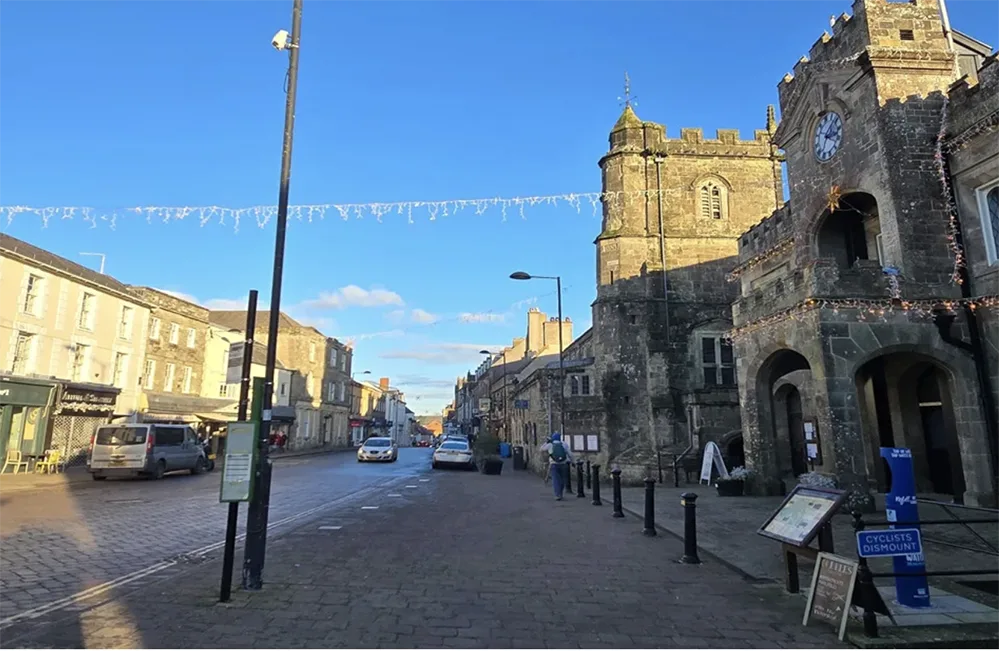
Make town centres interesting! Give us independent shops, markets worth visiting, street performers, exhibitions, live music, beautiful public spaces, somewhere pleasant to sit, good food, things for children to do and, above all, things we can’t get on the internet. Look at the Dorset towns that still feel busy – as a visitor, Sherborne and Shaftesbury both seem to do well. People go there because there’s something there beyond simply buying stuff.
We keep asking how we save our high streets. Perhaps we should stop trying to recreate the high street of 1989 and start asking what would actually make us leave the house in 2026.
P. Harris, Dorchester
On what farms are actually for?
I read recently about a farmer giving up growing grain because it simply isn’t providing a reliable enough income. He’ll put the land to grass – hay for horses – instead and perhaps return to grain if the economics improve.
I’m not a farmer, so perhaps I’m being hopelessly naive, but isn’t this completely bonkers?
Surely the most important job of British farmland is producing food? Yet we seem to have created an economy in which a farmer can make a better, safer living storing caravans, producing hay for horses, covering land with solar panels … or doing almost anything except feeding people.
I don’t blame farmers – they have mortgages, bills and families like the rest of us. If growing wheat loses money and something else pays, what exactly do we expect them to do?
But surely somebody in government should be asking where this ends. We want to treat our animals exceptionally well, but we also want cheap food. Supermarkets compete relentlessly on price and British farmers are then expected to compete with imports produced under entirely different economic conditions.
Then we act surprised when they diversify or stop producing food altogether. Conversations about food security are terribly dull until you haven’t got it.
Perhaps instead of asking why farmers are leaving agriculture, we should start asking why we’ve made producing food such a poor business to be in.
Richard M, Sherborne
On a thought for the day
I often find myself wondering how we came to measure a person’s success so heavily by their financial wealth and the possessions they accumulate while they are alive.
Historically, communities seemed to value people for their quiet good deeds and how gently they looked after the land.
If the best thing we can do with our lives is simply to leave the world a little less messy than we found it, could we perhaps start gently shifting our focus? What if we began praising stewardship and care for the next generation, rather than just what we can gather for ourselves?
Baz, Fifehead Magdalen
On being 90
I enjoyed your correspondent’s defence of being 80 last month, in particular her irritation at being treated as though she ought to be sitting quietly in an armchair. Quite right too.
I am 91. I still drive, do my own shopping, follow the news, swear at politicians and have absolutely no intention of ‘slowing down’, whatever that is supposed to mean. My children, themselves now pensioners, have recently developed an irritating habit of asking whether I’m ‘sure I’m all right’ doing things I have been doing perfectly competently for longer than they have been alive. So may I offer some reassurance to your 80-year-old correspondent? The annoying assumptions are just going to become more ridiculous.
But the great advantage of reaching 90 is that you can tell people so.
Bill P, Wimborne